

Monday 10 March 2025
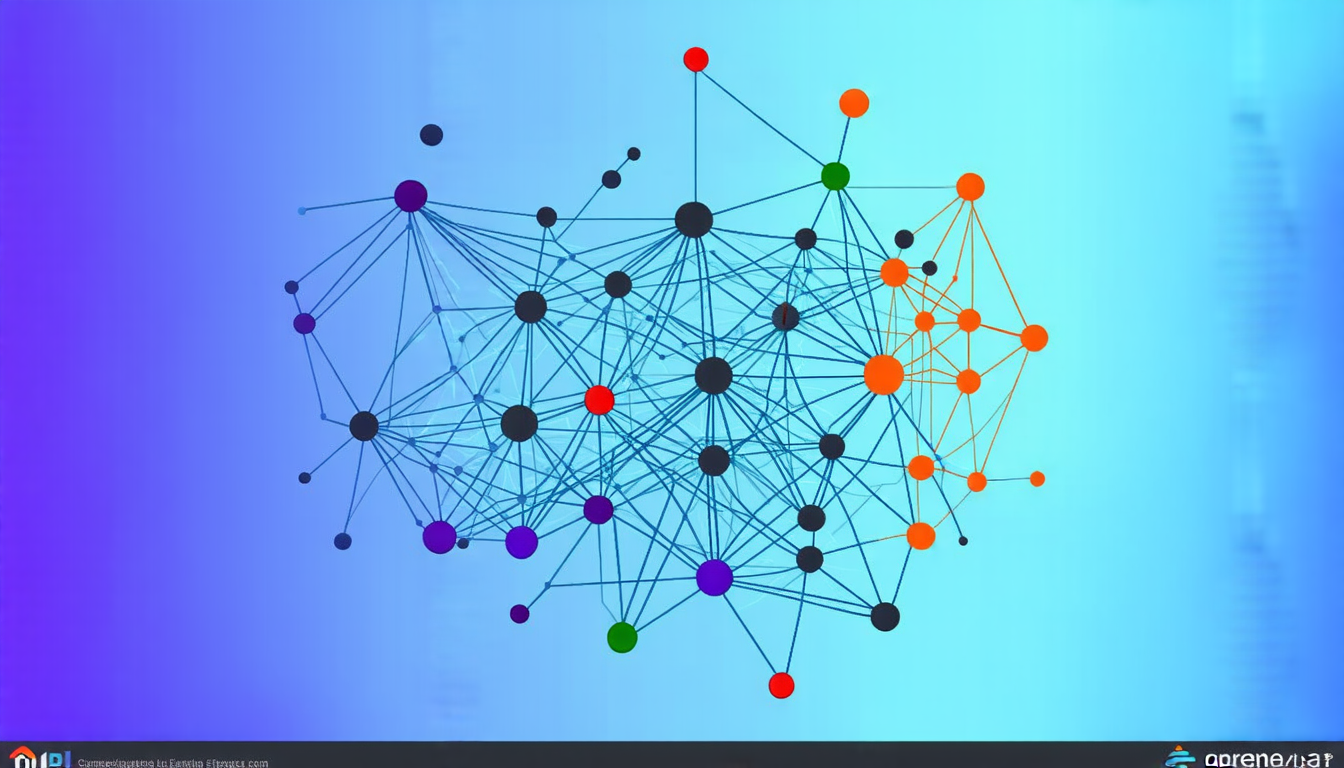
A new approach to simplifying complex networks has been unveiled, with potential applications in fields such as social media analysis and biological research. The method, known as Bayesian Non-Parametric Pooling (BN-Pool), uses a probabilistic model to identify clusters of similar nodes within a network, reducing the overall size and complexity of the data.
Traditional methods for simplifying networks typically rely on fixed clustering algorithms or manual specification of cluster sizes. However, these approaches can be limited by their inability to adapt to the unique characteristics of each dataset. BN-Pool overcomes this limitation by employing a Bayesian non-parametric framework, which allows it to automatically determine the number and size of clusters based on the data itself.
The key innovation behind BN-Pool is its use of a Dirichlet process mixture model, which generates a distribution over possible cluster assignments for each node in the network. This distribution is then used to compute a probability score for each potential cluster assignment, allowing the algorithm to select the most likely configuration.
To evaluate the effectiveness of BN-Pool, researchers tested it on several real-world datasets, including social media networks and biological pathways. The results showed that BN-Pool was able to identify clusters that corresponded well with known community structures in these datasets, even when the number of clusters was not fixed in advance.
One of the most significant advantages of BN-Pool is its ability to capture subtle patterns in complex networks. Unlike traditional methods, which may group nodes together based on simple proximity measures, BN-Pool takes into account more nuanced characteristics such as node attributes and edge weights.
The potential applications of BN-Pool are vast, ranging from social network analysis to biological research. For example, the algorithm could be used to identify clusters of similar proteins in a biological pathway, or to group users with similar interests on a social media platform.
While BN-Pool is a powerful tool for simplifying complex networks, it is not without its limitations. One potential issue is the computational cost of running the algorithm, particularly for very large datasets. However, researchers are working to optimize the method and make it more efficient in the future.
In the meantime, the development of BN-Pool represents an important step forward in our ability to analyze and understand complex networks. By providing a flexible and adaptive approach to clustering, this algorithm has the potential to unlock new insights in a wide range of fields.
Cite this article: “Unveiling Complex Networks with Bayesian Non-Parametric Pooling”, The Science Archive, 2025.
Complex Networks, Bayesian Non-Parametric Pooling, Network Simplification, Clustering Algorithms, Social Media Analysis, Biological Research, Dirichlet Process Mixture Model, Probability Scores, Community Structures, Large Datasets





