

Monday 10 March 2025
A simple, yet ingenious approach has been developed to help students understand a fundamental concept in physics – double-slit interference. The method uses shoelaces, of all things, to demonstrate how light behaves when passing through two parallel slits.
Double-slit interference is a phenomenon where light waves interact with each other as they pass through two openings, creating an intricate pattern on a screen behind. This phenomenon has puzzled students and scientists alike for centuries, but the new approach aims to make it more accessible and intuitive.
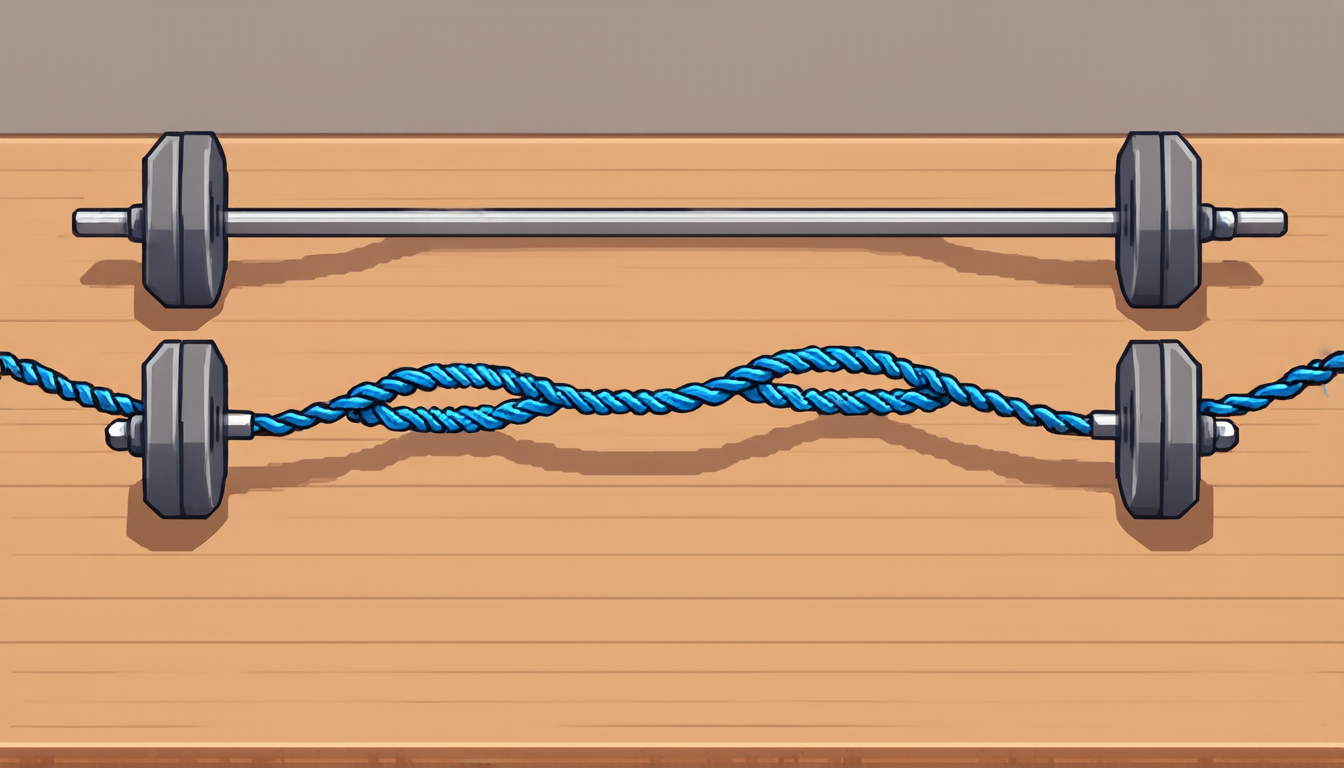
The method involves stretching shoelaces across a table or floor, representing the wave paths of light passing through the slits. By attaching weights to the ends of the laces, tension is applied, eliminating slack and allowing students to visualize the pathlength difference between the two waves.
Students can then measure the distance along the laces where the patterns align, effectively demonstrating how the pathlength difference affects the resulting pattern on the screen. This hands-on approach helps students understand that it’s not necessary for both pathlengths to be integer multiples of the wavelength for constructive interference to occur – a common misconception among students.
The shoelace method is particularly effective in highlighting the relationship between the pathlength difference and the angle of incidence, as measured by the distance from the center line. By applying different tensions to the laces, students can experiment with varying wavelengths and observe how this affects the resulting pattern.
In addition to providing a more intuitive understanding of double-slit interference, this approach also offers an opportunity for students to explore the limitations of certain approximations, such as the small-angle approximation sin θ = y/D. By measuring the distance along the laces at different angles, students can see how well these approximations hold up in practice.
The shoelace method is a testament to the power of creative thinking and the importance of making complex concepts more accessible. By using everyday objects in innovative ways, educators can help students develop a deeper understanding of fundamental principles in physics. As with any effective teaching tool, this approach has the potential to inspire a new generation of scientists and engineers, equipped with a solid foundation in the wonders of light and its behavior.
Cite this article: “Unraveling Double-Slit Interference with Shoelaces”, The Science Archive, 2025.
Physics, Double-Slit Interference, Shoelaces, Light Waves, Wave Paths, Pathlength Difference, Constructive Interference, Wavelength, Angle Of Incidence, Small-Angle Approximation
Reference: Beth Parks, Hans Benze, “Visualizing Double-Slit Interference on a Shoestring” (2025).





