
Monday 10 March 2025
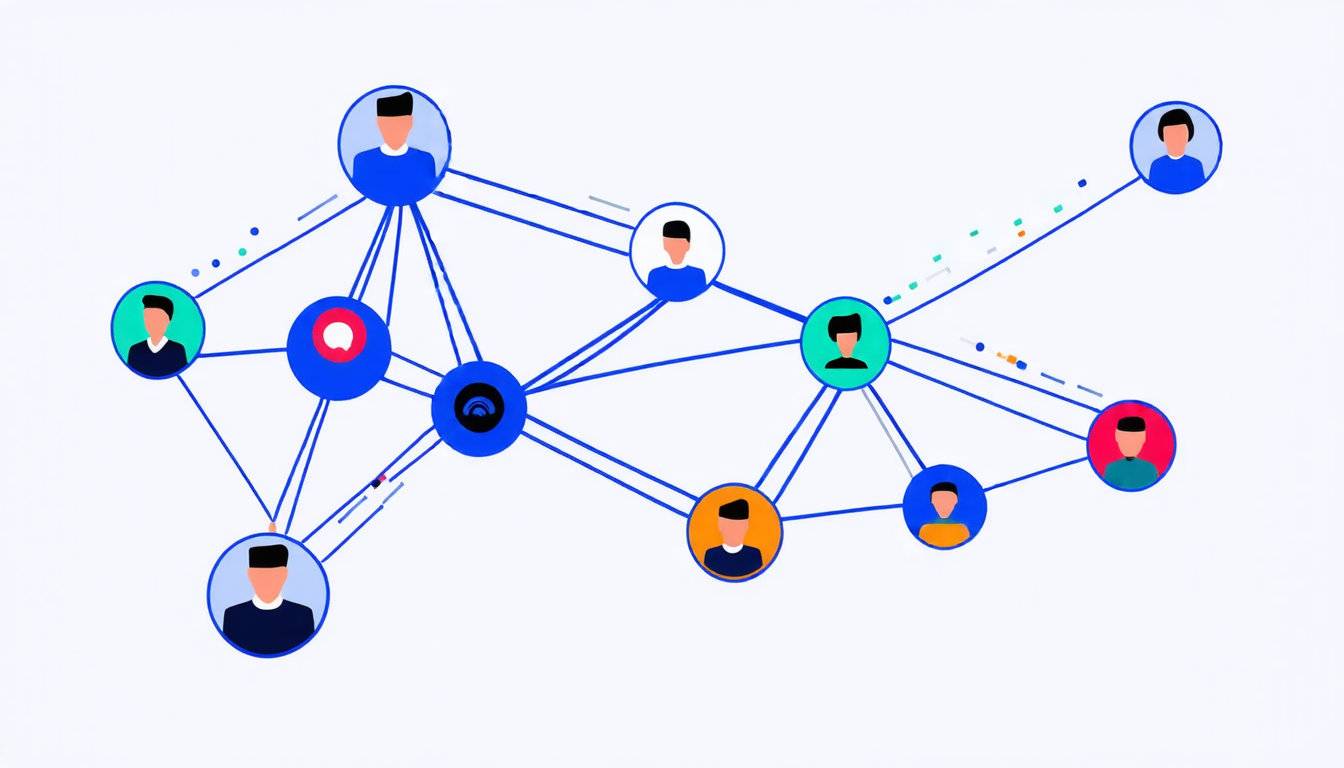
A team of researchers has made a significant breakthrough in understanding how to analyze data from complex networks, such as social media platforms or online communities. Their work has important implications for fields like epidemiology, where scientists study the spread of diseases through contact between individuals.
Traditionally, statistical methods are used to analyze data from these types of networks, but they can be limited by their inability to account for the intricate relationships between nodes in the network. The researchers have developed a new approach that takes into account the complex interactions within the network and provides more accurate results.
The key innovation is the use of a design-based framework, which allows the researchers to model the potential outcomes of different treatments or interventions on individuals within the network. This means that they can simulate the effects of different scenarios, such as vaccinating certain individuals or introducing new social connections, and predict how the network will respond.
One of the biggest challenges in analyzing complex networks is dealing with the sheer scale of the data. Networks can contain millions of nodes and edges, making it difficult to visualize and analyze the relationships between them. The researchers have developed a novel method for estimating the variance of their estimates, which allows them to account for the uncertainty inherent in working with large datasets.
The implications of this research are far-reaching. In epidemiology, for example, the new approach could be used to study the spread of diseases and identify effective strategies for containment. It could also be applied to social network analysis, allowing researchers to better understand how information spreads through online communities.
In addition, the design-based framework has potential applications in fields like environmental science, where it could be used to model the effects of different policies or interventions on complex systems.
The researchers’ work is an important step forward in understanding and analyzing complex networks. It shows that by combining innovative statistical methods with a deep understanding of the underlying data, scientists can gain valuable insights into the behavior of these intricate systems.
By developing more accurate models of complex networks, researchers can better understand how they function and identify effective strategies for intervention. This has important implications for fields like epidemiology, where accurate modeling is critical for predicting the spread of diseases and developing effective containment strategies.
Cite this article: “Unlocking Complex Networks: A New Approach to Data Analysis”, The Science Archive, 2025.
Complex Networks, Data Analysis, Epidemiology, Social Media, Online Communities, Statistical Methods, Design-Based Framework, Variance Estimation, Uncertainty, Large Datasets