

Monday 10 March 2025
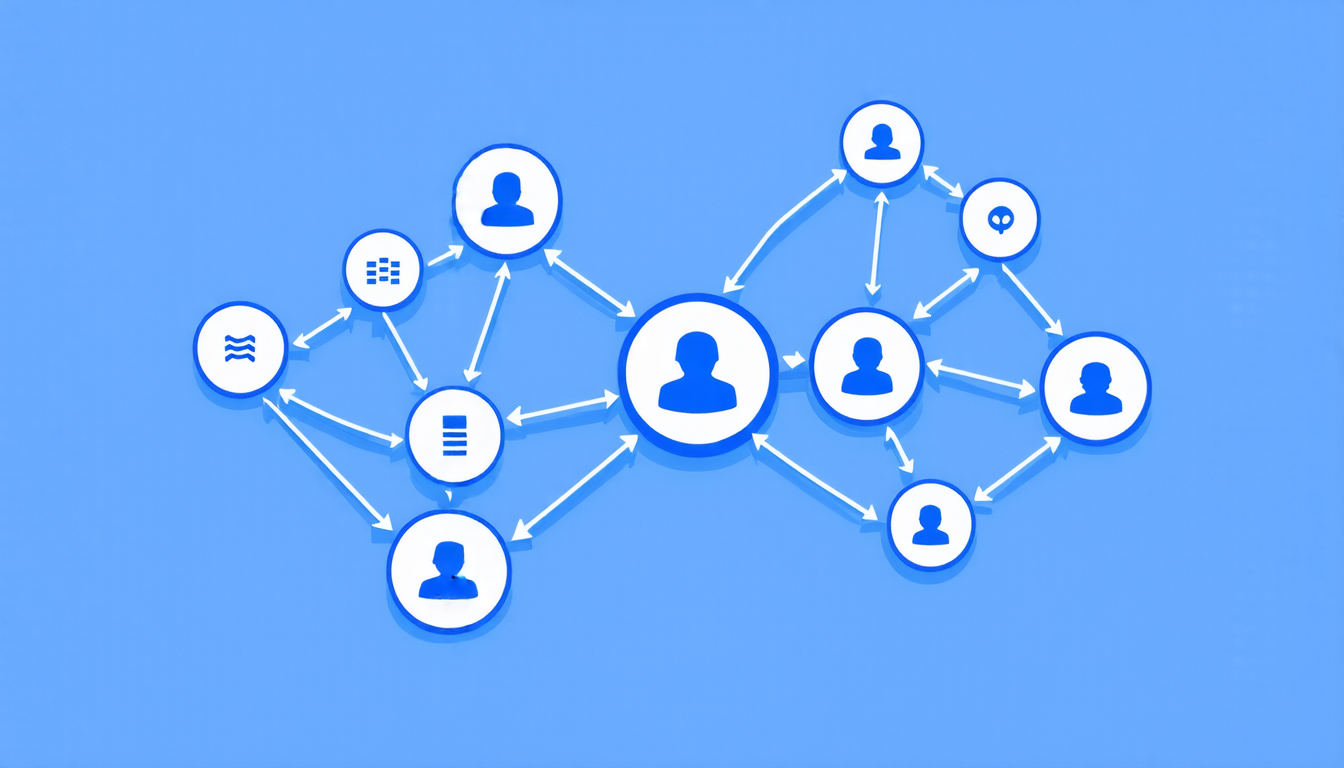
A visual map of biomedical research has been created, allowing researchers to navigate the vast and complex landscape of human health. This interactive tool brings together thousands of experts and datasets, providing a unique insight into the relationships between them.
The map, known as the Cell Map for AI Talent Knowledge Graph (CM4AI TKG), is a product of the Bridge2AI project, which aims to develop high-quality biomedical datasets for artificial intelligence-driven research. By combining data from 2 million papers, 44,000 authors, and 1,179 biomedical datasets, the map provides a detailed view of the connections between researchers and their work.
The visualization uses a combination of machine learning algorithms and dimensionality reduction techniques to condense the vast amount of data into a two-dimensional space. This allows users to easily explore the relationships between different experts and datasets, identifying potential collaborators or dataset users with justifications provided by large language models.
One of the key features of the map is its ability to provide recommendations for future research collaborations. By analyzing the publications and expertise of individual researchers, the system can suggest potential collaborators who may not have worked together before but share similar interests and areas of study. These recommendations are accompanied by explanations generated by the large language models, providing users with a deeper understanding of why these collaborations might be beneficial.
The map also allows users to explore the existing research landscape in greater detail. By searching for specific researchers or datasets, users can access detailed information about their work, including publication histories and career milestones. This provides valuable insights into the development of new research areas and the evolution of existing ones.
The CM4AI TKG has significant potential for advancing medical AI research. By providing a clear visual representation of the relationships between experts and datasets, it enables researchers to identify patterns and trends that may not be immediately apparent from individual datasets or publications. This can lead to more effective collaboration and the development of new research areas.
In addition, the map’s ability to provide recommendations for future collaborations could help to address one of the biggest challenges facing medical AI research: the need for diverse and interdisciplinary teams. By bringing together experts from different fields and backgrounds, these collaborations can lead to innovative solutions that might not have been possible otherwise.
The CM4AI TKG is a powerful tool for biomedical researchers, providing a unique insight into the complex landscape of human health. Its ability to identify potential collaborators and provide explanations for why they might be beneficial could help to accelerate medical AI research and lead to new breakthroughs in healthcare.
Cite this article: “Visualizing Biomedical Research: The CM4AI TKG Map”, The Science Archive, 2025.
Biomedical Research, Artificial Intelligence, Data Visualization, Machine Learning, Dimensionality Reduction, Knowledge Graph, Biomedical Datasets, Medical Ai Research, Interdisciplinary Collaboration, Healthcare Breakthroughs





