

Monday 10 March 2025
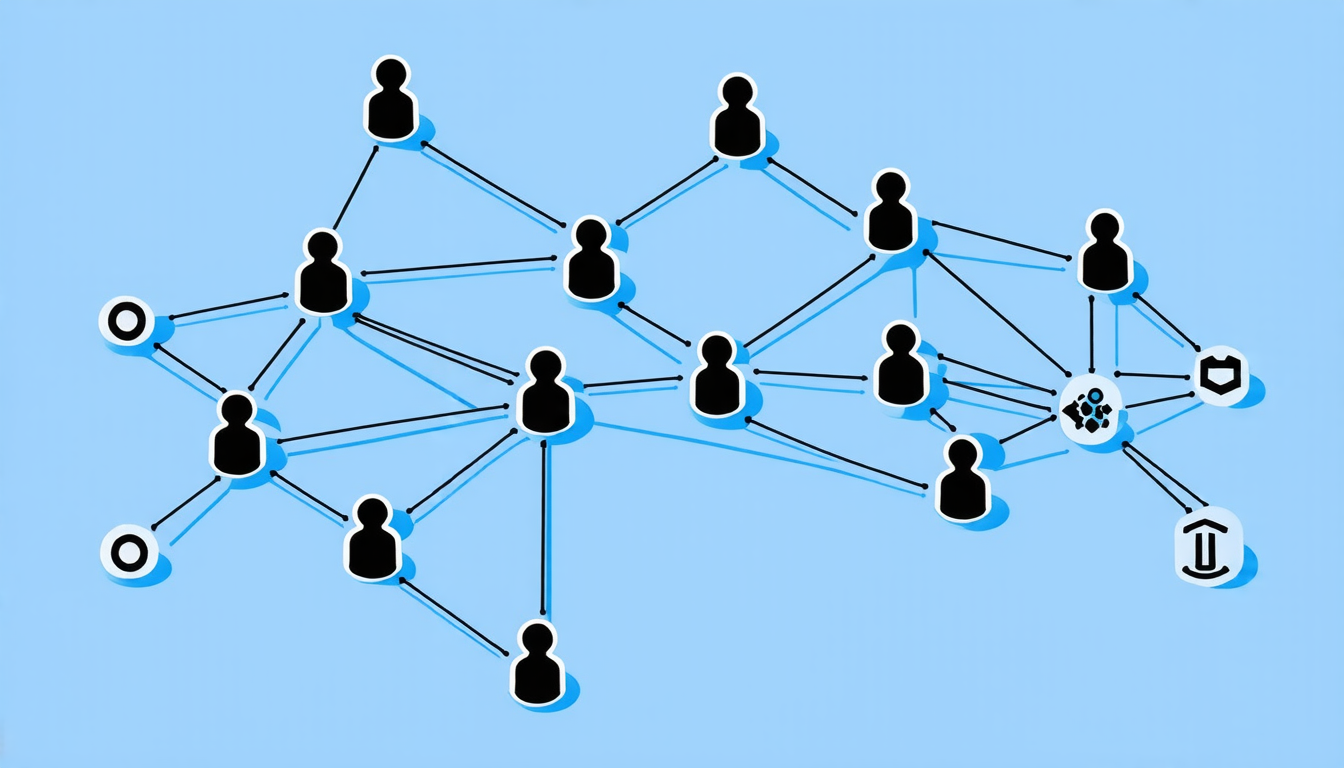
Researchers have developed a new approach to analyzing complex networks, like social media or transportation systems, that can handle missing data and provide more accurate results.
Traditional methods for analyzing these types of networks rely on having complete information about each node and its connections. However, in many real-world scenarios, this data is incomplete or missing. For example, in a social network, some users may not have publicly shared their relationships with others, while in a transportation system, sensors might only be able to track certain routes or vehicles.
To address this problem, researchers have developed a new framework called Topology-Driven Attribute Recovery (TDAR). This approach uses the structure of the network itself to infer missing information and improve the accuracy of its analysis.
The key insight behind TDAR is that even with incomplete data, the relationships between nodes in a network can still provide valuable clues about their attributes. By analyzing these relationships, researchers can make educated guesses about the missing data and use that information to refine their analysis.
For example, if you’re trying to understand how people are connected on social media, you might look at which users tend to interact with each other most frequently. Even if some of those interactions aren’t publicly visible, you could still infer that certain users are likely to be friends or have similar interests based on the patterns you see.
TDAR uses this kind of reasoning to iteratively refine its estimates of missing data and improve the accuracy of its analysis. By doing so, it can provide more detailed and accurate insights into complex networks than traditional methods.
The researchers tested TDAR on a variety of real-world datasets, including social media networks and transportation systems. In each case, they found that TDAR was able to outperform traditional methods in terms of accuracy and completeness.
One of the most promising applications of TDAR is in the field of artificial intelligence. By using this approach to analyze complex networks, AI systems could potentially become more accurate and effective at tasks like recommendation systems or natural language processing.
Overall, TDAR represents an important advance in our ability to analyze and understand complex networks. Its potential applications are vast, and it could have a significant impact on fields like social media, transportation, and artificial intelligence.
Cite this article: “New Approach to Analyzing Complex Networks Improves Accuracy and Completeness”, The Science Archive, 2025.
Network Analysis, Missing Data, Topology-Driven Attribute Recovery, Complex Networks, Social Media, Transportation Systems, Artificial Intelligence, Machine Learning, Recommendation Systems, Natural Language Processing





