

Monday 10 March 2025
Deep multi-view clustering is a complex process that involves analyzing data from multiple perspectives and grouping similar items together. This technique has numerous applications in various fields, including computer vision, natural language processing, and bioinformatics.
Recently, researchers have been working on developing more efficient and accurate methods for deep multi-view clustering. One such approach involves using a structure-guided deep multi-view clustering model that incorporates both local structural information and embedding structural information to improve the clustering performance.
The traditional method of clustering data is based on subspace-based methods, graph-based methods, or matrix factorization-based methods. However, these methods often neglect to fully mine the multi-view structural information and fail to explore the distribution of multi-view data, limiting their performance. In contrast, the proposed structure-guided deep multi-view clustering model addresses these limitations by introducing a positive sample selection strategy based on neighborhood relationships.
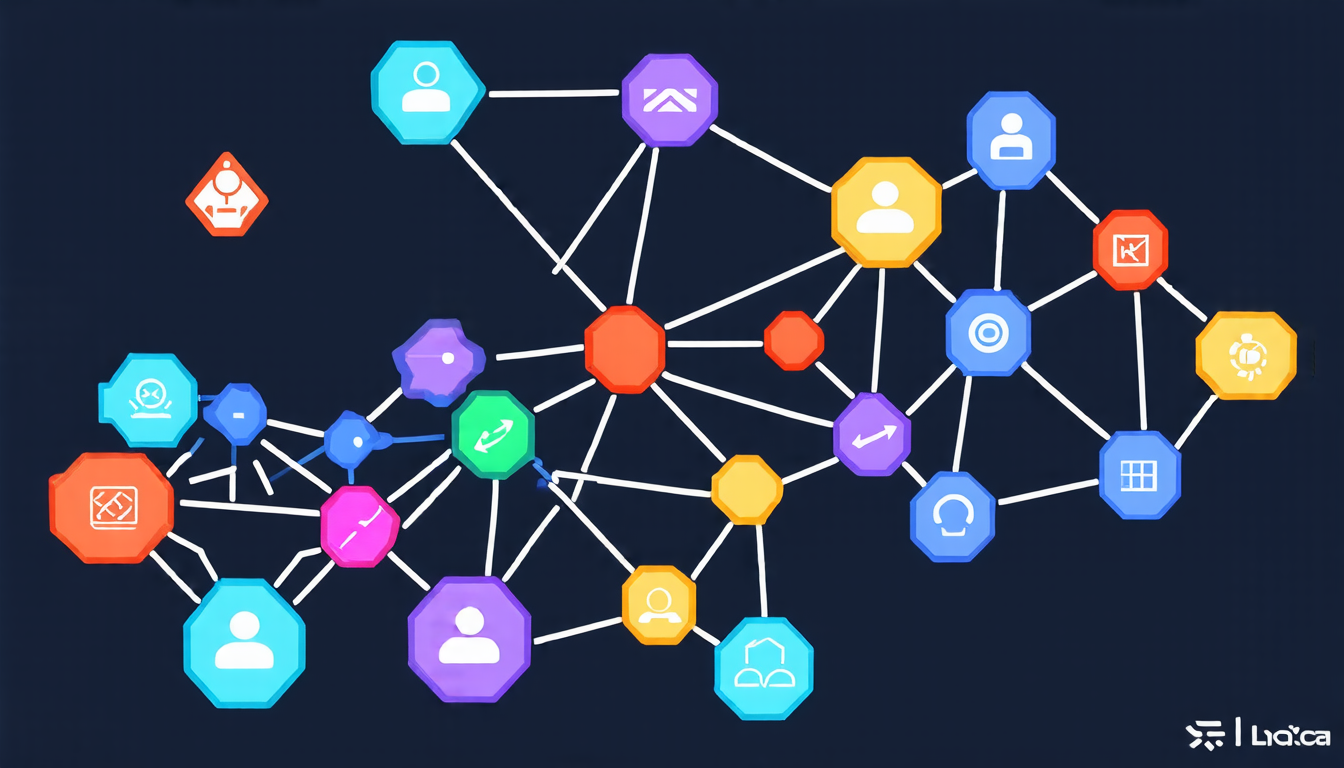
This strategy constructs multi-view nearest neighbor graphs to dynamically redefine positive sample pairs, enabling the mining of local structural information within multi-view data and enhancing the reliability of positive sample selection. Additionally, the model introduces a Gaussian distribution-based modeling strategy that uncovers latent structural information and optimizes feature embedding discrepancies for the same instance across different views.
The researchers tested their approach on several benchmark datasets and compared it to existing state-of-the-art methods. The results showed significant improvements in clustering performance, demonstrating the effectiveness of the proposed structure-guided deep multi-view clustering model.
One of the key advantages of this approach is its ability to handle noisy data and outliers. By incorporating both local structural information and embedding structural information, the model can better capture the underlying patterns and relationships in the data. This makes it more robust and accurate than traditional methods that rely solely on a single type of information.
The proposed method also has practical applications in various fields. For example, in computer vision, it can be used to group similar images together based on their visual features. In natural language processing, it can be used to cluster text documents based on their semantic meaning. In bioinformatics, it can be used to identify patterns and relationships in genomic data.
Overall, the structure-guided deep multi-view clustering model is a significant advancement in the field of machine learning and has numerous potential applications across various disciplines. Its ability to incorporate multiple types of information and handle noisy data makes it a valuable tool for researchers and practitioners alike.
Cite this article: “Structure-Guided Deep Multi-View Clustering: A Novel Approach for Improved Data Analysis”, The Science Archive, 2025.
Deep Learning, Multi-View Clustering, Structure-Guided, Machine Learning, Computer Vision, Natural Language Processing, Bioinformatics, Graph-Based Methods, Matrix Factorization, Clustering Performance





