

Monday 10 March 2025
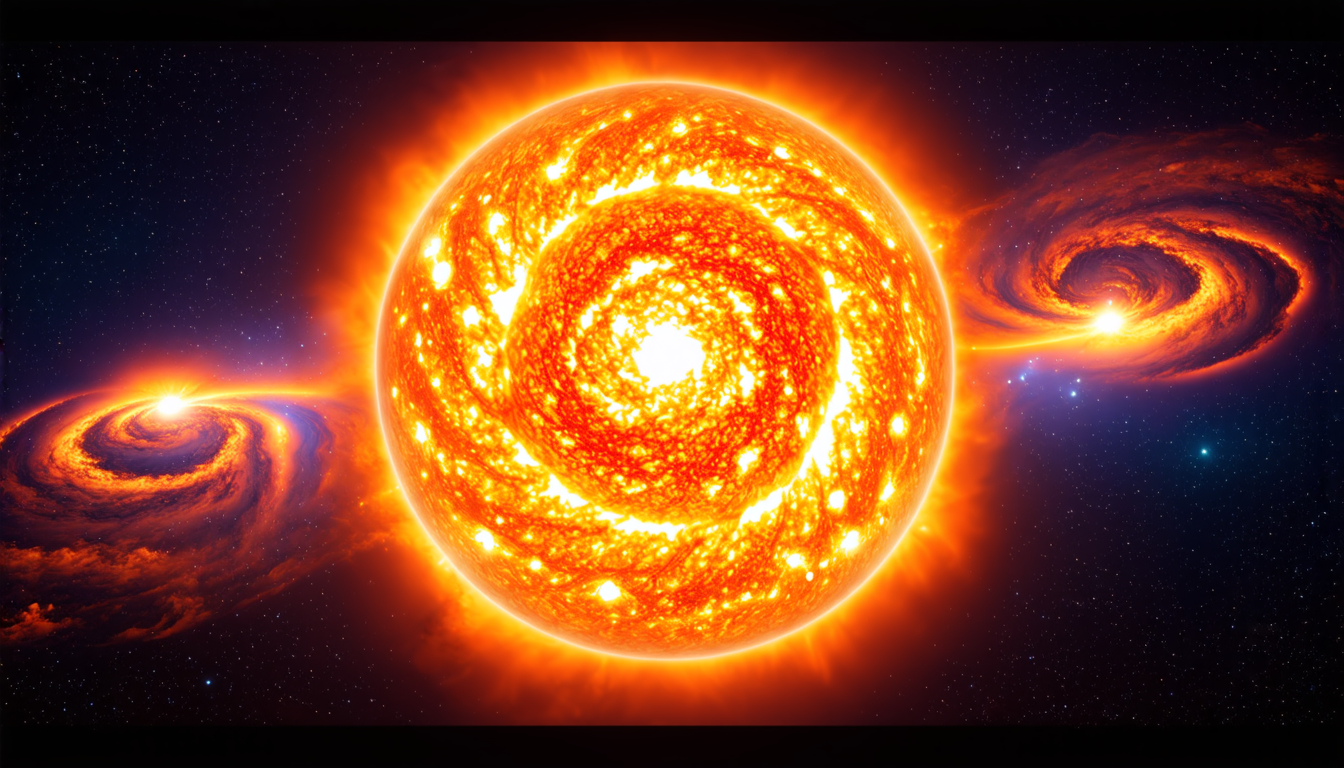
Scientists have long been fascinated by the explosive events that erupt on the surface of the sun, known as solar flares and coronal mass ejections (CMEs). These powerful releases of energy can impact Earth’s magnetic field, causing spectacular aurora displays and even disrupting our communication systems.
A new study published in Astronomy & Astrophysics has shed light on a previously unknown aspect of these solar events: the incredible speeds at which particles are accelerated during reconnection events. Reconnection occurs when oppositely charged magnetic fields come together, releasing a massive amount of energy as they merge.
The research team used data from the Swedish 1-meter Solar Telescope (SST) to study small-scale reconnection events in the chromosphere, a layer of the sun’s atmosphere just above its surface. By analyzing the spectra of light emitted by these events, they were able to measure the speeds at which particles are accelerated during reconnection.
The results are astonishing: particles are accelerated to incredible velocities of up to 100 km/s (62 miles/s), rivaling those seen in some of the most powerful solar flares. This acceleration is likely caused by the intense magnetic fields that build up during reconnection, which can reach strengths of several hundred Gauss.
These findings have significant implications for our understanding of solar physics and the impact of solar activity on Earth’s magnetic field. By studying these small-scale reconnection events, scientists may be able to better predict when larger, more powerful flares are likely to occur.
The study also highlights the importance of high-resolution observations in understanding complex astrophysical phenomena. The SST’s ability to capture detailed spectra of the sun’s chromosphere has allowed researchers to pinpoint the exact location and timing of these reconnection events, providing a level of detail that would be impossible with lower-resolution instruments.
In addition to advancing our knowledge of solar physics, this research also underscores the importance of continued investment in space weather monitoring and prediction. As our reliance on technology grows, so too does the need for accurate forecasting of solar activity and its potential impacts on Earth’s magnetic field.
By continuing to study the intricate details of solar flares and CMEs, scientists can better prepare us for the challenges posed by these powerful events. And with the help of advanced telescopes like the SST, we’re one step closer to unlocking the secrets of our sun’s incredible energy releases.
Cite this article: “Unlocking the Secrets of Solar Flares: Study Reveals Extreme Particle Acceleration”, The Science Archive, 2025.
Solar Flares, Coronal Mass Ejections, Magnetic Fields, Reconnection Events, Chromosphere, Swedish 1-Meter Solar Telescope, Spectra, Particle Acceleration, Solar Physics, Space Weather Monitoring





