

Monday 10 March 2025
As the world becomes increasingly reliant on networked systems, a team of researchers has made significant strides in developing more efficient and adaptable methods for managing these complex networks.
One of the key challenges facing network administrators is the need to balance competing demands for resources. In a typical scenario, multiple users or applications may be vying for access to limited bandwidth or computing power, leading to bottlenecks and inefficiencies. To address this issue, scientists have turned to machine learning algorithms, which can analyze patterns in data and make predictions about future behavior.
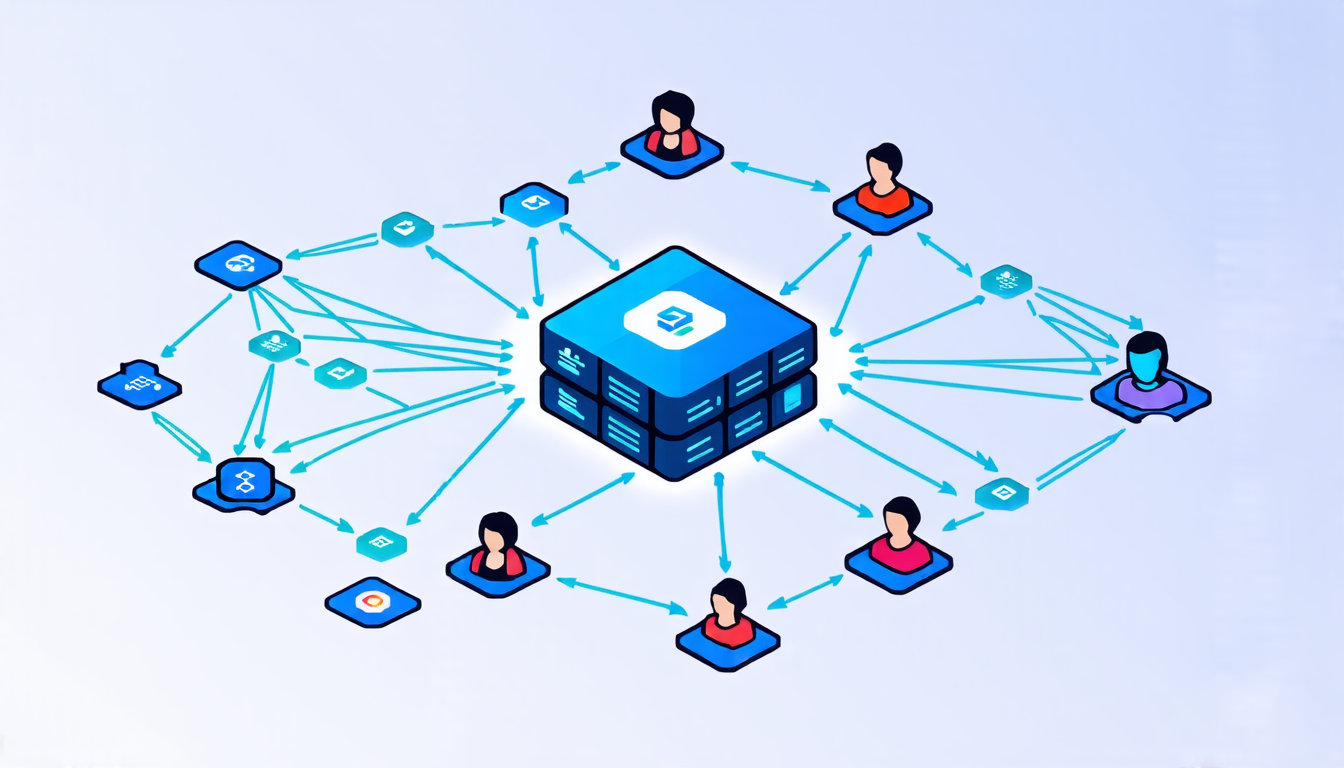
In their latest study, researchers from the University of Waterloo, Canada, and Rogers Communications, a major telecommunications company, have developed an innovative approach that combines machine learning with traditional optimization techniques. By using a deep neural network to predict the traffic demands of different network slices – or virtual networks within a physical infrastructure – they can allocate resources more effectively and minimize congestion.
The team’s system, known as OPA (Online Pricing Algorithm), uses real-time data from various sources, including sensor readings and user behavior, to forecast future demand. This information is then used to adjust the prices of different network slices, allowing administrators to optimize resource allocation and ensure that critical applications receive the necessary bandwidth.
One of the key advantages of OPA is its ability to adapt quickly to changing conditions. Unlike traditional optimization methods, which may struggle to respond to sudden spikes in traffic or other unexpected events, the algorithm can rapidly reconfigure itself to meet new demands.
The researchers tested their system using data from a large-scale 5G network testbed, simulating various scenarios and evaluating its performance under different conditions. The results were impressive, with OPA consistently outperforming traditional methods in terms of resource utilization and overall efficiency.
As the demand for high-speed internet and cloud computing continues to grow, the need for more efficient and adaptable network management systems will only increase. With OPA, network administrators now have a powerful tool at their disposal, allowing them to optimize resource allocation and ensure that critical applications receive the necessary bandwidth to operate effectively.
The implications of this research extend far beyond the realm of telecommunications, however. As networks become increasingly interconnected and interdependent, the ability to manage complex systems efficiently will be crucial for industries ranging from healthcare to finance and beyond. By developing more sophisticated algorithms like OPA, scientists are helping to lay the groundwork for a more resilient and adaptable networked society.
Cite this article: “Optimizing Network Resource Allocation with Machine Learning”, The Science Archive, 2025.
Network Management, Machine Learning, Optimization Techniques, Deep Neural Networks, Resource Allocation, Traffic Demands, Online Pricing Algorithm, 5G Network, Telecommunications, Networked Systems.





