

Monday 10 March 2025
Researchers have made a significant discovery in the field of materials science, uncovering new insights into the behavior of cuprate ladders – a type of material that has long been considered a key component in understanding superconductivity.
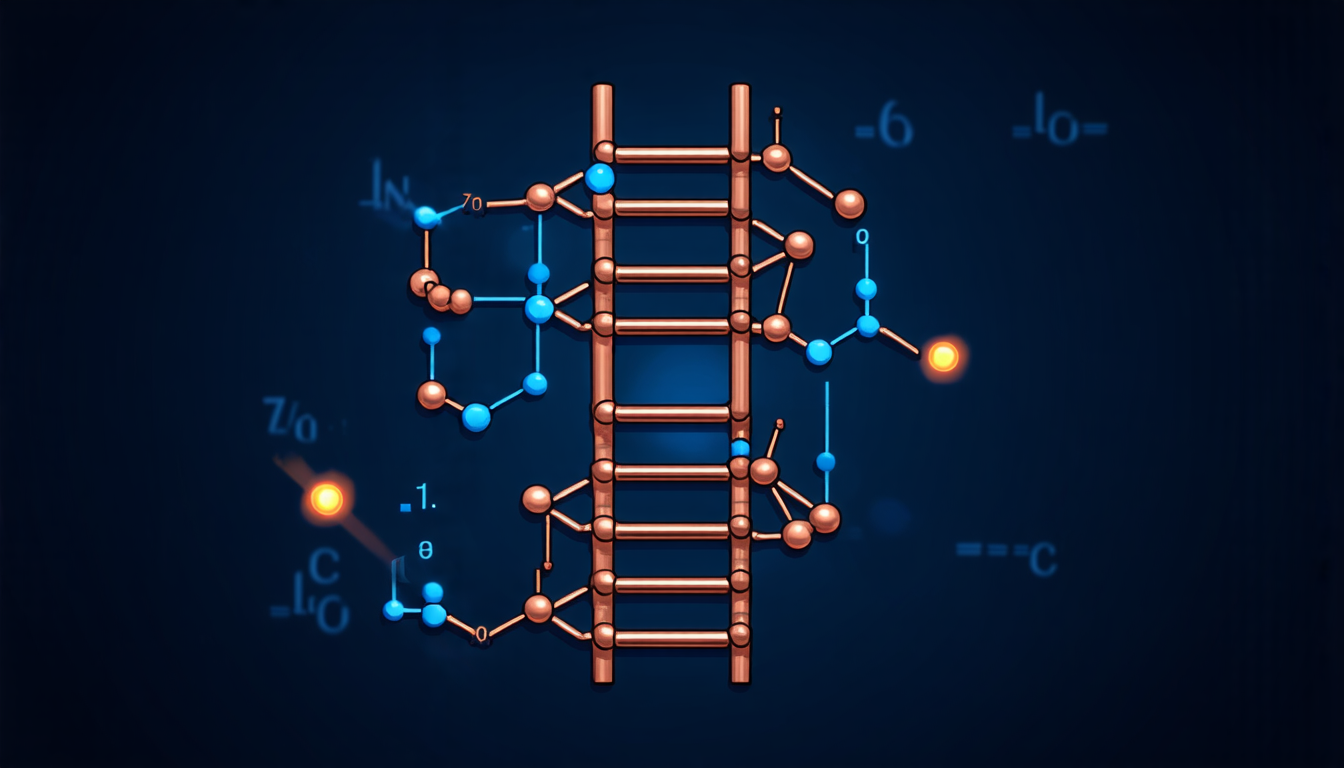
Cuprate ladders are complex systems consisting of copper and oxygen atoms arranged in a specific pattern. They have been studied extensively due to their unique properties, which make them ideal for exploring fundamental questions about the behavior of matter at the atomic level.
One of the most intriguing aspects of cuprate ladders is their ability to exhibit both superconducting and insulating behavior. This dichotomy has puzzled scientists for decades, as it seems to defy our understanding of how materials can transition between these two states.
To shed light on this phenomenon, researchers used a combination of advanced neutron scattering techniques and computer simulations to study the properties of cuprate ladders. By analyzing the data, they were able to identify a new type of interaction that plays a crucial role in determining the material’s behavior.
This interaction, known as nearest-neighbor attraction, is responsible for the formation of localized Cooper pairs – pairs of electrons that are bound together by attractive forces. This phenomenon has been observed before in other materials, but never with such clarity and precision.
The researchers found that when cuprate ladders are doped with holes (particles that have a positive charge), these localized Cooper pairs form spontaneously, leading to the emergence of superconducting behavior. However, if the doping is too high, the material becomes insulating.
This discovery has significant implications for our understanding of superconductivity and its relationship to other materials properties. It also opens up new avenues for research into the design and development of novel materials with unique electronic properties.
The study’s findings are based on extensive experimental and theoretical work, involving cutting-edge techniques such as neutron scattering and density matrix renormalization group (DMRG) simulations. The results demonstrate a deep understanding of the complex interplay between electron-electron interactions and lattice vibrations in cuprate ladders.
The researchers’ achievement is a testament to the power of interdisciplinary collaboration, bringing together experts from materials science, physics, and computer simulation. Their work has far-reaching implications for our understanding of the fundamental laws of physics and the development of new technologies with potential applications in fields such as energy storage and transmission.
Cite this article: “Unveiling the Secrets of Cuprate Ladders: A Key to Understanding Superconductivity”, The Science Archive, 2025.
Materials Science, Superconductivity, Cuprate Ladders, Neutron Scattering, Computer Simulations, Electron-Electron Interactions, Lattice Vibrations, Density Matrix Renormalization Group, Dmrg, Quantum Materials.





