

Monday 10 March 2025
Scientists have long been fascinated by the behavior of particles that move randomly, and how they interact with their environment. Now, a new study has shed light on the curious case of branching random walks in random environments.
To understand what’s going on here, let’s start with the basics. A random walk is simply a particle that moves randomly from one place to another. It’s like a drunk person stumbling through a crowded street, except instead of bumping into people, it bumps into other particles or obstacles. When these particles interact, they can split off and create new particles, which then move off in different directions. This process is known as branching.
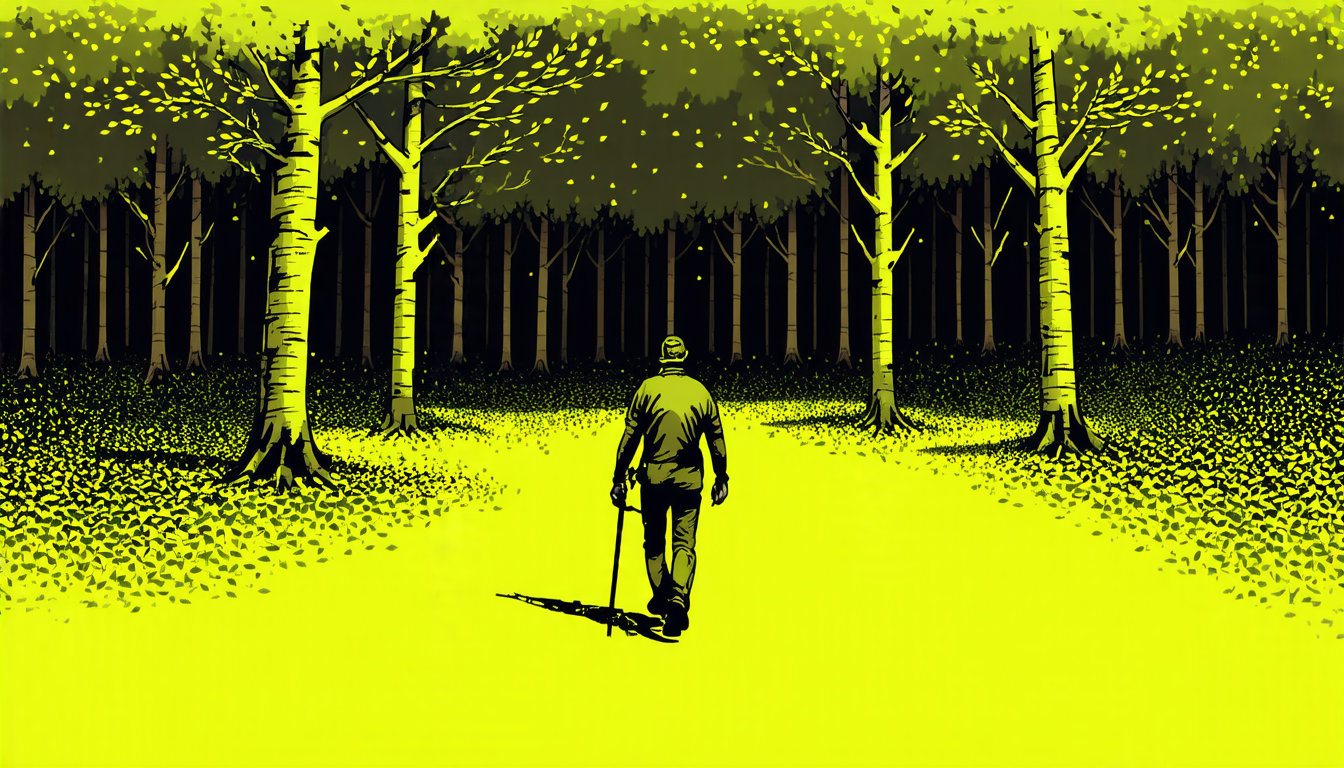
But what happens when these branching random walks take place in an environment that’s not fixed? For example, imagine a forest where the trees are randomly spaced, or a river that flows through a landscape with obstacles like rocks and sandbars. In this case, the particles have to navigate not just their own movements, but also the changing terrain.
Researchers have been studying branching random walks in random environments for some time now, but there’s still much to be learned. One of the biggest challenges is understanding how these processes behave over long periods of time. Do they tend to spread out and cover more ground, or do they get stuck in certain areas?
The new study has made significant progress in answering this question. By analyzing data from simulations of branching random walks in different environments, scientists were able to identify patterns that emerged over time. They found that the particles tended to move away from areas with high concentrations of obstacles, and towards areas where it was easier to move.
But here’s the really interesting part: the researchers also found that the environment itself played a crucial role in shaping the behavior of the particles. In other words, the way the particles moved wasn’t just determined by their own random movements, but also by the shape and layout of the environment they were moving through.
This has important implications for our understanding of how complex systems work. It suggests that even seemingly random processes can be influenced by the structure of the environment in which they occur. And it opens up new possibilities for studying similar phenomena in other fields, such as biology or economics.
So what does this all mean? In short, it means that we’re getting closer to understanding how complex systems work, and how the environment shapes the behavior of particles and organisms within them.
Cite this article: “Branching Random Walks in Random Environments: A New Study Reveals Surprising Insights”, The Science Archive, 2025.
Branching Random Walks, Random Environments, Particle Movement, Obstacles, Terrain, Simulations, Data Analysis, Patterns, Complex Systems, Environmental Influence
Reference: Mehmet Öz, “Strong law of large numbers for a branching random walk among Bernoulli traps” (2025).





