

Monday 10 March 2025
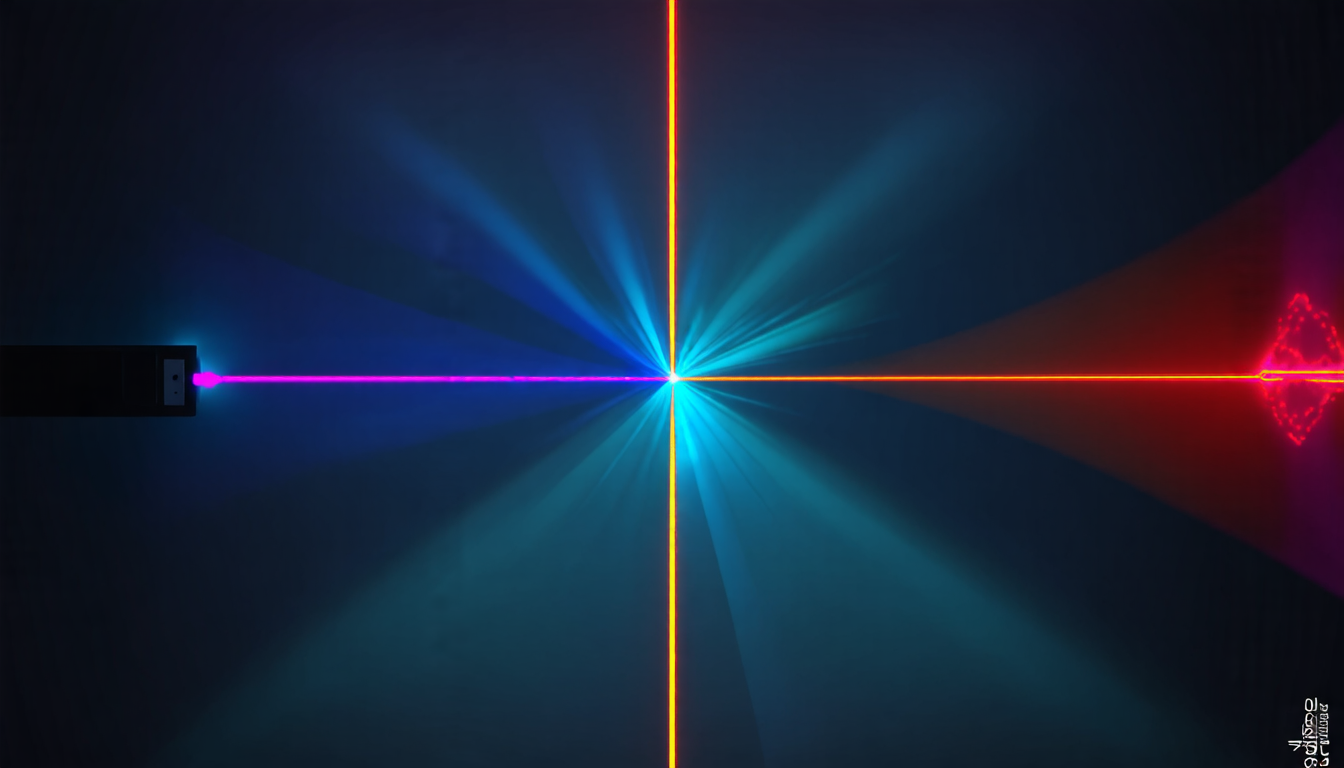
Physicists have long been fascinated by the properties of light, and in particular, the way it behaves when it passes through a beam splitter. This seemingly simple setup can produce some remarkable effects, including the ability to create a beam that is both coherent and incoherent at the same time.
In a recent paper, researchers from the University of Vienna have taken this concept a step further by demonstrating how to measure the power of individual modes within an optical beam. These modes are like different frequencies or harmonics that make up the overall light signal, and being able to quantify their contribution is crucial for understanding many phenomena in optics.
The team’s approach relies on measuring the beam quality parameter known as M2, which is a standard metric used to describe the spatial properties of laser beams. By analyzing the M2 values along two perpendicular axes, they were able to derive a set of equations that relate the power of each mode to the overall beam quality.
One of the key insights from this work is that it provides a way to estimate the power of the fundamental mode – the mode that is typically associated with the highest intensity and narrowest beam width. This is important because many optical systems rely on having a high-quality fundamental mode to function properly, such as in laser-based materials processing or optical communication systems.
The researchers also found that their method can be used to identify situations where the beam quality is degraded due to the presence of higher-order modes. These modes can cause problems by introducing additional noise and distortions into the beam, which can be particularly troublesome in applications where precision is critical.
To demonstrate the power of their approach, the team used a laser beam with a complex mode structure and measured its M2 values along two axes. They then used these measurements to estimate the power of each mode and found that their predictions were in excellent agreement with experimental results.
Overall, this work represents an important advance in our understanding of optical beams and has significant implications for many fields where light is used as a tool or medium. By providing a way to measure the power of individual modes within an optical beam, researchers can now better understand and control the behavior of light in complex systems, which will likely lead to new breakthroughs and innovations in areas such as optics, photonics, and materials science.
Cite this article: “Measuring the Power of Individual Modes in Optical Beams”, The Science Archive, 2025.
Optics, Photonics, Materials Science, Laser Beams, Beam Quality, M2 Parameter, Mode Structure, Optical Communication Systems, Laser-Based Materials Processing, Coherent And Incoherent Light





