

Monday 10 March 2025
Researchers have developed a new approach for identifying credit risks in supply chains, using Generative Adversarial Networks (GANs) to generate synthetic data that can help improve predictive accuracy.
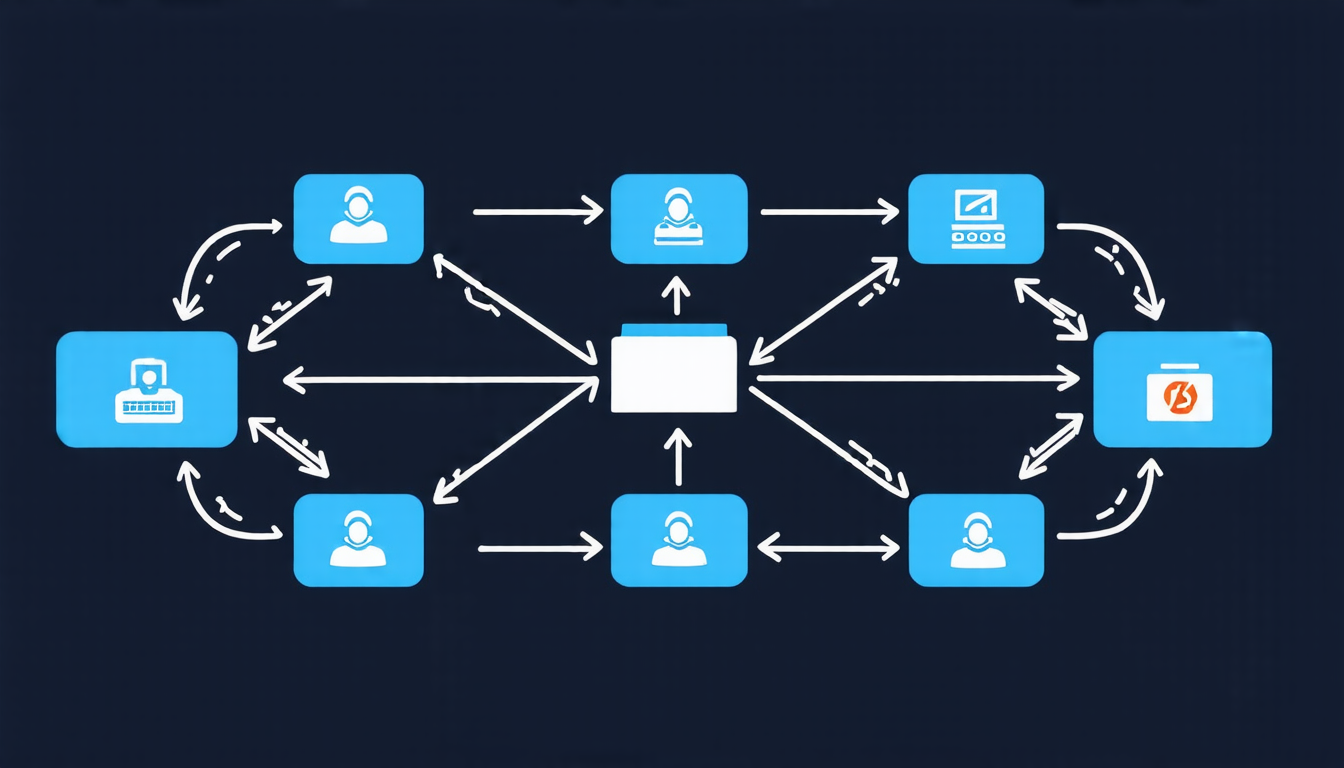
The study focuses on the complex task of assessing credit risk within supply chains, where companies often rely on limited and imbalanced datasets to make crucial decisions about lending and investment. Traditional methods for identifying credit risks tend to fall short in this context, as they’re often based on static features and fail to capture dynamic dependencies between suppliers, manufacturers, and distributors.
To address these limitations, the researchers turned to GANs, a type of deep learning algorithm that can generate new data by learning patterns from existing data. In this case, the GAN model was trained on real-world transaction data from three representative industries – manufacturing (steel), distribution (pharmaceuticals), and services (e-commerce) – to produce synthetic credit risk scenarios.
The generated data is designed to mimic the complexity of real-world transactions, including factors such as financial indicators, operational efficiency metrics, and contract status. By combining these synthetic data with traditional machine learning models, the researchers were able to improve predictive accuracy for credit risk assessment by up to 5% compared to using only real-world data.
The study highlights the potential benefits of GANs in supply chain finance, particularly in situations where historical data is limited or imbalanced. By generating high-quality synthetic data that can augment and diversify existing datasets, GANs can help improve the robustness and reliability of credit risk models.
Moreover, the approach demonstrates the feasibility of using AI-driven methods to analyze complex systems like supply chains, which involve multiple stakeholders, intricate relationships, and dynamic factors. The authors suggest that future research could integrate additional external factors such as macroeconomic indicators, market trends, and supplier relationship dynamics to further refine predictive capabilities.
The findings have significant implications for companies involved in supply chain finance, as they can now leverage AI-driven methods to better assess credit risks and make more informed decisions about lending and investment. The study also underscores the potential of GANs in various other applications where complex data is involved, such as fraud detection, financial forecasting, and risk assessment.
The approach has been tested on a dataset comprising real-world transaction data from three representative industries – manufacturing (steel), distribution (pharmaceuticals), and services (e-commerce).
Cite this article: “Enhancing Credit Risk Assessment in Supply Chains through Generative Adversarial Networks”, The Science Archive, 2025.
Credit Risk, Supply Chain Finance, Generative Adversarial Networks, Gans, Deep Learning, Machine Learning, Predictive Accuracy, Credit Risk Assessment, Synthetic Data, Ai-Driven Methods.





