

Monday 10 March 2025
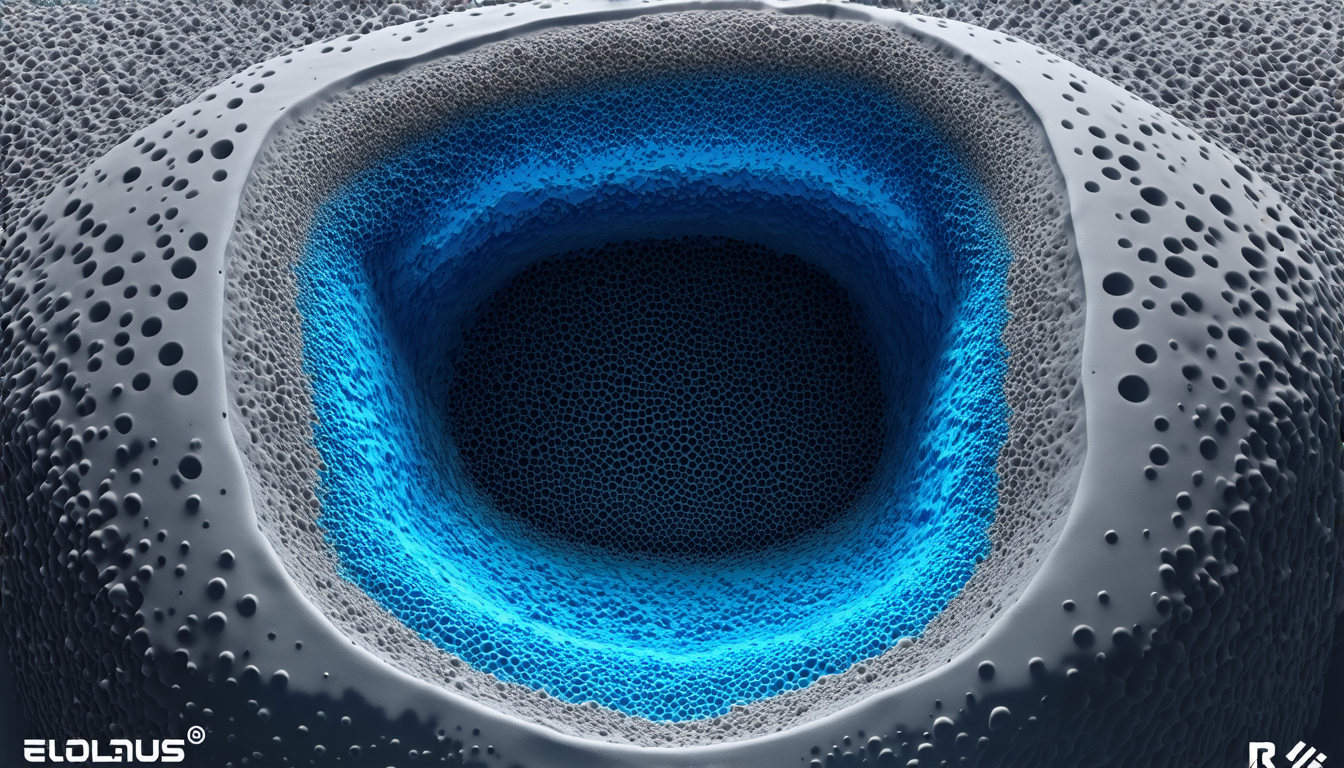
The field of materials science has long been plagued by a fundamental challenge: understanding how the internal structure of a material affects its mechanical properties. This is particularly important for porous materials, which are used in everything from construction to medical implants. However, the complex relationships between microstructure and strength have made it difficult to predict how these materials will behave under different conditions.
Recently, researchers have turned to deep learning to crack this nut. By using neural networks to analyze large datasets of material properties and internal structures, they’ve been able to develop models that can accurately predict a material’s behavior under various loads. But there’s still a major problem: most of these models are trained on large datasets of existing materials, which aren’t always representative of the complex microstructures found in real-world porous materials.
Enter the team from Duke University, who have developed a new approach to tackling this problem. By incorporating domain-specific knowledge – such as the physical laws governing material behavior – into their deep learning models, they’ve been able to improve predictive accuracy significantly.
The team’s approach involves using a combination of convolutional neural networks and recurrent neural networks to analyze stress-strain curves, which are used to predict microstructural properties like porosity and surface area. By incorporating domain-specific knowledge in the form of equations that describe the relationships between material properties and internal structures, they’ve been able to refine their models’ predictions and improve overall accuracy.
The results are impressive: when tested on a dataset of porous materials, the team’s model was able to accurately predict microstructural properties with an R2 score of 0.9 or higher – a significant improvement over traditional machine learning approaches.
But what does this mean for the field of materials science? For one thing, it opens up new possibilities for designing and optimizing porous materials for specific applications. By being able to accurately predict how these materials will behave under different conditions, researchers can develop more effective materials that are better suited to their intended use.
It also highlights the potential for deep learning to be used as a tool for understanding complex systems in general. By incorporating domain-specific knowledge into machine learning models, researchers may be able to develop more accurate and reliable predictions across a wide range of fields – from climate modeling to medical diagnosis.
Of course, there are still challenges ahead: scaling up this approach to larger datasets, for example, or developing new methods for incorporating domain-specific knowledge.
Cite this article: “Deep Learning Breakthrough in Materials Science Predicts Microstructural Properties with High Accuracy”, The Science Archive, 2025.
Materials Science, Deep Learning, Neural Networks, Porous Materials, Microstructure, Strength, Mechanical Properties, Domain-Specific Knowledge, Convolutional Neural Networks, Recurrent Neural Networks





