

Monday 10 March 2025
Scientists have long been fascinated by the mysteries of thermal conductivity, a phenomenon where heat flows through materials. Recently, researchers made a significant breakthrough in understanding this process by developing a non-contact method to measure it.
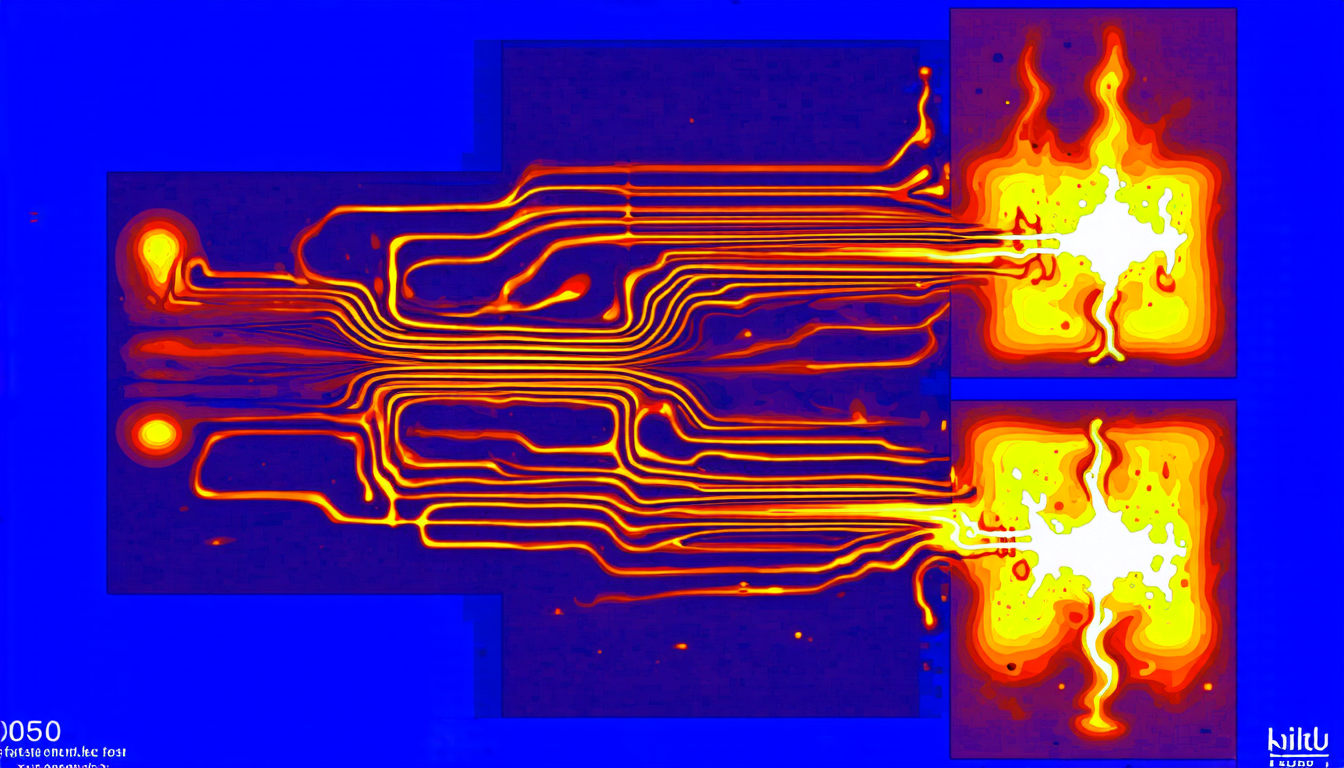
The technique involves using lock-in thermography (LIT), which uses a periodic magnetic field to modulate the temperature of a material. By analyzing the resulting thermal images, scientists can determine the thermal conductivity of the material without physically touching it.
To demonstrate the effectiveness of this method, researchers tested it on various ferromagnetic materials, including nickel and its alloys. The results showed that the technique was able to accurately measure the thermal conductivity of these materials, even when they were exposed to high temperatures or strong magnetic fields.
One of the key benefits of this method is its ability to non-invasively measure the thermal conductivity of materials in real-time. This could have significant implications for industries such as electronics and energy, where understanding thermal conductivity is crucial for designing efficient devices and systems.
For example, in electronic devices, thermal conductivity plays a critical role in determining how quickly they can dissipate heat. By using LIT to non-invasively measure the thermal conductivity of these devices, scientists could optimize their design and improve their performance.
Similarly, in energy systems, understanding thermal conductivity is essential for designing efficient energy conversion systems. LIT could be used to monitor the thermal conductivity of materials in real-time, allowing researchers to optimize the design of these systems and improve their efficiency.
In addition to its practical applications, this method also provides new insights into the fundamental physics of thermal conductivity. By studying the behavior of heat flow through different materials, scientists can gain a deeper understanding of the underlying mechanisms that govern this process.
Overall, the development of LIT is an exciting breakthrough in the field of thermal conductivity research. Its ability to non-invasively measure thermal conductivity in real-time has significant implications for industries and could lead to new insights into the fundamental physics of heat flow.
Cite this article: “Non-Invasive Measurement of Thermal Conductivity using Lock-In Thermography”, The Science Archive, 2025.
Thermal Conductivity, Lock-In Thermography, Non-Contact Method, Magnetic Field, Thermal Imaging, Ferromagnetic Materials, Nickel Alloys, Real-Time Measurement, Energy Systems, Electronics.





