

Monday 10 March 2025
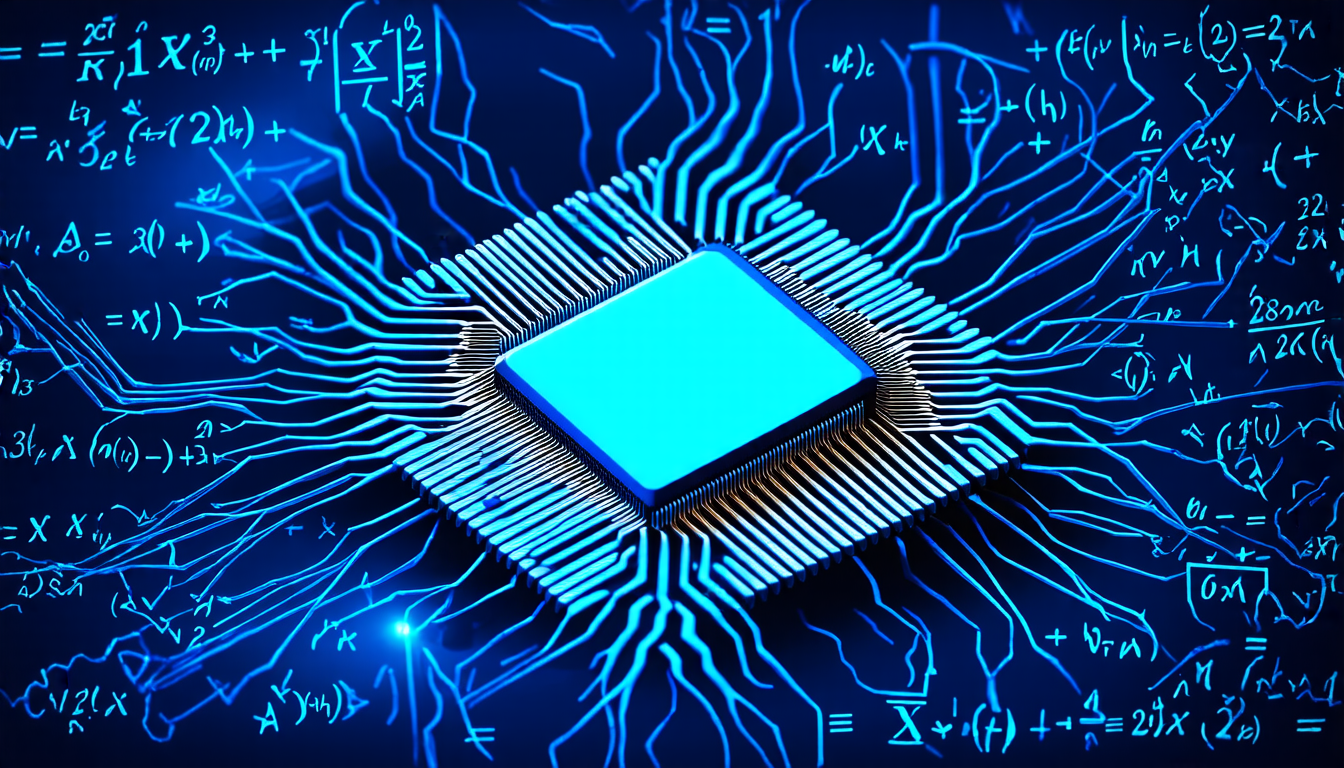
Scientists have long sought to harness the power of artificial intelligence to solve complex problems in fields like engineering and physics. Now, a team of researchers has made significant strides in this area by developing a new approach that uses neuromorphic computing to solve partial differential equations (PDEs).
For those who may not be familiar with PDEs, they are mathematical formulas used to model real-world phenomena such as heat transfer, fluid dynamics, and quantum mechanics. Solving these equations is crucial for simulating complex systems and making accurate predictions about their behavior.
Traditionally, solving PDEs requires powerful computers and sophisticated algorithms. However, the team behind this new approach has demonstrated that a neuromorphic chip can be used to solve PDEs with remarkable efficiency and accuracy.
Neuromorphic chips are designed to mimic the structure and function of the human brain. They are composed of interconnected neurons that communicate with each other through electrical impulses, or spikes. This unique architecture allows them to process information in a way that is both fast and energy-efficient.
In this study, the researchers used a neuromorphic chip called Loihi 2 to solve PDEs related to linear elasticity, which describes how materials deform when subjected to stress. They mapped the sparse interactions between neighboring finite elements to small populations of neurons on the chip, allowing them to dynamically update according to the governing physics of the problem.
The results were impressive: the neuromorphic chip was able to achieve comparable levels of numerical accuracy and scaling while using significantly less energy than traditional computers. For example, solving a PDE with 1000 mesh nodes required only about 50 millijoules of energy on the Loihi 2 chip, compared to over 20 joules for a conventional CPU.
The researchers also demonstrated that their approach can be extended to more complex problems involving nontrivial mesh geometries and dynamics. They showed that the neuromorphic chip can handle systems with thousands of nodes, making it a promising tool for solving large-scale PDEs in fields like materials science and engineering.
One of the key advantages of this approach is its ability to scale efficiently as the size of the problem increases. Traditional computers often struggle to solve large-scale PDEs due to limitations in memory and processing power. In contrast, neuromorphic chips can be easily parallelized, allowing them to take advantage of their distributed architecture to solve larger problems.
The implications of this research are significant.
Cite this article: “Neuromorphic Computing Breakthrough Solves Complex Partial Differential Equations with Efficiency and Accuracy”, The Science Archive, 2025.
Artificial Intelligence, Neuromorphic Computing, Partial Differential Equations, Pdes, Engineering, Physics, Materials Science, Computer Architecture, Numerical Accuracy, Energy Efficiency.





