

Monday 10 March 2025
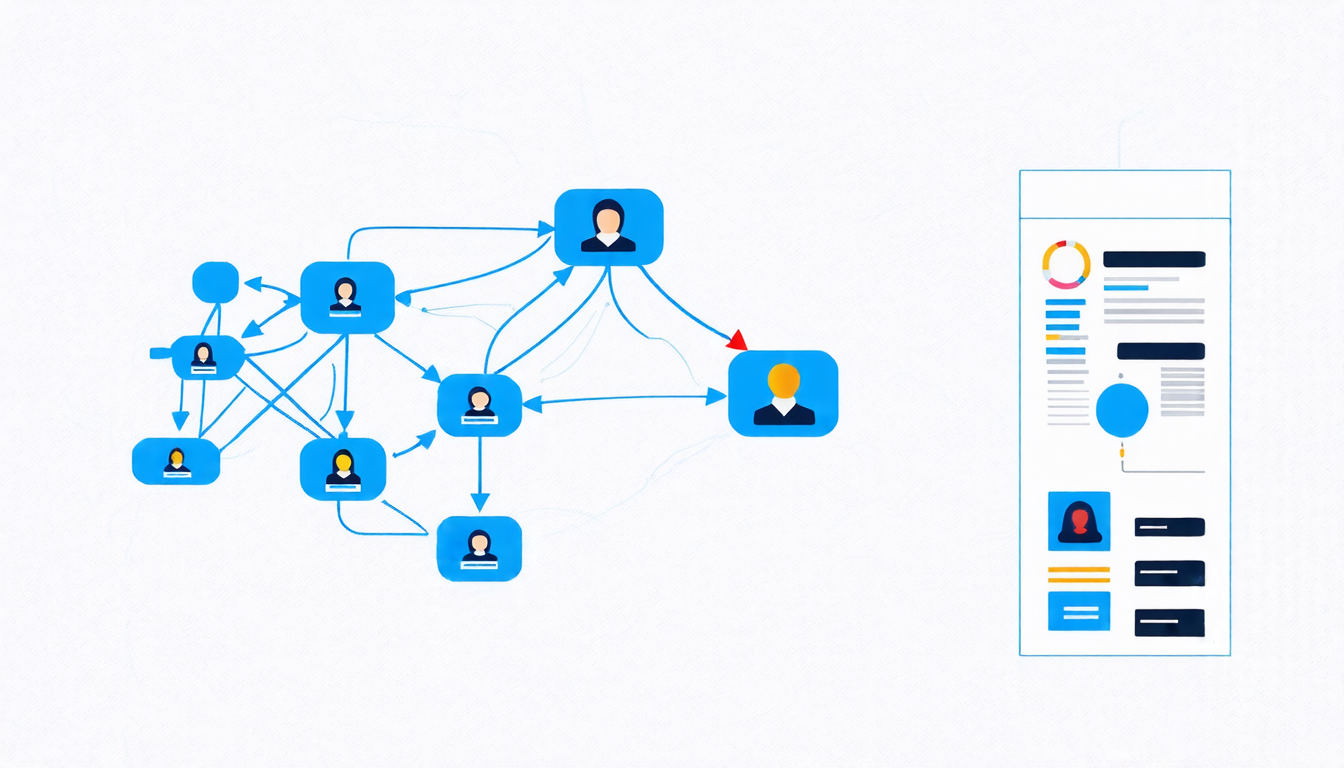
A new approach to streamlining business processes has been developed, one that uses artificial intelligence and data augmentation techniques to optimize decision-making. The method, known as Fine-Tuned Offline Reinforcement Learning Augmented Process Sequence Optimization (FORLAPS), aims to identify the most efficient paths through complex workflows.
The challenge in optimizing these processes lies in the sheer volume of data involved, which can be overwhelming for traditional machine learning models. FORLAPS addresses this by using a combination of offline reinforcement learning and fine-tuning techniques to improve performance.
Offline reinforcement learning is a type of AI that learns from historical data without interacting with its environment. This approach has been shown to be effective in situations where real-time feedback is not available or desirable. Fine-tuning involves adjusting the model’s parameters based on new information, allowing it to adapt to changing circumstances.
In the case of FORLAPS, offline reinforcement learning is used to identify patterns and relationships within the data. The model then learns to predict the best course of action given a set of inputs. Fine-tuning is applied by augmenting the dataset with additional information, such as simulated scenarios or hypothetical outcomes.
The result is a more accurate and robust model that can adapt to changing circumstances and make better decisions in real-time. This approach has been tested on several public datasets and an additional case study, demonstrating its effectiveness in a range of business process optimization scenarios.
One of the key benefits of FORLAPS is its ability to handle large volumes of data efficiently. By using offline reinforcement learning, the model can learn from historical data without requiring real-time feedback or extensive computational resources. This makes it well-suited for applications where data is limited or expensive to collect.
Another advantage of FORLAPS is its flexibility. The fine-tuning process allows the model to adapt to changing circumstances and new information, making it more effective in dynamic environments. This adaptability also enables the model to be applied to a wide range of business processes, from simple workflows to complex systems.
The potential applications of FORLAPS are vast. By optimizing decision-making processes, businesses can improve efficiency, reduce costs, and enhance customer satisfaction. The approach could also be used in healthcare, finance, and other industries where accurate predictions and informed decisions are critical.
As AI continues to play an increasingly important role in business operations, the development of innovative approaches like FORLAPS is essential for driving progress and improving outcomes.
Cite this article: “Optimizing Business Processes with Artificial Intelligence: Introducing Fine-Tuned Offline Reinforcement Learning Augmented Process Sequence Optimization (FORLAPS)”, The Science Archive, 2025.
Artificial Intelligence, Business Process Optimization, Reinforcement Learning, Data Augmentation, Offline Learning, Fine-Tuning, Decision-Making, Workflow Efficiency, Process Automation, Predictive Analytics





