

Monday 10 March 2025
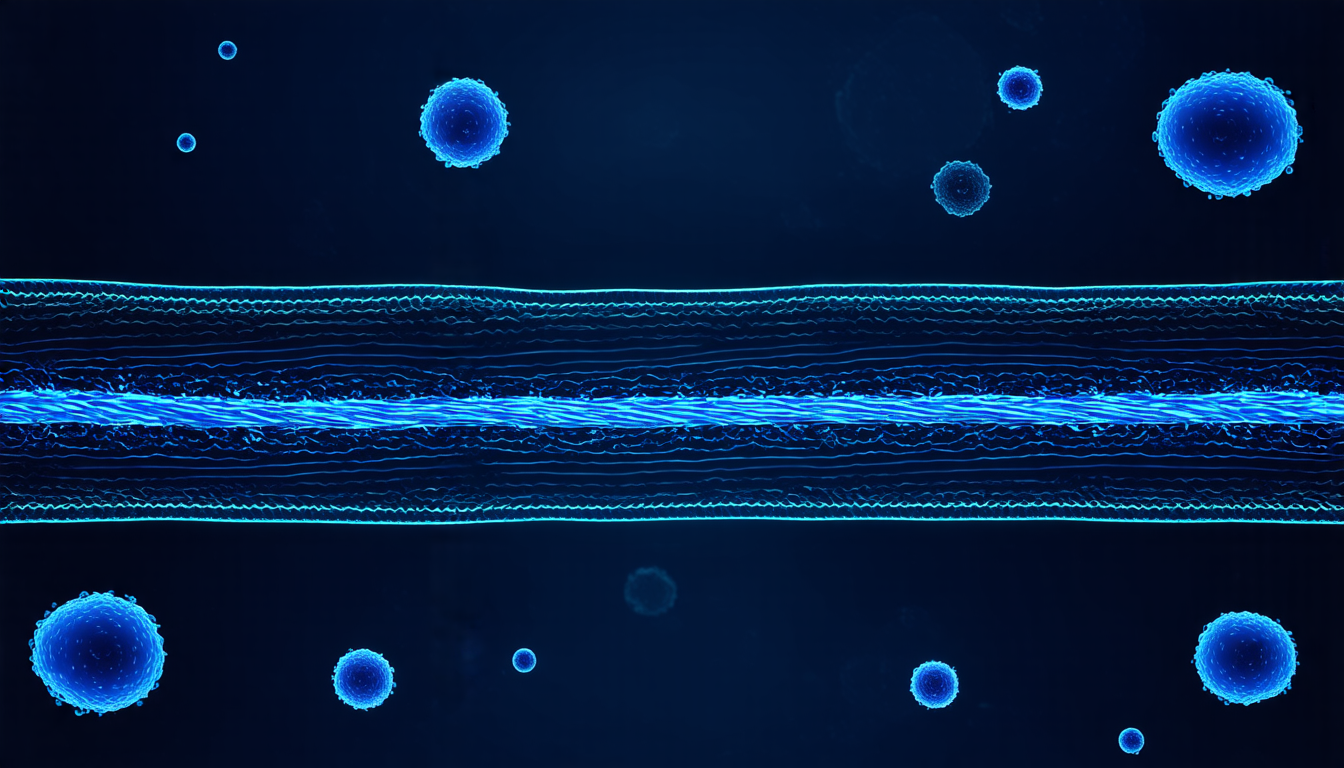
Researchers have made a significant breakthrough in understanding the dynamics of microtubules, the building blocks of cells that play a crucial role in maintaining their shape and structure. Microtubules are long, thin cylinders composed of tubulin proteins that are dynamic, constantly growing and shrinking as they interact with other cellular components.
Scientists have long been fascinated by the complex behavior of microtubules, which is essential for the proper functioning of cells. However, understanding this behavior has proven to be a challenging task due to the intricate interactions between microtubules and other cellular components.
In recent years, researchers have made significant progress in modeling the dynamics of microtubules using mathematical equations. One such model, known as the u-model, has been particularly successful in capturing the complex behavior of microtubules. The model assumes that the tubulin proteins are electric dipoles, which interact with each other to form a ferroelectric crystal lattice.
Using this model, researchers have discovered three types of solitonic waves that can propagate along microtubules: kink solitons, breathers and bell-type solitons. These waves are stable structures that can maintain their shape and velocity even as they interact with other cellular components.
Kink solitons are particularly interesting because they can change the orientation of the tubulin proteins as they move along the microtubule. This means that kink solitons could potentially be used to transmit information along microtubules, which would have significant implications for our understanding of cell biology and potentially even consciousness.
Breathers, on the other hand, are localized modulated waves that can maintain their shape and velocity over long distances. These waves could play a crucial role in maintaining the structure and function of cells by regulating the interactions between microtubules and other cellular components.
The discovery of these solitonic waves is a significant breakthrough because it provides new insights into the complex behavior of microtubules. It also opens up new avenues for research, including the potential use of kink solitons to transmit information along microtubules.
In the future, researchers will be able to use this knowledge to better understand the dynamics of microtubules and their role in maintaining cell structure and function. This could have significant implications for our understanding of cell biology and potentially even consciousness.
Cite this article: “Unlocking the Secrets of Microtubule Dynamics”, The Science Archive, 2025.
Microtubules, Cell Biology, Solitons, Tubulin Proteins, Ferroelectric Crystal Lattice, U-Model, Kink Solitons, Breathers, Bell-Type Solitons, Consciousness
Reference: Slobodan Zdravković, “Microtubules: dynamics, soliton waves, some roles in the cell” (2025).





