

Monday 10 March 2025
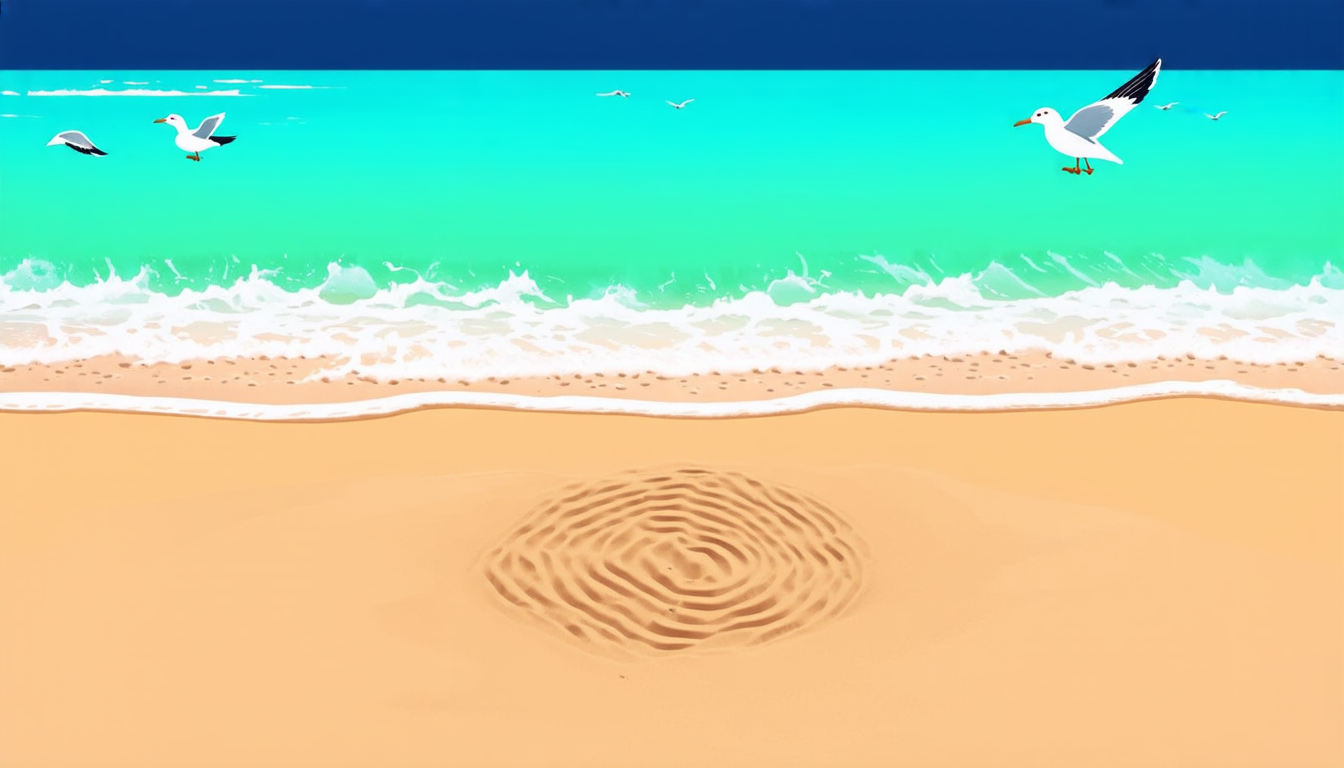
Scientists have long been fascinated by the way sand and dust move across the surface of our planet. From majestic dunes that stretch as far as the eye can see to tiny ripples that form on a quiet beach, these natural wonders are shaped by the wind and water that surrounds us.
But despite their beauty, these movements are also crucial for shaping our environment. Sand and dust can affect everything from climate patterns to human health, and understanding how they move is key to predicting and mitigating these impacts.
Recently, researchers have made a major breakthrough in understanding how sand and dust move across the surface of the Earth. Using advanced computer simulations and wind tunnel experiments, scientists were able to create artificial ripples on a bed of fine-grained sand and study their behavior in detail.
What they found was remarkable. The ripples grew and evolved over time, forming complex patterns that were unlike anything seen before. But what’s more, the researchers discovered that these ripples are not just random movements – they are actually driven by the interaction between the wind and the sand itself.
The key to this discovery was a new model of how the sand moves under the influence of the wind. This model takes into account the way that the sand grains interact with each other, as well as the way that the wind blows across the surface. By simulating these interactions on a computer, the researchers were able to predict exactly how the ripples would form and evolve over time.
The results are astonishing. The simulations show that the ripples can grow to be tens of centimeters high, with wavelengths stretching for meters across the sand. And what’s more, the researchers found that these ripples are not just limited to sandy beaches – they can also occur on rocky outcrops and even in deserts.
But why is this important? The answer lies in the way that these ripples affect our environment. By studying how they form and evolve, scientists can gain a better understanding of how sand and dust move across the surface of the Earth. This knowledge can be used to predict and mitigate the impacts of climate change, as well as to improve our understanding of natural disasters such as dust storms.
The researchers’ findings also have implications for our daily lives. For example, by studying how ripples form on beaches, scientists can better understand how to predict and prepare for coastal erosion. And in areas where dust is a major problem, understanding how it moves across the surface could help policymakers develop more effective strategies for reducing its impact.
Cite this article: “Ripples of Change: Scientists Uncover Secrets of Sand and Dust Movement”, The Science Archive, 2025.
Wind, Sand, Dust, Ripples, Climate Change, Natural Disasters, Erosion, Environment, Simulation, Computer Modeling





