
Monday 10 March 2025
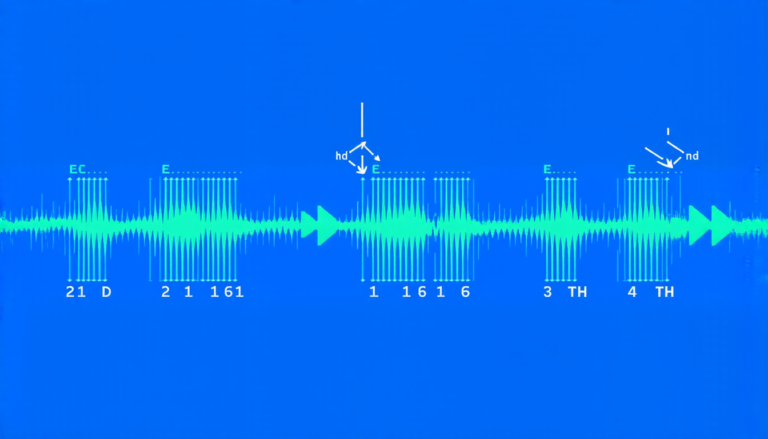
The world of data analysis is about to get a whole lot smarter, thanks to a team of researchers who have developed a new approach to modeling complex time series data. Time series data refers to the collection of measurements taken at regular intervals over a period of time – think stock prices, weather patterns, or traffic flow. Traditionally, analyzing these types of data has been a challenge, as they often exhibit complex patterns and behaviors that are difficult to capture using traditional statistical models.
The researchers’ new approach, known as softplus neural network-based INGARCH (sp NB-INGARCH) models, uses a combination of machine learning techniques and advanced mathematical modeling to better capture the intricacies of time series data. The key innovation is the use of softplus functions, which are a type of smooth and continuous function that can be used to model complex relationships between variables.
The team tested their new approach on several real-world datasets, including one related to emergency department (ED) arrivals at a hospital. They found that the sp NB-INGARCH models outperformed traditional methods in terms of accuracy and ability to capture patterns in the data. The researchers also demonstrated the flexibility of their approach by applying it to different types of time series data, including financial markets and traffic flow.
One of the key benefits of the new approach is its ability to handle overdispersion, a common problem in time series analysis where the variance exceeds the mean. Traditional models often struggle with this issue, leading to inaccurate predictions and poor performance. The sp NB-INGARCH models, on the other hand, are designed to explicitly account for overdispersion, making them more robust and reliable.
The potential applications of this technology are vast. For example, healthcare providers could use it to better predict patient arrivals at emergency departments, allowing them to staff accordingly and reduce wait times. Similarly, financial analysts could use it to improve their predictions of stock prices and portfolio risk. Traffic flow managers could use it to optimize traffic signal timing and reduce congestion.
The researchers are also exploring the use of their approach in other areas, such as climate modeling and natural language processing. With its ability to capture complex patterns and behaviors in time series data, this technology has the potential to revolutionize a wide range of fields and industries.
Cite this article: “Revolutionizing Time Series Analysis with Softplus Neural Network- Based INGARCH Models”, The Science Archive, 2025.
Time Series Data, Machine Learning, Neural Networks, Softplus Functions, Mathematical Modeling, Time Series Analysis, Overdispersion, Healthcare, Finance, Traffic Flow