
Monday 10 March 2025
The quest for efficient spatial modeling just got a whole lot easier. Researchers have developed a new approach that can drastically reduce the computational costs associated with analyzing large datasets, making it possible to model complex phenomena on an unprecedented scale.
At the heart of this innovation is the clustered nearest neighbor Gaussian process (cNNGP), a clever algorithm that leverages spatial patterns in data to group similar covariance matrices together. This clustering step allows for significant reductions in both computational time and storage requirements, making the cNNGP an attractive solution for researchers working with massive datasets.
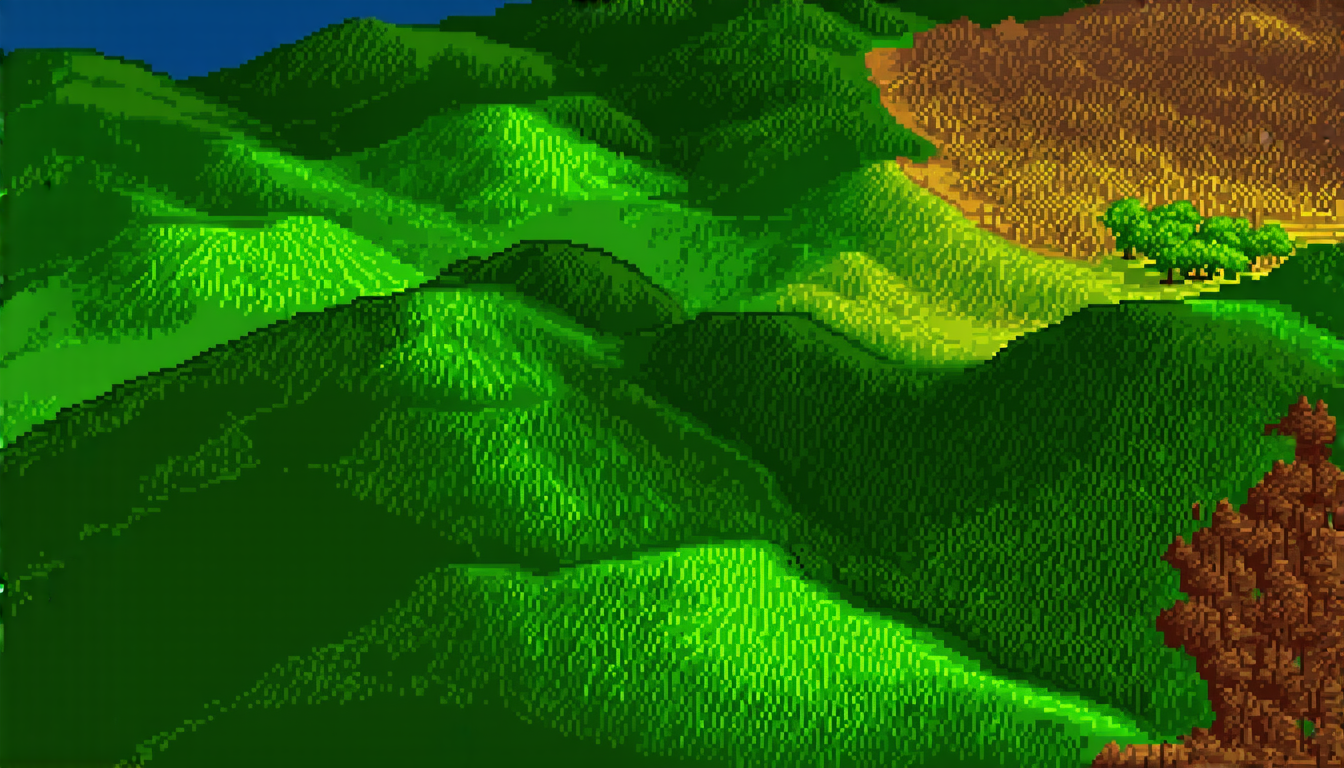
To demonstrate the effectiveness of this approach, scientists used the cNNGP to model biomass distribution across the state of Maine using data from NASA’s GEDI (Global Ecosystem Dynamics Investigation) project. This ambitious endeavor involved analyzing over 86,000 pixels of data, covering a vast area of approximately 35,000 square kilometers.
The results were nothing short of impressive. The cNNGP not only provided estimates comparable to those obtained with the full nearest neighbor Gaussian process (NNGP), but also did so in a fraction of the time. In fact, the cNNGP required just 16% of the computational resources needed for the NNGP, making it an attractive solution for researchers working with limited computing power or tight deadlines.
But what exactly is a Gaussian process? Simply put, it’s a statistical model that describes complex phenomena in terms of random functions. In the context of spatial modeling, Gaussian processes are particularly useful for capturing patterns and relationships between distant locations. However, their computational cost can be prohibitively high, especially when dealing with massive datasets.
The cNNGP addresses this issue by cleverly exploiting the spatial structure of the data. By grouping similar covariance matrices together, the algorithm reduces the number of calculations required to estimate model parameters. This clustering step is made possible by a technique called leader clustering, which identifies and groups clusters based on their proximity to each other.
The implications of this innovation are far-reaching. With the cNNGP, researchers can now tackle complex spatial modeling problems that were previously out of reach due to computational constraints. This has significant potential for applications in fields such as ecology, climate science, and epidemiology, where understanding spatial patterns is crucial for making accurate predictions.
While the cNNGP is not a panacea for all spatial modeling challenges, it represents a significant step forward in the quest for efficient and effective data analysis.
Cite this article: “Unlocking Efficient Spatial Modeling with Clustered Nearest Neighbor Gaussian Processes”, The Science Archive, 2025.
Spatial Modeling, Gaussian Process, Nearest Neighbor, Computational Costs, Big Data, Nasa, Gedi, Ecology, Climate Science, Epidemiology, Leader Clustering