

Monday 10 March 2025
The quest for a more intelligent AI has long been a Holy Grail of sorts for computer scientists and engineers. One major hurdle in achieving this goal is the ability to understand complex physical systems, such as those found in electrical circuits or mechanical devices. While humans can intuitively grasp these concepts with ease, our artificial intelligence counterparts have struggled to do so.
Recently, a team of researchers has made significant strides in addressing this challenge by developing a new framework that combines visual understanding, physical knowledge, and simulation-based reasoning. The result is an AI system capable of accurately analyzing complex physical systems, a major breakthrough in the field.
The key innovation lies in the way the AI system, called MAPS (Multi-Modal Scientific Reasoning with Physics Perception and Simulation), approaches problem-solving. Traditional AI models rely solely on text-based inputs to analyze problems, but this approach often falls short when dealing with complex physical systems. By incorporating visual understanding through image recognition and simulation-based reasoning, MAPS is able to better comprehend the intricacies of these systems.
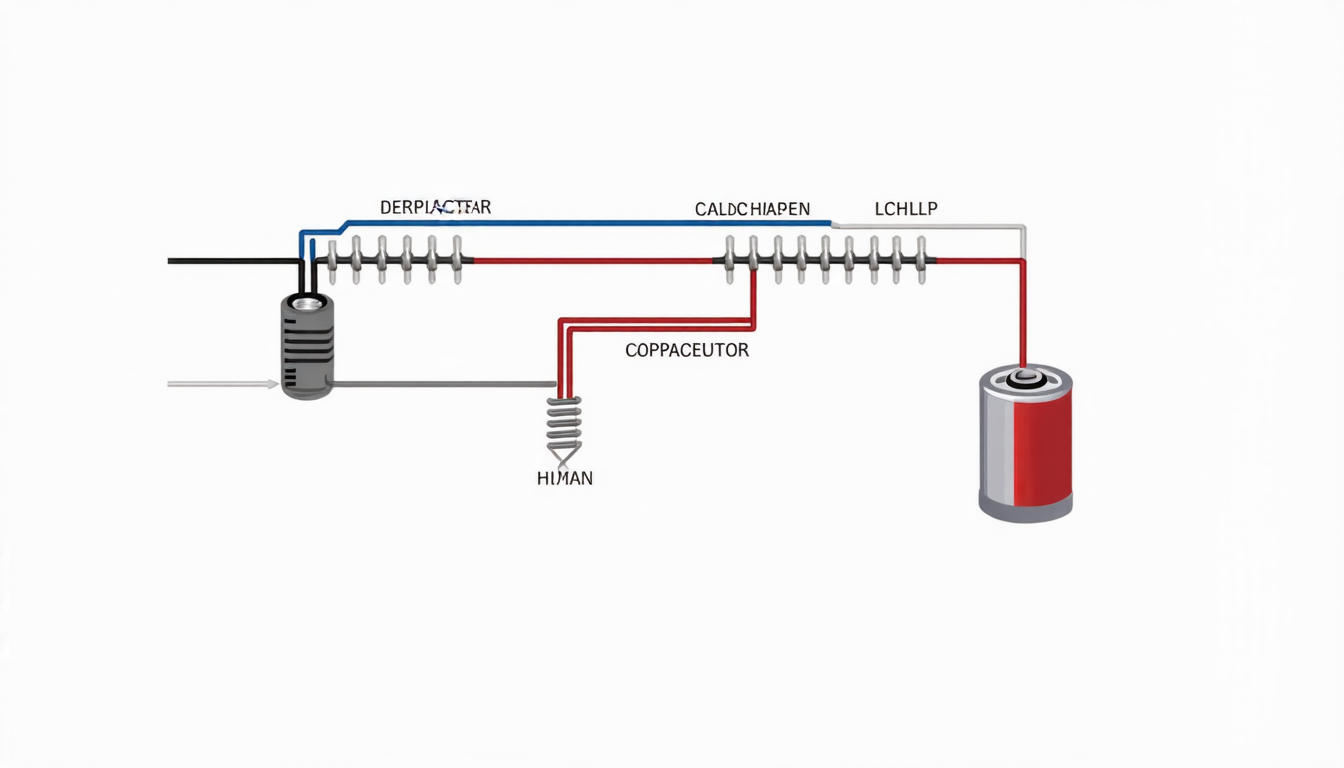
The system begins by using a visual perception model, PPM (Physics Perception Model), to analyze an input diagram, such as a circuit layout or mechanical device. The PPM is trained on synthetic data that mimics real-world diagrams, allowing it to learn the patterns and structures associated with physical systems.
Once the PPM has identified the components and relationships within the diagram, MAPS uses simulation-based reasoning to generate a simulation language description (SLD) of the system. This SLD serves as a blueprint for the AI’s subsequent analysis.
The final step is Simulation-Aided Reasoning (SAR), where the AI uses the SLD to perform calculations and infer answers to complex questions about the physical system. This process is remarkably effective, allowing MAPS to accurately analyze systems that would have previously stumped traditional AI models.
One notable example of MAPS’ capabilities is its ability to correctly identify and solve problems involving electrical circuits. In a series of experiments, researchers found that MAPS was able to accurately analyze complex circuit diagrams and generate precise solutions, even in cases where human engineers might struggle.
The implications of this breakthrough are significant. As AI continues to play an increasingly important role in fields such as engineering, medicine, and finance, the ability to accurately understand and analyze complex physical systems will be crucial.
MAPS is not without its limitations, however. The system still struggles with errors in simulation description conversion and hallucination during the SAR step.
Cite this article: “Artificial Intelligence Breakthrough: Accurate Analysis of Complex Physical Systems”, The Science Archive, 2025.
Here Are The Relevant Keywords: Artificial Intelligence, Physical Systems, Maps, Multi-Modal Scientific Reasoning, Physics Perception Model, Simulation-Based Reasoning, Simulation-Aided Reasoning, Electrical Circuits, Complex Problems, Ai Development





