
Tuesday 11 March 2025
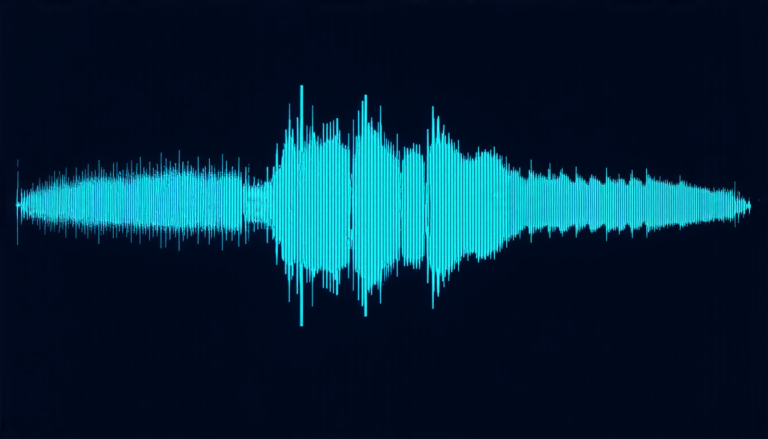
Scientists have made a significant breakthrough in the field of computational imaging, developing a new method that can reconstruct signals with unprecedented accuracy even when faced with incomplete or noisy data.
The traditional approach to signal reconstruction involves using linear sensors and algorithms to capture and process information. However, this method has its limitations, particularly when dealing with complex systems where the relationship between the sensor and the signal is non-linear.
To overcome these challenges, researchers have turned to machine learning techniques, such as neural networks, which can learn patterns in data and make predictions based on that knowledge. One of the most promising approaches in this area is known as knowledge distillation, where a well-performing model is used to train a less complex model, effectively transferring its knowledge.
In the latest development, scientists have applied this concept to signal reconstruction, using a technique called unrolling networks. These networks are designed to mimic the process of signal reconstruction, with each layer representing a step in the processing and recovery of the signal.
The key innovation is the inclusion of a teacher model, which provides guidance to the student model as it learns to reconstruct the signal. The teacher model has access to complete or almost complete information about the sensing operator, allowing it to provide accurate feedback to the student model.
In experiments, the team used the new method to reconstruct signals in two different applications: single-pixel imaging and multiple-input multiple-output (MIMO) detection. In both cases, the results were impressive, with the reconstructed signals showing significant improvements over traditional methods.
One of the most striking findings was the ability of the method to recover signals even when faced with incomplete or noisy data. This is particularly important in real-world applications, where sensors may be prone to errors or malfunctioning.
The researchers believe that their approach has the potential to revolutionize the field of computational imaging, enabling the development of new systems and applications that were previously impossible. As they continue to refine their technique, it’s likely that we’ll see even more innovative uses for this technology in the future.
One of the most exciting aspects of this research is its potential to improve our understanding of complex systems and phenomena. By developing more accurate methods for signal reconstruction, scientists may be able to better understand and analyze data from a wide range of fields, from medicine to environmental science.
As the researchers continue to push the boundaries of what’s possible with computational imaging, it will be fascinating to see where this technology takes us next.
Cite this article: “Breakthrough in Signal Reconstruction Enables Accurate Data Recovery from Noisy and Incomplete Information”, The Science Archive, 2025.
Signal Reconstruction, Computational Imaging, Machine Learning, Neural Networks, Knowledge Distillation, Unrolling Networks, Teacher Model, Student Model, Sensing Operator, Mimo Detection.