

Tuesday 11 March 2025
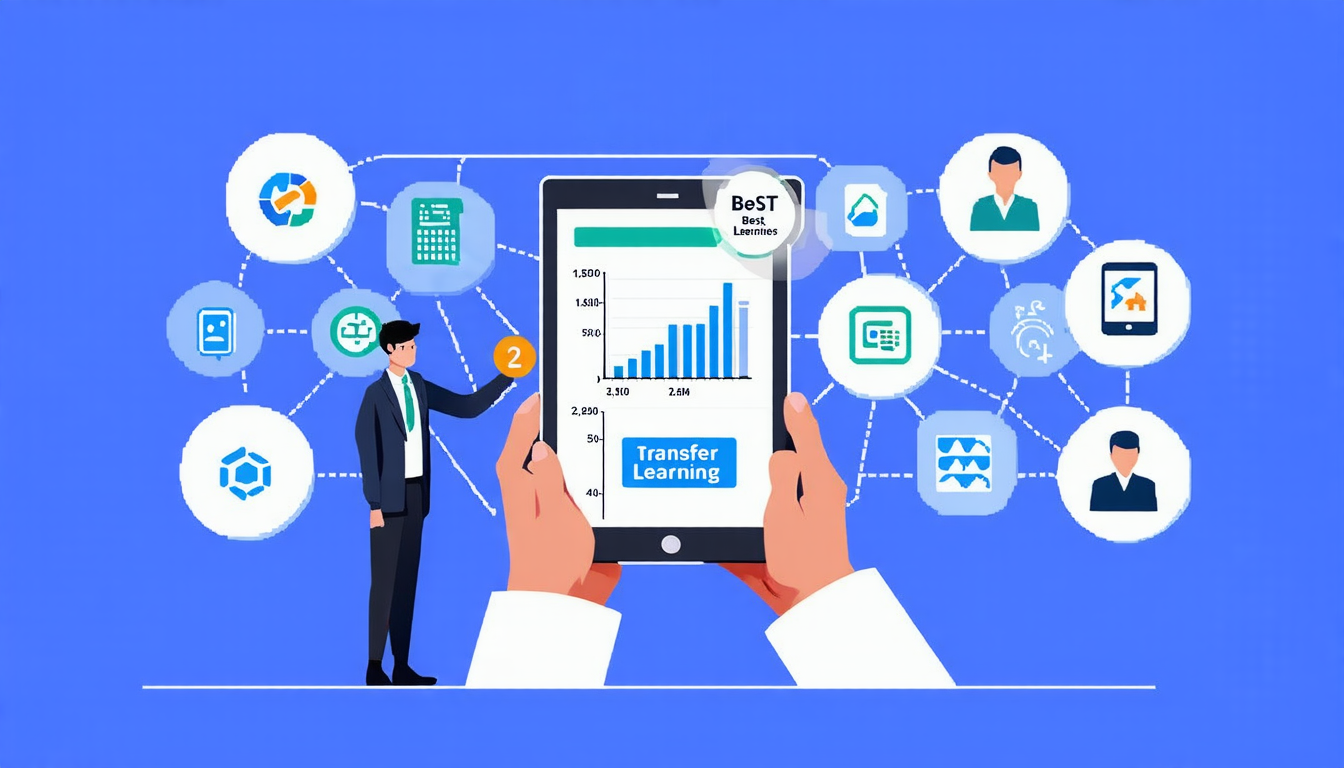
Scientists have made a significant breakthrough in the field of artificial intelligence, developing a novel method for selecting the most suitable pre-trained models for transfer learning tasks. Transfer learning is a technique where a model trained on one task is used as a starting point for another related task, often resulting in faster and more accurate training times.
The new approach, dubbed BeST (Best Source Selection Task), uses an innovative quantization-level optimization procedure to measure the similarity between pre-trained models and target data. This allows the method to quickly identify the most transferable sources without having to retrain them from scratch.
To demonstrate the effectiveness of BeST, researchers conducted extensive experiments using various datasets, including MNIST, CIFAR10, and Imagenette. In each case, they used a range of pre-trained models as potential sources for transfer learning tasks. The results showed that BeST consistently outperformed traditional methods in selecting the best source model for a given target task.
One of the key advantages of BeST is its ability to handle large numbers of candidate sources and target tasks efficiently. This is particularly important in modern AI applications, where data volume and complexity are increasing rapidly. The method’s speed and scalability make it an attractive solution for industries such as healthcare, finance, and technology, where rapid development and deployment of AI models are crucial.
BeST also offers significant time savings compared to traditional methods. By using pre-trained models and calculating the similarity metric in a fraction of the time required to train a new model from scratch, developers can accelerate their projects and reduce costs. This is especially important for industries with tight project timelines or limited resources.
The researchers used 5 different random seeds to initialize the source model, demonstrating that their results are not sensitive to particular network initialization parameters. This adds an extra layer of reliability to BeST, ensuring that it can be applied consistently across various AI applications.
In addition to its technical merits, BeST has practical implications for developers and organizations. By providing a reliable method for selecting the best pre-trained models, BeST can help reduce the complexity and uncertainty associated with transfer learning tasks. This can lead to faster development times, improved model performance, and reduced costs.
The potential applications of BeST are vast, from natural language processing and computer vision to reinforcement learning and generative models. As AI continues to evolve at an unprecedented pace, methods like BeST will play a crucial role in unlocking its full potential.
Cite this article: “Breakthrough Method for Selecting Pre-Trained Models in Transfer Learning Tasks”, The Science Archive, 2025.
Artificial Intelligence, Transfer Learning, Pre-Trained Models, Best, Best Source Selection Task, Quantization-Level Optimization, Similarity Metric, Mnist, Cifar10, Imagenette, Natural Language Processing.





