

Tuesday 11 March 2025
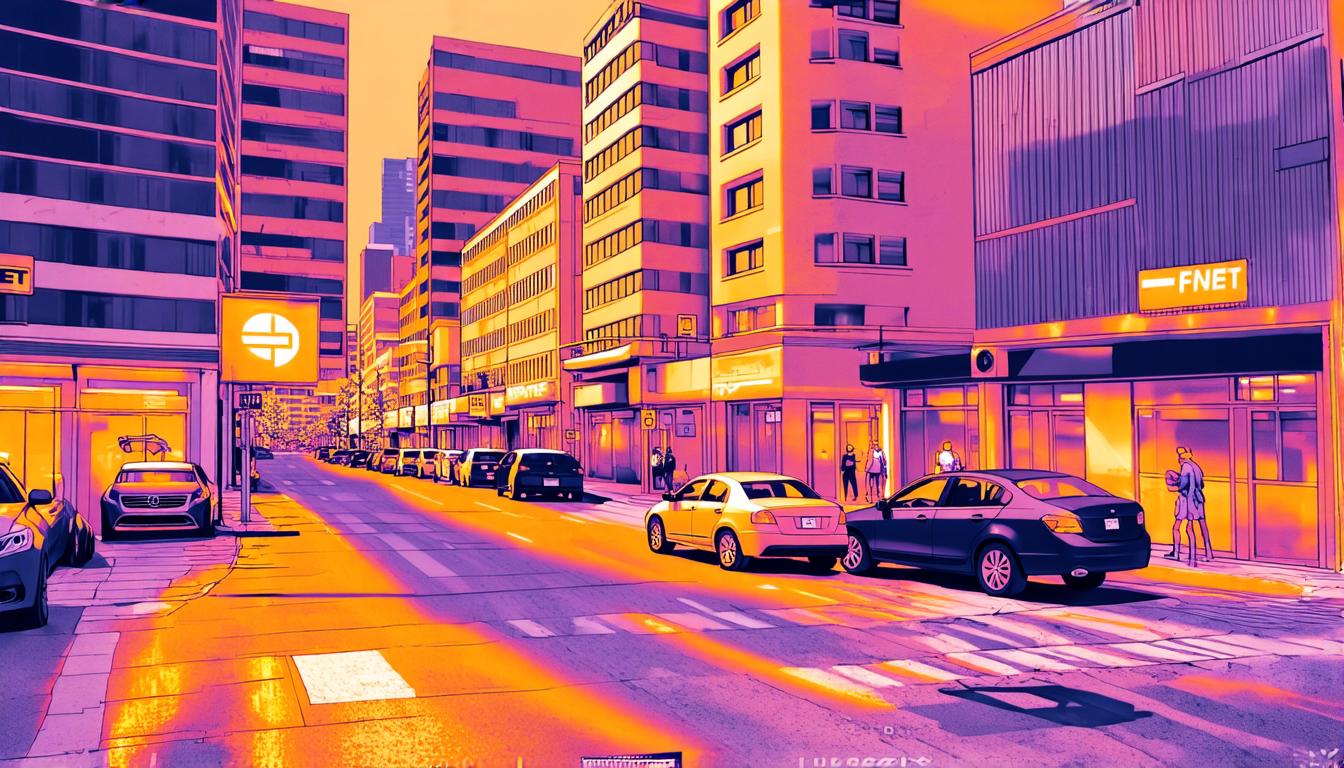
A team of researchers has made a significant breakthrough in the field of computer vision, developing a new method for fusing data from different sensors and modalities to improve semantic segmentation. The technique, dubbed EFNet, uses an early fusion strategy combined with a simple yet effective feature clustering sampling method to achieve efficient RGB-T (red, green, blue – thermal) semantic segmentation.
The goal of this research is to develop a system that can accurately identify objects in complex environments, such as urban scenes, using data from multiple sensors. This has important implications for applications such as autonomous vehicles, surveillance systems, and robotics.
Traditionally, computer vision algorithms have relied on single-modal sensor data, such as RGB images or thermal images. However, these approaches often struggle to effectively handle complex scenes with multiple objects and varying lighting conditions. By incorporating data from multiple sensors, researchers hope to improve the accuracy and robustness of semantic segmentation algorithms.
EFNet’s early fusion strategy involves combining features extracted from different modalities at an early stage in the processing pipeline. This allows the algorithm to learn rich feature representations that capture both spatial and semantic information. The feature clustering sampling method is then used to select a subset of the most informative features, reducing the computational burden and improving the efficiency of the algorithm.
The researchers evaluated EFNet on three public datasets: MFNet, FMB, and PST900. The results showed that EFNet outperformed state-of-the-art methods in terms of accuracy and efficiency, with significant reductions in both parameter count and computational effort.
One of the key advantages of EFNet is its ability to adapt to different sensor modalities and environments. By incorporating data from multiple sensors, the algorithm can learn to recognize objects and scenes that may not be well-represented by a single modality. This makes it particularly useful for applications such as autonomous vehicles, where the system must be able to handle a wide range of scenarios and conditions.
The researchers also explored the use of different decoders in EFNet, finding that a lightweight multi-scale feature aggregation decoder based on Euclidean distance performed best. This decoder uses a simple yet effective approach to aggregate features from different scales and modalities, resulting in improved segmentation accuracy.
Overall, the development of EFNet represents an important step forward in the field of computer vision. The algorithm’s ability to efficiently fuse data from multiple sensors and modalities makes it well-suited for a wide range of applications, from autonomous vehicles to surveillance systems.
Cite this article: “EFNet: A Novel Method for Efficient RGB-T Semantic Segmentation”, The Science Archive, 2025.
Computer Vision, Semantic Segmentation, Rgb-Thermal, Efnet, Early Fusion, Feature Clustering Sampling, Multi-Modal Sensor Data, Autonomous Vehicles, Surveillance Systems, Robotics.





