

Tuesday 11 March 2025
Scientists have long been searching for evidence of exotic forces that could revolutionize our understanding of the universe. Recently, a team of researchers has made significant strides in this pursuit by setting new limits on a type of force known as spin- and velocity-dependent interactions.
These interactions are thought to arise from the exchange of hypothetical particles, such as axions or paraphotons, which could mediate forces between charged particles at very short distances. The idea is that these particles would interact with the spins and velocities of fundamental particles like electrons and protons, giving rise to forces that would be invisible to our current understanding of physics.
The latest experiment, conducted by a team of scientists from Huazhong University of Science and Technology in China, used a clever trick to detect these interactions. They created a spin source made up of alternating stripes of iron-cobalt alloy and silicon dioxide, which they then oscillated at a frequency of 18.85 Hz. This created a periodic magnetic field that would interact with the spins of nearby electrons.
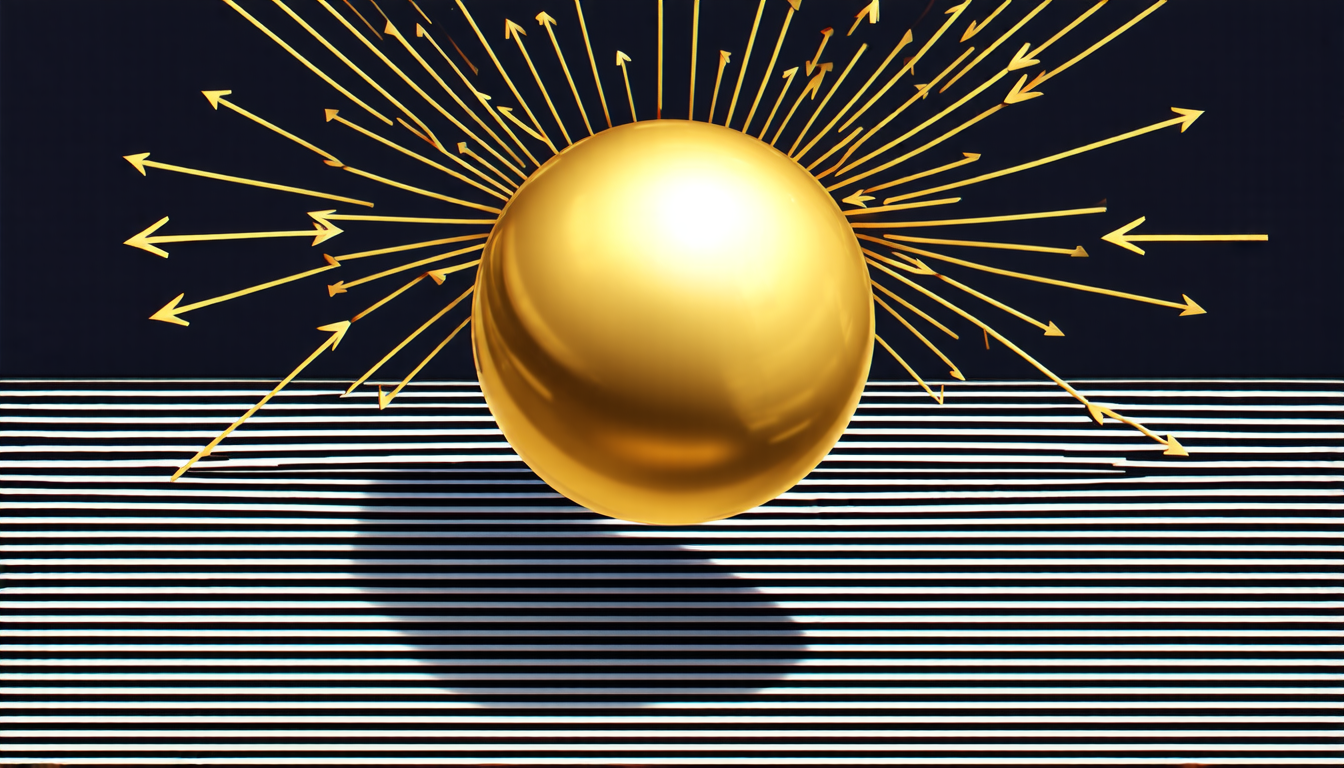
The team then attached a cantilever to a gold sphere, which was suspended above the spin source. As the spin source oscillated, it created a tiny force on the cantilever, which was measured using a fiber optic interferometer. By demodulating the signal at the 10th harmonic of the driving frequency, the researchers were able to separate the signal of interest from spurious forces.
The experiment was designed to enhance the strength of the exotic force by increasing the relative velocity between the spin source and the gold sphere. The team achieved this by using a higher oscillation frequency and a larger amplitude than previous experiments.
After analyzing the data, the researchers set new limits on the coupling constant of these interactions at distances below 10 micrometers. In particular, they found that the coupling constant was less than 2.2 x 10^-9 at a distance of 2.1 micrometers.
These results are significant because they provide some of the most stringent constraints to date on spin- and velocity-dependent interactions. The experiment also demonstrates the power of innovative experimental design in probing these exotic forces.
The search for these types of interactions is an active area of research, with scientists using a variety of techniques to explore their existence. Future experiments will likely involve even more sophisticated designs and larger scales, which could ultimately reveal evidence of new fundamental forces.
Cite this article: “New Limits Set on Spin- and Velocity-Dependent Interactions”, The Science Archive, 2025.
Exotic Forces, Spin-Dependent Interactions, Velocity-Dependent Interactions, Axions, Paraphotons, Fundamental Particles, Electrons, Protons, Fiber Optic Interferometer, Coupling Constant





