

Tuesday 11 March 2025
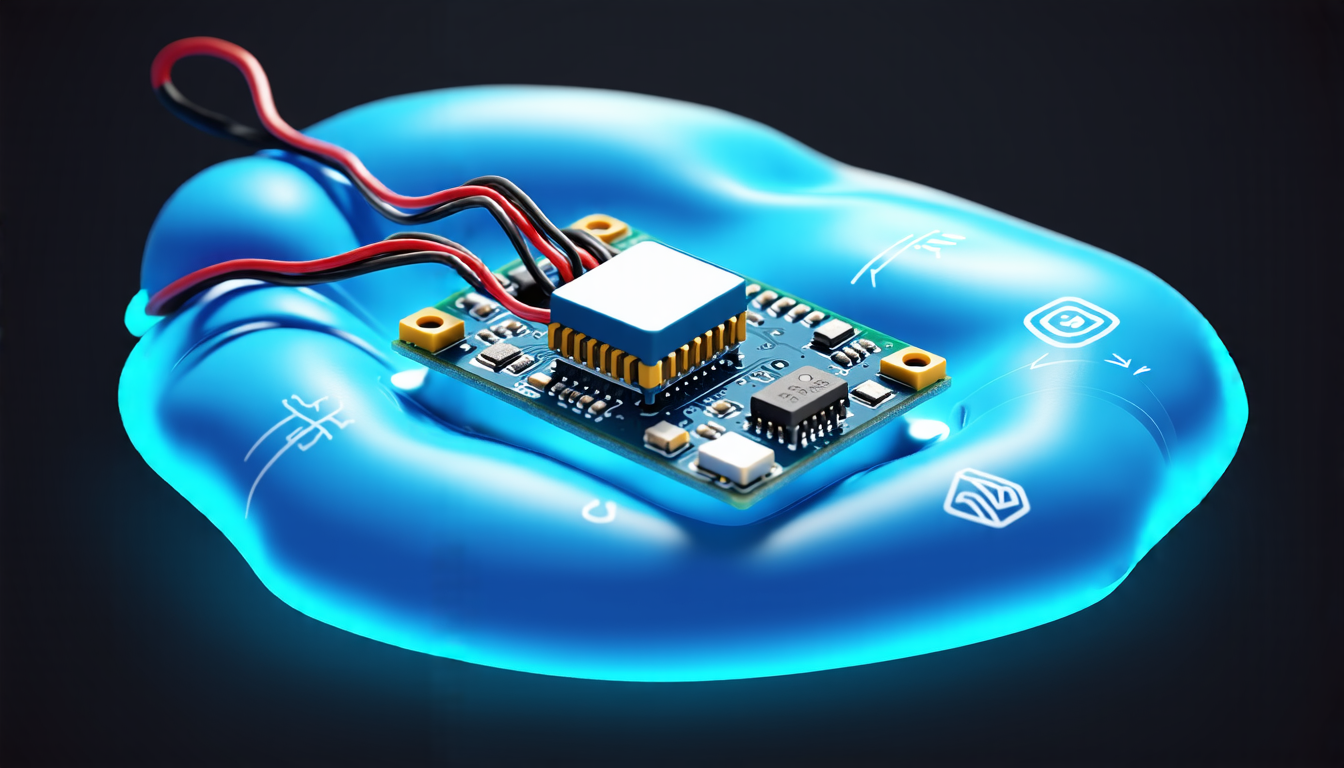
Soft, stretchy electronics that can be implanted in the body have been a holy grail of sorts for researchers, offering the promise of more comfortable and effective treatments for a range of conditions. Now, a team of scientists has made significant progress towards achieving this goal by developing a novel way to create flexible, battery-free circuits.
The key innovation is a type of liquid metal composite that can be easily patterned into complex shapes using a laser. This allows researchers to create intricate electronic circuits that are not only flexible but also highly conductive and durable. The liquid metal, known as EGaIn, is a eutectic alloy of gallium, indium, and tin that has been shown to have excellent electrical properties.
One of the most promising applications of this technology is in the field of optogenetics, where scientists use light to stimulate specific cells or groups of cells in the brain. Currently, these experiments require bulky equipment and cables, which can be a major limitation. With the new liquid metal circuits, researchers could potentially create tiny, implantable devices that allow them to control neural activity with unprecedented precision.
The potential benefits are numerous. For example, optogenetics could be used to treat conditions such as Parkinson’s disease, where stimulating specific brain cells has been shown to alleviate symptoms. It could also be used to develop new treatments for mental health disorders, such as depression and anxiety, by targeting specific neural circuits.
Another exciting application is in the field of bioelectronics, where researchers aim to create implantable devices that can monitor or even control bodily functions, such as heart rate or muscle activity. The liquid metal circuits could potentially be used to create ultra-thin, flexible sensors that can be implanted under the skin, allowing for real-time monitoring of vital signs.
The technology is still in its early stages, but the potential implications are enormous. By creating implantable devices that are soft, stretchy, and battery-free, researchers may be able to develop new treatments that are more effective, comfortable, and convenient than those currently available. With further development, this technology could revolutionize the field of bioelectronics and open up new possibilities for treating a range of medical conditions.
Cite this article: “Soft, Stretchy Electronics Bring Implantable Devices Closer to Reality”, The Science Archive, 2025.
Soft Electronics, Implantable Devices, Optogenetics, Liquid Metal Composite, Egain, Bioelectronics, Flexible Circuits, Battery-Free, Neural Activity, Medical Conditions





