

Tuesday 11 March 2025
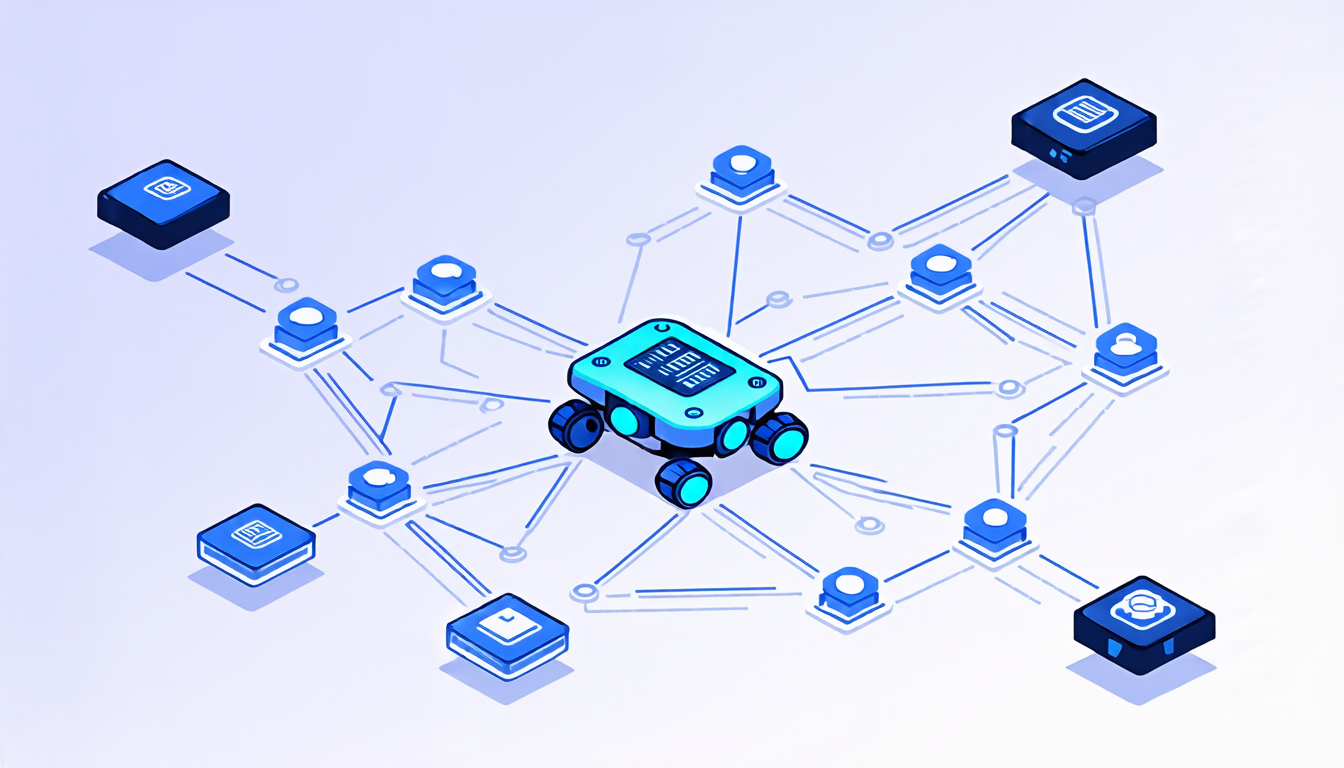
Researchers have been working on a new approach to building more resilient networks, and it involves combining two powerful tools: graph neural networks (GNNs) and deep reinforcement learning (DRL). The idea is to use GNNs to extract information from complex network structures and DRL to optimize the behavior of the network.
Networks are becoming increasingly important in our daily lives, and they’re used for everything from communication to healthcare. But as networks grow more complex, they also become more vulnerable to attacks and disruptions. That’s where this new approach comes in.
GNNs are a type of artificial intelligence that can learn to recognize patterns in data by analyzing the relationships between different nodes or entities. In the context of networks, GNNs can be used to identify potential vulnerabilities and optimize network performance.
DRL, on the other hand, is a type of machine learning that involves training an agent to make decisions based on rewards or penalties. In this case, the goal is to train the agent to optimize the behavior of the network by making decisions about how to route traffic and allocate resources.
By combining GNNs and DRL, researchers are able to create a more robust and adaptable network that can respond quickly to changes in the environment. The approach has been tested on a number of different networks, including IoT networks and cellular networks, with promising results.
One of the key challenges facing network operators is dealing with the increasing complexity of modern networks. As networks grow more complex, it becomes harder for humans to understand what’s happening and make decisions about how to optimize performance. GNNs can help by providing a new way to analyze and visualize network data.
Another challenge is the need to balance competing priorities in network design. For example, network operators may want to prioritize speed over security or vice versa. DRL can help by providing a framework for making trade-offs between different goals.
The approach has also been tested on real-world networks, including those used in IoT and industrial automation applications. The results are promising, with the GNN-DRL system able to improve network performance and reduce latency.
While there are still many challenges facing network operators, this new approach offers a promising solution for building more resilient and adaptable networks. By combining the power of GNNs and DRL, researchers are creating a new generation of networks that can respond quickly to changing conditions and adapt to new threats.
Cite this article: “Building Resilient Networks with Graph Neural Networks and Deep Reinforcement Learning”, The Science Archive, 2025.
Graph Neural Networks, Deep Reinforcement Learning, Network Resilience, Artificial Intelligence, Machine Learning, Iot Networks, Cellular Networks, Network Optimization, Network Security, Industrial Automation





