
Tuesday 11 March 2025
Scientists have made a significant breakthrough in the field of functional data clustering, which is used to group complex patterns and curves together based on their similarities. This technique has far-reaching applications in various fields such as medicine, finance, and environmental science.
The researchers developed two new methods for calculating distances between clusters, known as MS-linkage and BD-linkage. These methods are designed to be more robust against outliers and contamination than traditional approaches. Outliers can occur when a data point is significantly different from the rest of the data, while contamination refers to the presence of noise or incorrect data points.
The new methods work by focusing on the most central curves within each cluster, rather than trying to fit all the data points together perfectly. This approach helps to reduce the influence of outliers and contaminants, resulting in more accurate clustering results.
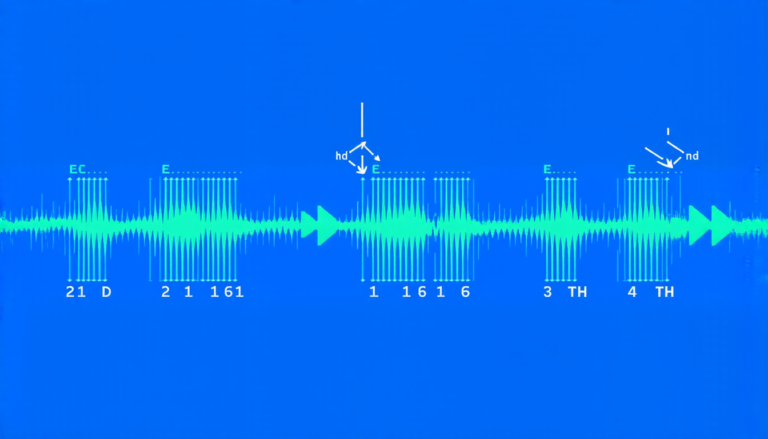
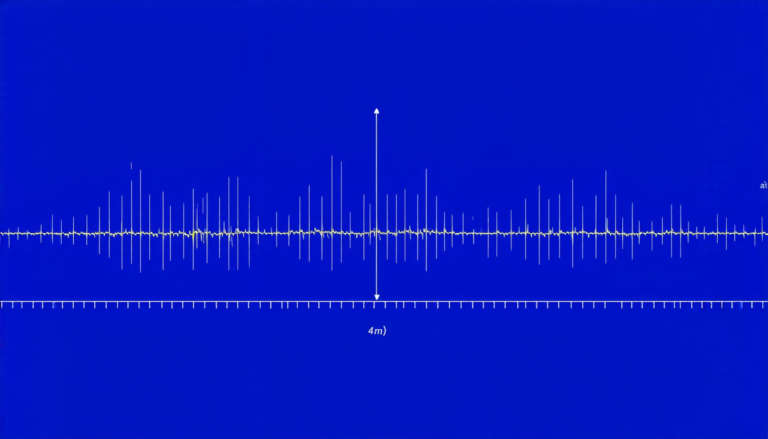
To test their methods, the researchers used two types of EEG (electroencephalogram) data. The first type was collected from a single subject during resting state, while the second type was recorded from multiple subjects with different brain states. The results showed that the new methods were able to accurately cluster the EEG signals based on their similarities.
One of the key applications of functional data clustering is in medicine, particularly in the diagnosis and treatment of neurological disorders such as epilepsy. By analyzing the patterns and curves of brain activity, doctors can identify potential seizure triggers and develop targeted treatments.
The researchers also tested their methods on a dataset from an experiment where participants were asked to perform different motor tasks while their brains were being scanned using functional magnetic resonance imaging (fMRI). The results showed that the new methods were able to accurately cluster the fMRI signals based on their similarities, allowing for more effective analysis of brain activity.
The development of these new methods has significant implications for various fields beyond medicine. For example, in finance, functional data clustering can be used to analyze and predict stock market trends. In environmental science, it can be used to study and model complex patterns in climate data.
Overall, the researchers’ work represents a major advancement in the field of functional data clustering. By developing more robust methods for calculating distances between clusters, they have opened up new possibilities for analyzing and understanding complex patterns and curves in various fields.
Cite this article: “Advances in Functional Data Clustering for Improved Pattern Analysis”, The Science Archive, 2025.
Here Are The Relevant Keywords: Functional Data Clustering, Ms-Linkage, Bd-Linkage, Outliers, Contamination, Eeg, Fmri, Neurological Disorders, Epilepsy, Brain Activity
Reference: Tianbo Chen, “Robust Functional Ward’s Linkages with Applications in EEG data Clustering” (2025).