

Tuesday 11 March 2025
Researchers have made a significant breakthrough in developing biomaterials that could revolutionize the field of orthopedic implants. By combining titanium alloys with bioactive glass, scientists have created a material that enhances bone growth and integration around the implant.
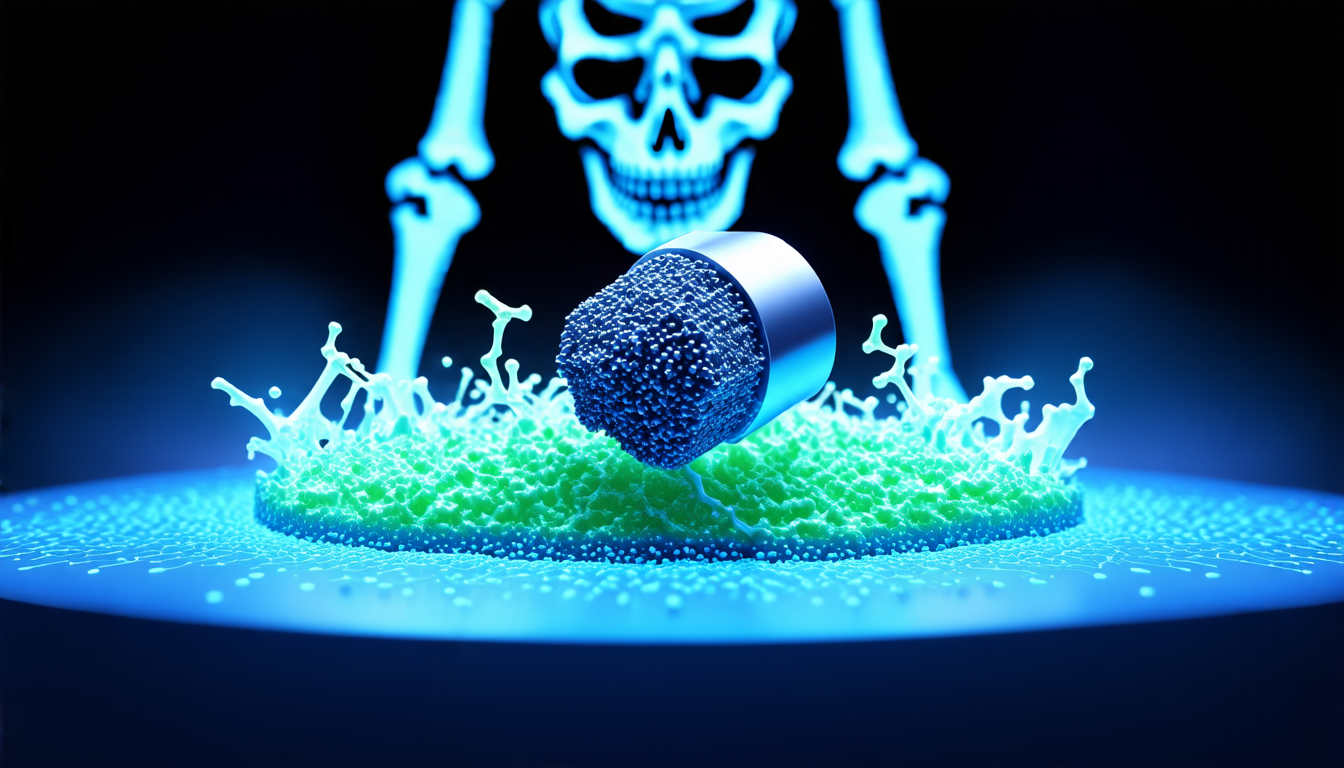
The study focused on the development of 3D-printed titanium implants coated with bioactive glass particles. The researchers found that the addition of bioactive glass significantly improved the osseointegration of the implant, which is critical for the success of orthopedic procedures such as joint replacement surgery.
Osseointegration refers to the direct contact between bone tissue and a metal implant. This process is essential for ensuring the long-term stability and durability of the implant. However, traditional titanium implants often struggle to integrate with surrounding bone tissue, leading to issues such as loosening or failure over time.
The researchers used a combination of techniques, including selective laser melting and bioactive glass coating, to create a material that promotes bone growth and integration. The bioactive glass particles were found to release ions that stimulate osteogenic activity, promoting the formation of new bone tissue around the implant.
The study found that the bioactive glass-coated implants exhibited significantly improved osseointegration compared to traditional titanium implants. The researchers observed increased bone density and volume around the implant, as well as enhanced bone-implant contact.
The development of biomaterials like this could have significant implications for orthopedic patients. By improving the integration between the implant and surrounding bone tissue, surgeons may be able to reduce the risk of complications and improve patient outcomes.
Furthermore, the use of bioactive glass in biomaterials could also lead to a reduction in the need for revision surgery. Revision surgery is often necessary when traditional implants fail or become loose over time, requiring additional procedures and lengthy recovery periods.
The study’s findings suggest that the combination of titanium alloys and bioactive glass particles may be a promising solution for improving the performance of orthopedic implants. Further research is needed to fully understand the potential benefits of this material and its applications in clinical practice. However, the early results are encouraging and could lead to significant advancements in the field of biomaterials.
The development of biomaterials that promote osseointegration and bone growth has the potential to revolutionize orthopedic surgery. By improving the integration between implants and surrounding tissue, surgeons may be able to reduce complications and improve patient outcomes.
Cite this article: “Breakthrough Biomaterials Enhance Bone Growth and Integration in Orthopedic Implants”, The Science Archive, 2025.
Orthopedic Implants, Biomaterials, Titanium Alloys, Bioactive Glass, Osseointegration, Bone Growth, 3D Printing, Selective Laser Melting, Osteogenic Activity, Revision Surgery.





