

Tuesday 11 March 2025
Scientists have long been searching for a way to monitor the integrity of concrete structures without causing damage or disruption. Concrete is a crucial building material, but it’s also prone to degradation over time, particularly when exposed to carbon dioxide in the air. This can lead to weakening and cracking, putting buildings at risk of collapse.
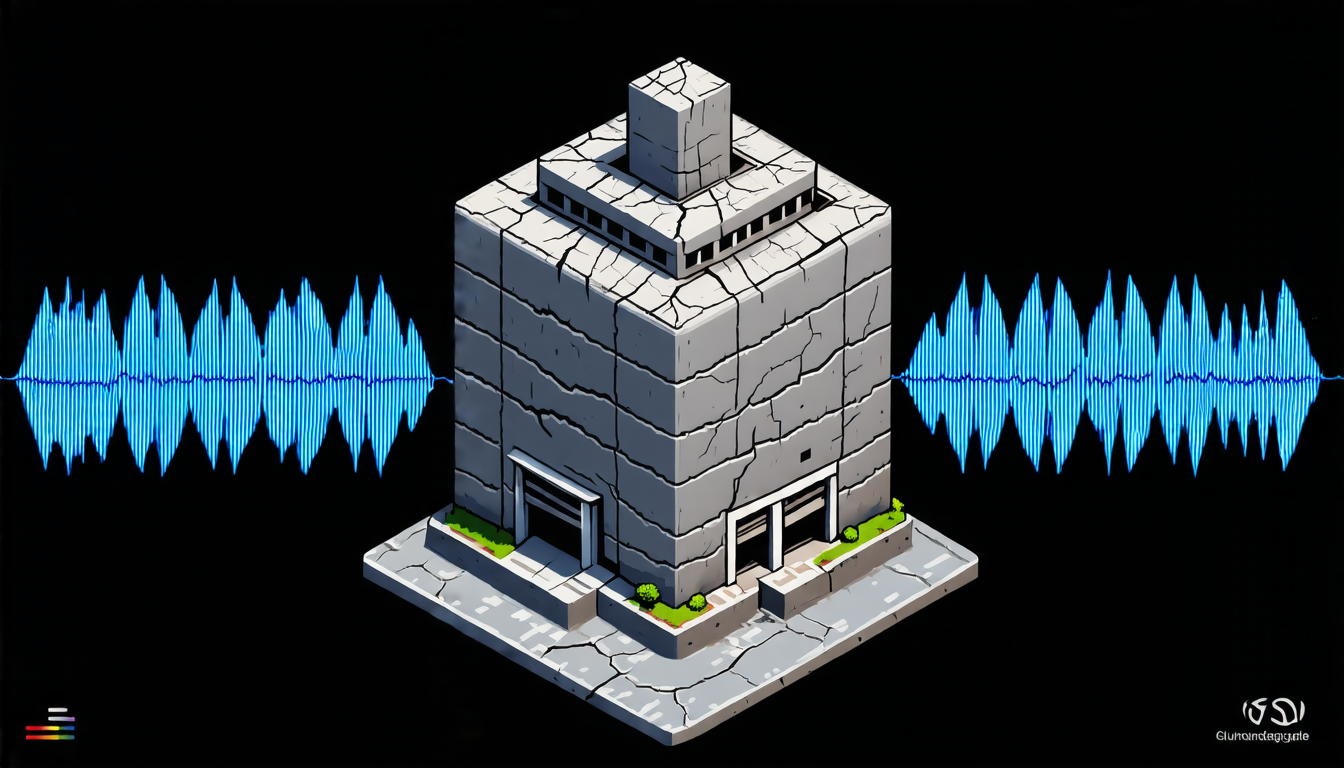
In recent years, researchers have turned to ultrasonic technology as a potential solution. By transmitting high-frequency sound waves through concrete, scientists can non-invasively detect changes in the material’s internal structure and composition. But there are limitations to this approach. For one, the signals generated by ultrasonic waves can be complex and difficult to interpret.
Enter a new study that offers a promising alternative. Researchers used a combination of linear and nonlinear signal processing techniques to analyze ultrasonic signals emitted by concrete samples as they underwent carbonation. The team found that the changes in signal behavior were closely tied to the level of carbonation, allowing them to develop a set of diagnostic indices that could be used to monitor the condition of concrete structures.
One key finding was that the non-linear properties of the concrete – its ability to respond differently to high-frequency sound waves than low-frequency ones – were particularly sensitive to changes in the material’s composition. By analyzing these non-linear effects, scientists can gain insight into the internal structure and chemistry of the concrete, even if they’re not directly visible.
The researchers tested their method on a range of concrete samples with different water-to-cement ratios, which affect the material’s porosity and reactivity. They found that the diagnostic indices developed in this study were able to accurately distinguish between samples with varying levels of carbonation.
This breakthrough has significant implications for the construction industry. By monitoring the condition of concrete structures using non-invasive ultrasonic testing, engineers can identify potential problems early on and take steps to prevent damage or collapse. This could help reduce maintenance costs and minimize the risk of accidents.
The study also highlights the potential benefits of combining linear and nonlinear signal processing techniques in materials science research. By leveraging the unique strengths of each approach, scientists may be able to develop more accurate and effective diagnostic tools for a range of applications.
In the future, researchers plan to expand their work to include testing on real-world structures, such as bridges and buildings. With further development, this technology could become a game-changer for concrete construction – allowing engineers to monitor the integrity of critical infrastructure with greater precision and confidence.
Cite this article: “Non-Invasive Concrete Monitoring Using Ultrasonic Technology”, The Science Archive, 2025.
Concrete, Ultrasonic Technology, Carbonation, Signal Processing, Nonlinear Effects, Diagnostic Indices, Water-To-Cement Ratio, Porosity, Reactivity, Materials Science





