

Tuesday 11 March 2025
In a breakthrough study, researchers have developed a revolutionary new system that can assist people with daily living tasks, such as transferring from bed to wheelchair or vice versa. The innovative technology uses a combination of robotics and artificial intelligence to simplify these often challenging and laborious processes.
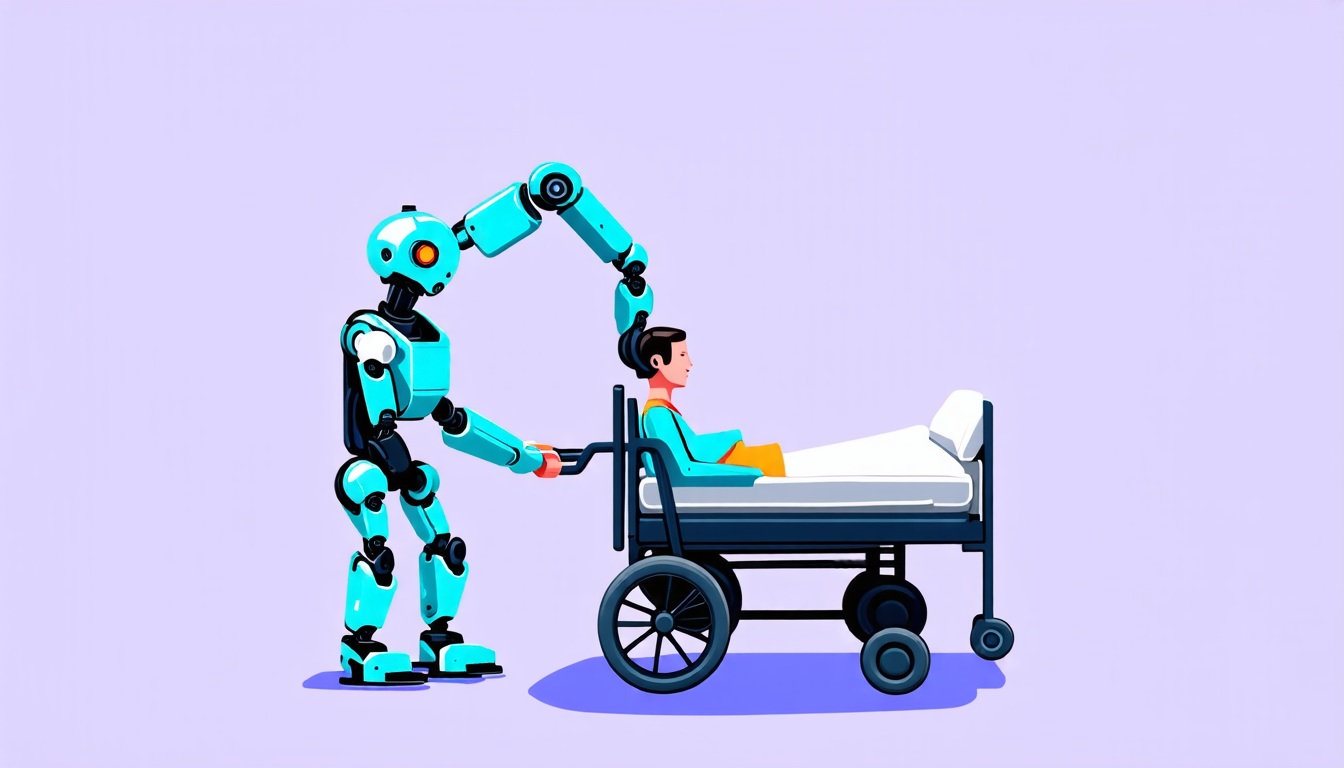
The system, known as CART- MPC, consists of a caregiving robot arm that works in tandem with an instrumented Hoyer sling and a wheelchair. The Hoyer sling is typically used by caregivers to lift and transfer patients from one location to another, but the new system adds a level of automation and precision that makes it easier for both caregivers and patients.
The robot arm is equipped with sensors and actuators that allow it to interact with the patient and the environment in real-time. It uses machine learning algorithms to learn the patient’s specific needs and adapt to any changes or unexpected obstacles that may arise during the transfer process.
One of the key advantages of CART-MPC is its ability to generalize across different hook shapes, sling materials, and care recipient body shapes. This means that it can be used with a wide range of patients, regardless of their size, shape, or mobility needs.
The system has been tested in both simulation and real-world environments, with impressive results. In the real-world trials, the robot arm was able to successfully transfer a manikin from a hospital bed to a wheelchair, demonstrating its ability to adapt to new situations and overcome any challenges that may arise.
The potential benefits of CART-MPC are significant. For patients with mobility impairments, it could provide greater independence and dignity by allowing them to participate more fully in their daily lives. For caregivers, it could reduce the physical strain and emotional burden associated with transferring patients.
While there is still much work to be done before this technology becomes widely available, the researchers behind CART-MPC are optimistic about its potential. As they continue to refine and improve the system, they believe that it could play a major role in improving the lives of people with mobility impairments.
Cite this article: “Revolutionary Care Technology Simplifies Daily Living Tasks”, The Science Archive, 2025.
Robotics, Artificial Intelligence, Caregiving, Robot Arm, Hoyer Sling, Wheelchair, Patient Transfer, Mobility Impairments, Machine Learning, Caregiving Technology





