

Thursday 23 January 2025
Physics-informed neural networks (PINNs) have revolutionized the field of scientific computing by providing a powerful tool for solving complex partial differential equations (PDEs). However, PINNs often struggle with high-dimensional problems due to the curse of dimensionality. A team of researchers has now developed an innovative approach called RSmote that addresses this limitation and achieves remarkable results.
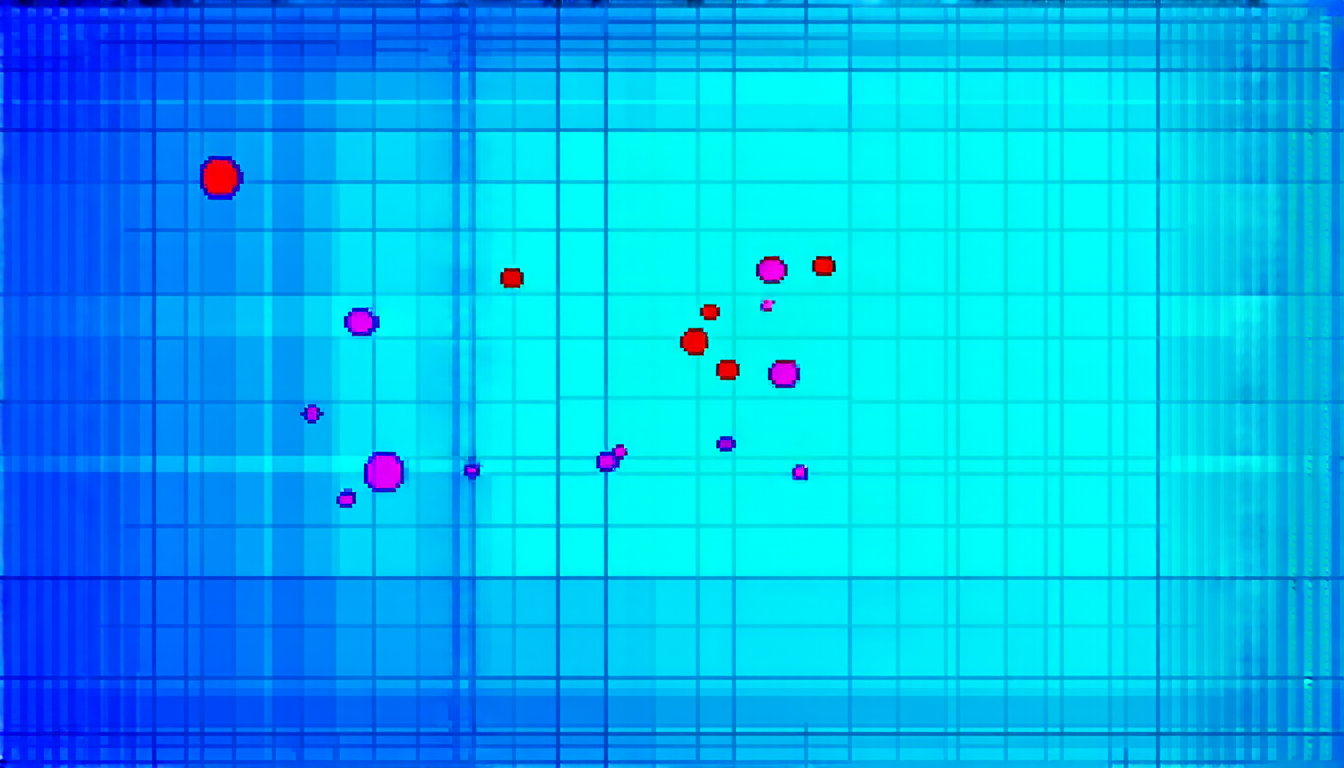
The core idea behind RSmote is to adaptively sample data points based on their residual values. This allows the network to focus on regions where the solution is most uncertain, leading to significant improvements in accuracy and efficiency. The algorithm works by iteratively updating the sampling distribution based on the residuals of the current solution, ensuring that the network converges rapidly towards the true solution.
In a series of experiments, the researchers tested RSmote on several challenging PDEs, including the Allen-Cahn equation, the reaction-diffusion equation, and the Burgers’ equation. The results show that RSmote outperforms traditional PINN methods in terms of accuracy and computational efficiency, particularly in high-dimensional problems.
One of the key advantages of RSmote is its ability to adaptively adjust the sampling distribution based on the residuals. This allows the network to learn more efficiently from the data points with larger residuals, which are often the most informative. In contrast, traditional PINN methods tend to oversample regions where the solution is already well-defined, leading to slower convergence and reduced accuracy.
Another significant benefit of RSmote is its ability to handle high-dimensional problems with ease. By adaptively sampling data points based on their residual values, the network can effectively mitigate the curse of dimensionality and achieve accurate solutions even in problems with thousands of dimensions.
The researchers also explored the impact of different ratios of training data points on the performance of RSmote. They found that increasing the ratio of sampled points to total points improves the accuracy of the solution, but only up to a certain point. Beyond this threshold, further increases in the ratio lead to diminishing returns.
Overall, RSmote represents a significant breakthrough in the field of PINNs and has the potential to revolutionize our ability to solve complex PDEs. By adaptively sampling data points based on their residual values, the algorithm can achieve remarkable accuracy and efficiency even in high-dimensional problems. As researchers continue to push the boundaries of what is possible with PINNs, RSmote will undoubtedly play a key role in shaping the future of scientific computing.
Cite this article: “Adaptive Sampling Algorithm for Physics-Informed Neural Networks (RSmote)”, The Science Archive, 2025.
Physics-Informed Neural Networks, Pinns, Rsmote, Adaptive Sampling, High-Dimensional Problems, Curse Of Dimensionality, Partial Differential Equations, Pdes, Scientific Computing, Machine Learning.





