

Thursday 23 January 2025
A new study sheds light on the performance of a popular algorithm used in machine learning, known as Weighted Conformal Risk Control (W-CRC). The research provides a theoretical guarantee for the efficiency of this algorithm under certain conditions.
The W-CRC algorithm is designed to calibrate predictive models by selecting the most reliable predictions from a set of candidate predictions. This approach has been widely used in various applications, including medical diagnosis and financial forecasting. However, until now, there has been limited understanding of its performance under real-world data settings.
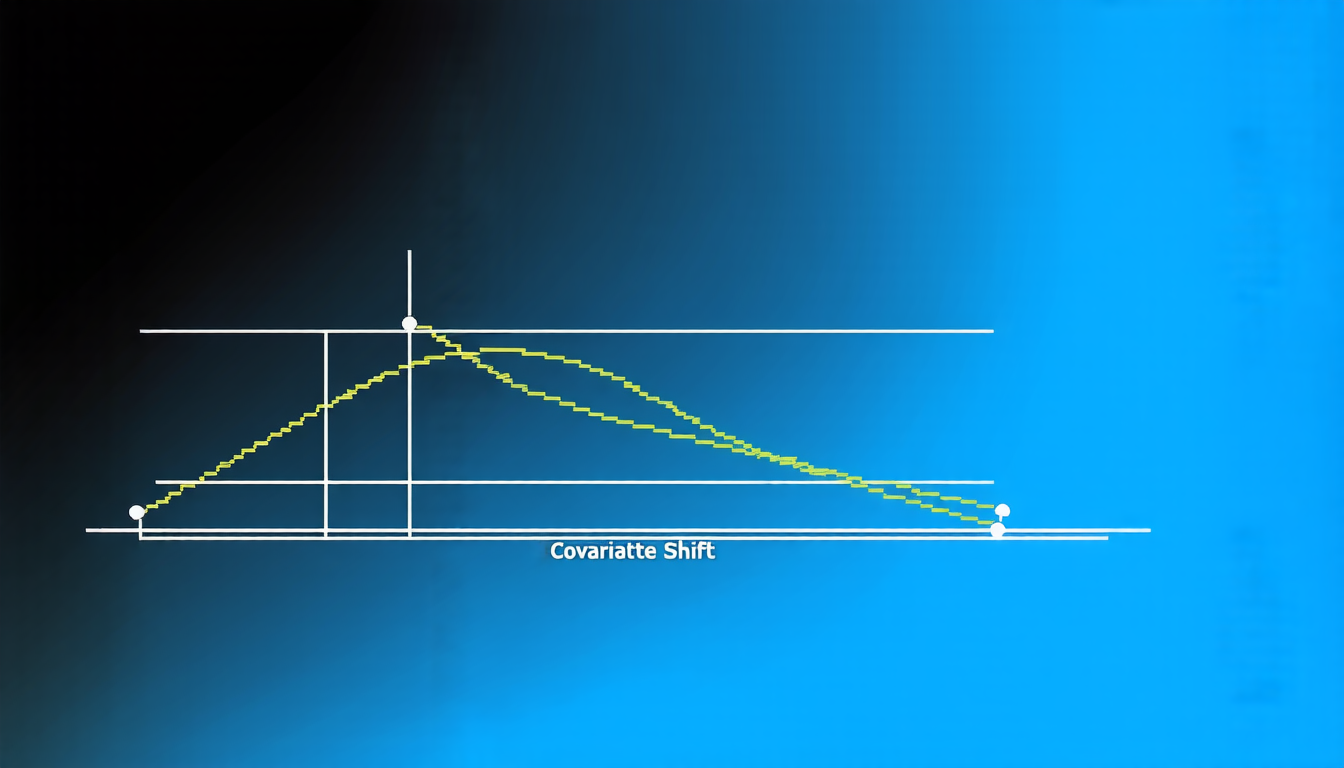
The study shows that the W-CRC algorithm can be guaranteed to perform well if certain conditions are met. Specifically, it requires a sufficient amount of calibration data and a reasonable balance between training and testing data. The researchers also found that the algorithm’s performance is sensitive to the magnitude of covariate shift, which occurs when the distribution of the input data changes over time.
The study’s findings have important implications for machine learning practitioners. By understanding the conditions under which W-CRC performs well, developers can design more effective algorithms and improve their predictive models. Additionally, the research highlights the need for careful consideration of covariate shift in real-world applications.
In a nutshell, the W-CRC algorithm is a powerful tool for calibrating predictive models. However, its performance depends on several factors, including the amount of calibration data and the magnitude of covariate shift. By understanding these factors, developers can create more accurate and reliable predictions.
The study’s results are based on theoretical analysis and simulation experiments. The researchers used a combination of mathematical proofs and computational simulations to evaluate the algorithm’s performance under different conditions. The findings suggest that W-CRC is a robust algorithm that can be effective in a wide range of applications, but it requires careful tuning of its parameters.
Overall, this study provides valuable insights into the performance of W-CRC and its limitations. It highlights the importance of considering covariate shift and calibration data when designing machine learning algorithms. By understanding these factors, developers can create more accurate and reliable predictions that are better suited to real-world applications.
Cite this article: “Guaranteeing Performance: Understanding Weighted Conformal Risk Controls Efficiency in Machine Learning Applications”, The Science Archive, 2025.
Weighted Conformal Risk Control, Machine Learning, Algorithm Performance, Predictive Modeling, Calibration Data, Covariate Shift, Training Data, Testing Data, Mathematical Proofs, Simulation Experiments





