

Tuesday 11 March 2025
The quest for better clustering algorithms has been an ongoing pursuit in the field of machine learning, and researchers have made significant strides in recent years. One such algorithm, GenClus, promises to bring a new level of sophistication to the task of identifying patterns in complex data sets.
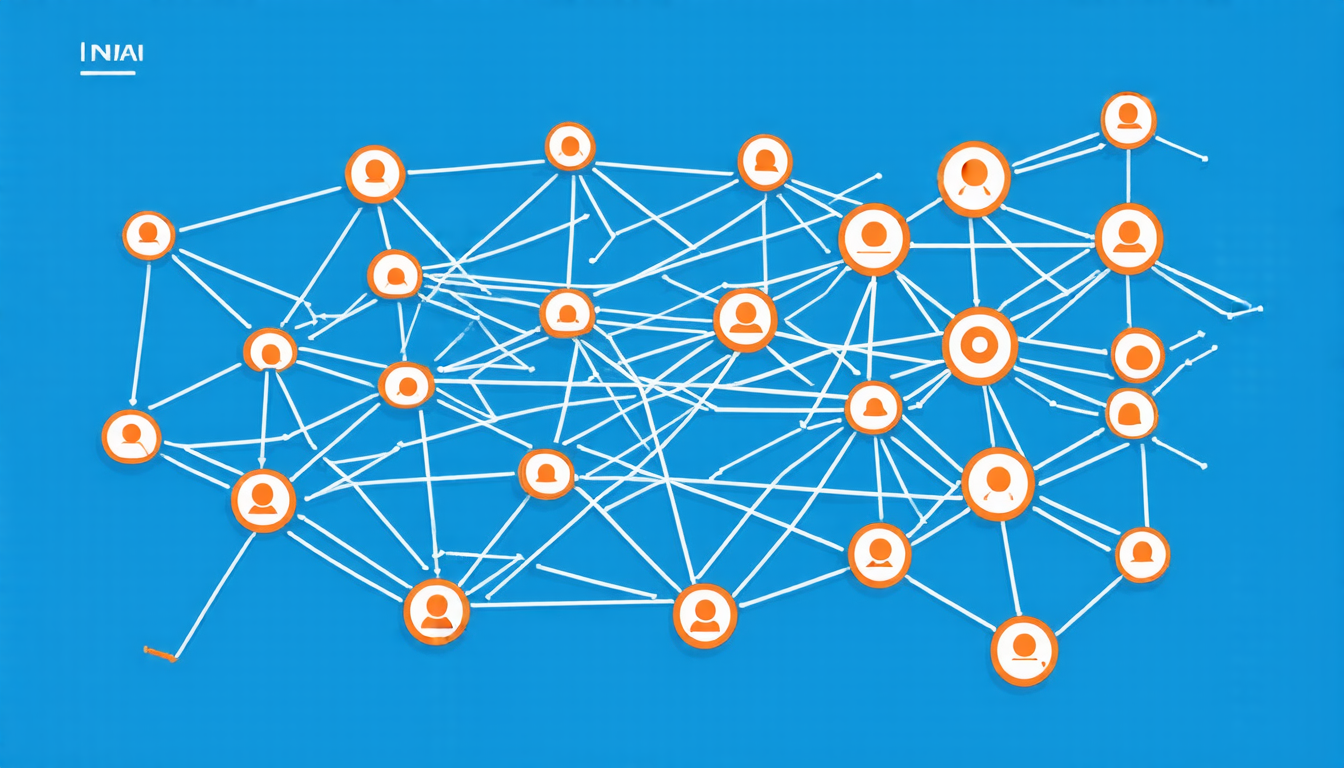
At its core, GenClus is designed to tackle the problem of multi-view clustering, where multiple views or perspectives are available for each node in the graph. This can be particularly useful when dealing with large-scale networks that have varying levels of connectivity and relationships between nodes. By considering multiple views simultaneously, GenClus aims to produce more accurate and robust cluster assignments.
The algorithm’s core innovation lies in its ability to learn a shared representation across different views, allowing it to identify meaningful patterns and relationships that might not be apparent from individual views alone. This is achieved through the use of a novel tensor decomposition technique, which breaks down the data into smaller, more manageable components.
One of the key benefits of GenClus is its flexibility in handling different types of data structures. The algorithm can easily adapt to graphs with varying numbers of nodes and edges, as well as those with missing or noisy data. This makes it a valuable tool for researchers working with real-world datasets that often exhibit these characteristics.
In addition to its technical merits, GenClus also demonstrates impressive performance in practice. Experiments on a range of synthetic and real-world datasets show that the algorithm is able to accurately identify clusters and outperform existing methods in many cases.
The authors’ results are particularly noteworthy when applied to large-scale networks, where traditional clustering algorithms can struggle to scale efficiently. By leveraging the power of multi-view learning, GenClus is able to effectively handle these types of datasets while producing high-quality cluster assignments.
One potential area for further exploration lies in the application of GenClus to more complex data structures, such as those with multiple levels of hierarchy or non-Euclidean geometry. As machine learning continues to evolve, it’s likely that researchers will seek to adapt and extend algorithms like GenClus to tackle these emerging challenges.
For now, however, GenClus stands as a promising new approach to multi-view clustering, offering a powerful tool for researchers and practitioners alike. Its ability to learn shared representations across different views has the potential to unlock new insights into complex data sets, and its flexibility and scalability make it an attractive option for a wide range of applications.
Cite this article: “GenClus: A Novel Approach to Multi-View Clustering”, The Science Archive, 2025.
Machine Learning, Clustering Algorithms, Multi-View Clustering, Graph Theory, Tensor Decomposition, Data Mining, Pattern Recognition, Large-Scale Networks, Scalability, Cluster Assignment.





