

Thursday 23 January 2025
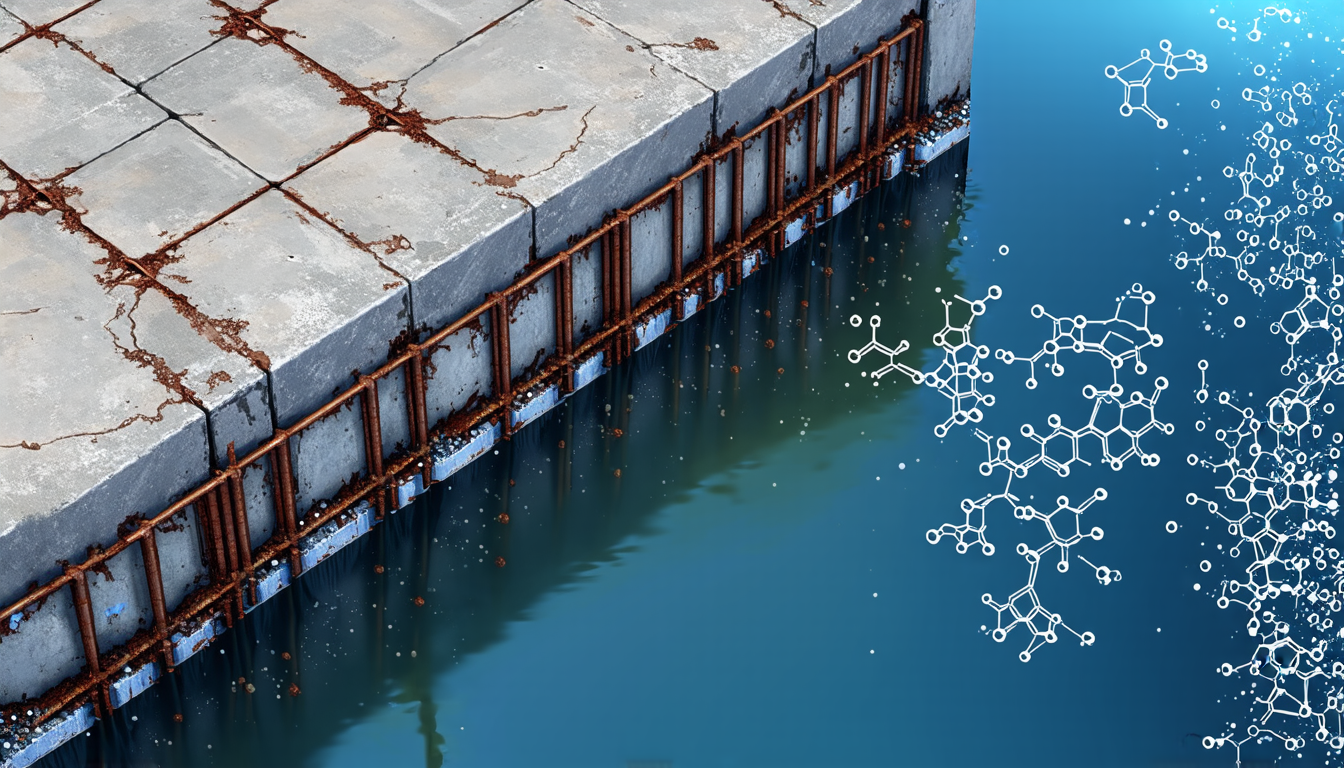
Steel reinforcement in concrete is a crucial aspect of modern infrastructure, but it’s also prone to corrosion, which can lead to catastrophic failures. A team of researchers has developed a new framework to better understand and predict this process.
Corrosion occurs when steel reacts with oxygen and water in the presence of certain chemicals, such as chlorides or carbonates, found in concrete. This reaction releases electrons, which flow through an external circuit, causing corrosion. The rate at which corrosion occurs depends on various factors, including the concentration of these chemicals, temperature, and humidity.
The researchers created a mathematical model that simulates the complex interactions between steel, water, oxygen, and chemicals in concrete. They used this framework to study the effects of different concentrations of calcium carbonate, a common compound found in concrete, on the corrosion process.
Their findings suggest that calcium carbonate plays a crucial role in buffering the pH level at the steel-concrete interface, which can slow down or even stop corrosion. In fact, the team discovered that even small amounts of calcium carbonate can make a significant difference in reducing corrosion rates.
The researchers also found that oxygen levels have a profound impact on the corrosion process. In aerobic environments, where oxygen is present, corrosion occurs more rapidly and extensively than in anaerobic conditions, where there is no oxygen. This is because oxygen helps to accelerate the oxidation of iron ions, which are responsible for corrosion.
Another significant finding was the influence of porosity on the corrosion process. The team discovered that higher porosities allow for faster diffusion of corrosive chemicals into the steel-concrete interface, leading to increased corrosion rates.
The implications of these findings are far-reaching. By understanding how calcium carbonate and oxygen levels affect corrosion rates, engineers can develop more effective strategies for preventing or mitigating this problem in concrete infrastructure. This could involve incorporating additional calcium carbonate into concrete mixes or using specialized coatings to reduce oxygen availability at the steel-concrete interface.
Furthermore, the researchers’ framework provides a powerful tool for simulating and predicting corrosion processes in complex systems like concrete structures. This can help engineers design more resilient infrastructure that is better equipped to withstand the corrosive effects of its environment.
Overall, this study highlights the importance of considering multiple factors when evaluating corrosion risks in concrete infrastructure. By acknowledging the intricate interactions between steel, water, oxygen, and chemicals, researchers can develop more effective solutions for preventing or mitigating this pervasive problem.
Cite this article: “Understanding Corrosion in Concrete: A Multifaceted Approach”, The Science Archive, 2025.
Steel Reinforcement, Concrete Infrastructure, Corrosion, Oxygen, Calcium Carbonate, Porosity, Ph Level, Iron Ions, Oxidation, Anaerobic Conditions





