

Tuesday 11 March 2025
The quest for efficient and accurate egomotion estimation has long been a challenge in robotics, autonomous vehicles, and other fields where precise motion tracking is crucial. Traditionally, methods relying on inertial sensors have proven prone to drifts and inaccuracies over time, making them unreliable for long-distance applications. Vision-based approaches, particularly those utilizing event-based vision sensors, offer an attractive alternative by capturing data only when changes are perceived in the scene.
Researchers at the University of Groningen have proposed a fully event-based pipeline for egomotion estimation that processes the event stream directly within the event-based domain. This innovative approach eliminates the need for frame-based intermediaries, allowing for low-latency and energy-efficient motion estimation. The method employs a shallow spiking neural network with a synaptic gating mechanism to convert precise event timing into bursts of spikes, which encode local optical flow velocities.
The team constructed a custom-designed chip to test their concept, demonstrating strong potential for low-power and real-time egomotion estimation. Simulations of larger networks showed that the system achieved state-of-the-art accuracy in egomotion estimation tasks with event-based cameras. This promising solution has significant implications for power-constrained robotics applications where high-speed motion tracking is essential.
The key innovation lies in the event-based processing, which allows the system to capture and analyze only the relevant information from the scene. In contrast, traditional frame-based methods require capturing and storing entire frames of data, even when little changes have occurred. By leveraging the sparse nature of event-based vision sensors, the proposed approach can significantly reduce power consumption while maintaining high accuracy.
The use of a shallow spiking neural network also enables efficient processing and learning within the system. Spiking neural networks are well-suited for event-based processing due to their ability to encode information in the timing and amplitude of individual spikes rather than relying on continuous-valued representations.
The Groningen team’s work offers a significant step forward in the development of efficient and accurate egomotion estimation methods. As robotics and autonomous systems continue to advance, the need for reliable and power-efficient motion tracking will only grow more pressing. This innovative approach has the potential to unlock new possibilities for these applications, enabling faster, more precise, and more sustainable motion tracking.
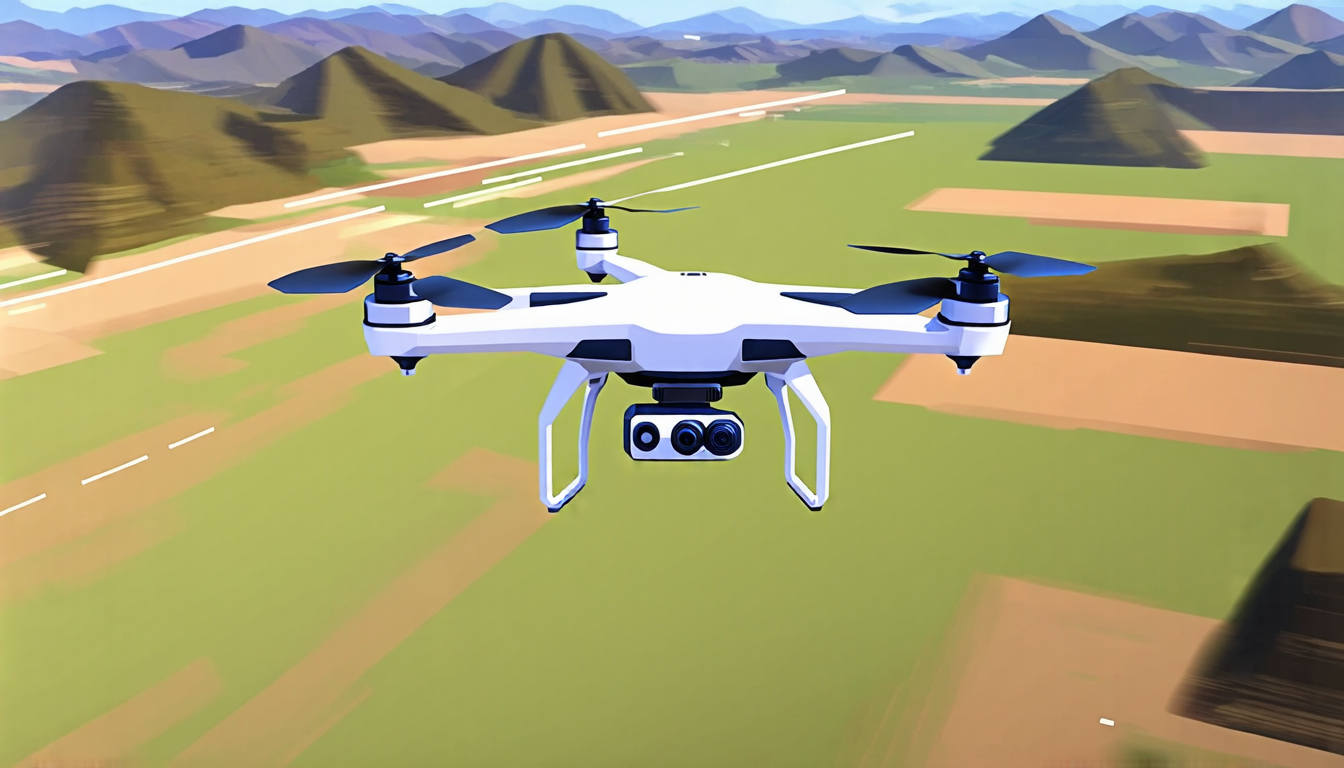
The proposed system’s low-power design makes it an attractive solution for battery-constrained devices, such as drones or autonomous vehicles, where every milliwatt of power saved can extend operating time by hours.
Cite this article: “Event-Based Egomotion Estimation for Low-Power and Real-Time Applications”, The Science Archive, 2025.
Egomotion Estimation, Event-Based Vision, Robotics, Autonomous Vehicles, Spiking Neural Networks, Low-Power Design, Motion Tracking, Power Consumption, Energy Efficiency, Real-Time Processing.





