

Tuesday 11 March 2025
A team of researchers has made a significant breakthrough in the development of nonlinear observers, which are essential tools for understanding and controlling complex systems. These observers are used to estimate the state of a system by processing incomplete or noisy data, but their design is notoriously challenging, especially when dealing with nonlinear systems.
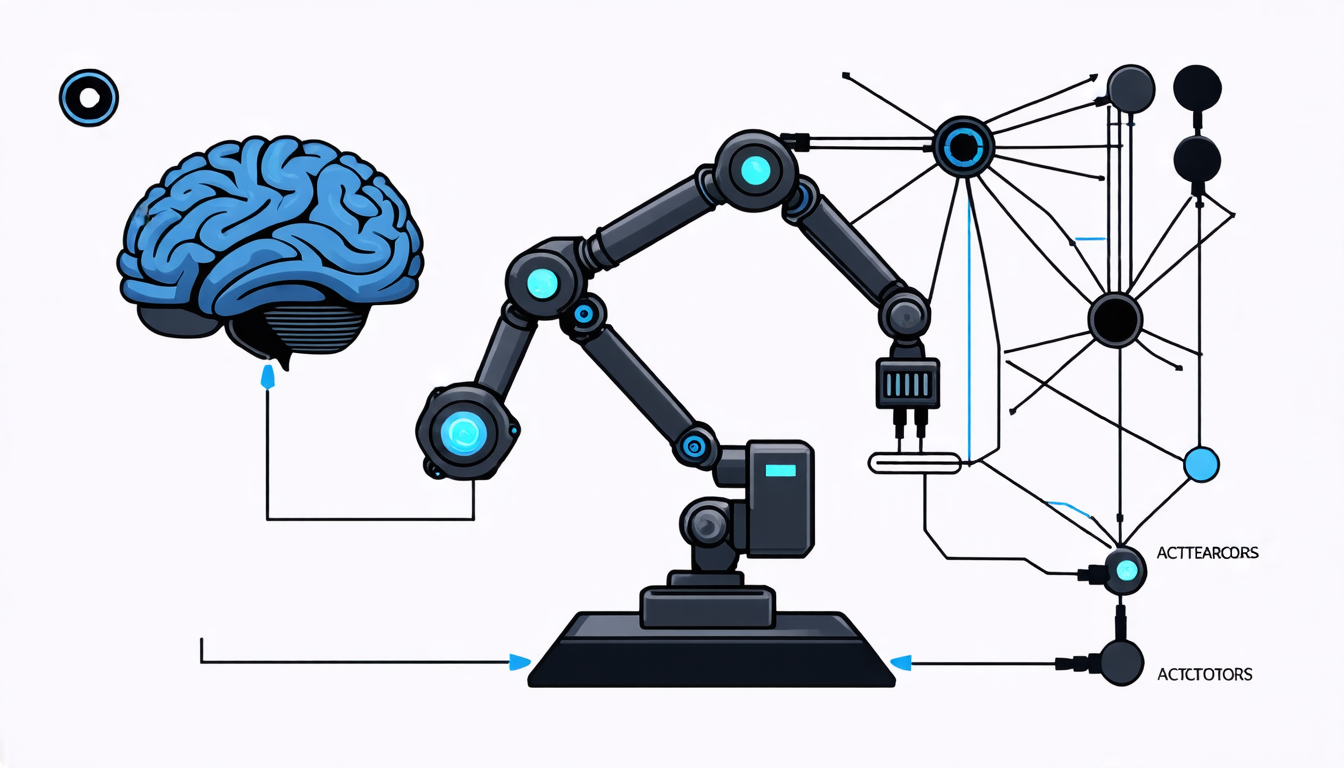
Traditionally, nonlinear observer design relies on numerical methods that are often inefficient and prone to errors. In contrast, the new approach uses physics-informed learning to approximate the transformation maps required for observer synthesis. This innovative method combines neural networks with physical laws to learn a representation of the system’s dynamics.
The researchers used this technique to design a Kazantzis-Kravaris/Luenberger (KKL) observer for autonomous nonlinear systems. The KKL observer is a type of nonlinear observer that has been shown to be particularly effective in estimating the state of complex systems. However, its design requires solving a challenging optimization problem that involves finding injective maps between the system’s state and output.
The physics-informed learning approach overcomes this challenge by using neural networks to approximate the transformation maps. The networks are trained using synthetic data generated by numerically solving the system and observer dynamics. This ensures that the learned representations are consistent with the physical laws governing the system.
The results of the study demonstrate the effectiveness of the new method in designing KKL observers for nonlinear systems. The approach was tested on a range of benchmark examples, including the reverse Duffing oscillator, van der Pol oscillator, R¨ossler attractor, and Lorenz attractor. In each case, the learned observer was able to accurately estimate the system’s state despite the presence of noise and uncertainties.
The implications of this research are significant for a wide range of fields, from control theory and systems biology to robotics and artificial intelligence. The ability to design accurate nonlinear observers using physics-informed learning has the potential to revolutionize our understanding and control of complex systems.
One of the most promising applications of this technology is in fault detection and isolation. By monitoring the state estimates generated by the observer, it is possible to identify when a system is malfunctioning or experiencing unusual behavior. This can be particularly useful in safety-critical systems such as aircraft or medical devices, where accurate fault detection is essential.
Overall, the development of physics-informed learning for nonlinear observer design has significant potential to transform our ability to understand and control complex systems.
Cite this article: “Physics-Informed Learning Revolutionizes Nonlinear Observer Design”, The Science Archive, 2025.
Nonlinear Observers, Physics-Informed Learning, Neural Networks, Observer Synthesis, Nonlinear Systems, Control Theory, Systems Biology, Robotics, Artificial Intelligence, Fault Detection, Machine Learning.





