

Tuesday 11 March 2025
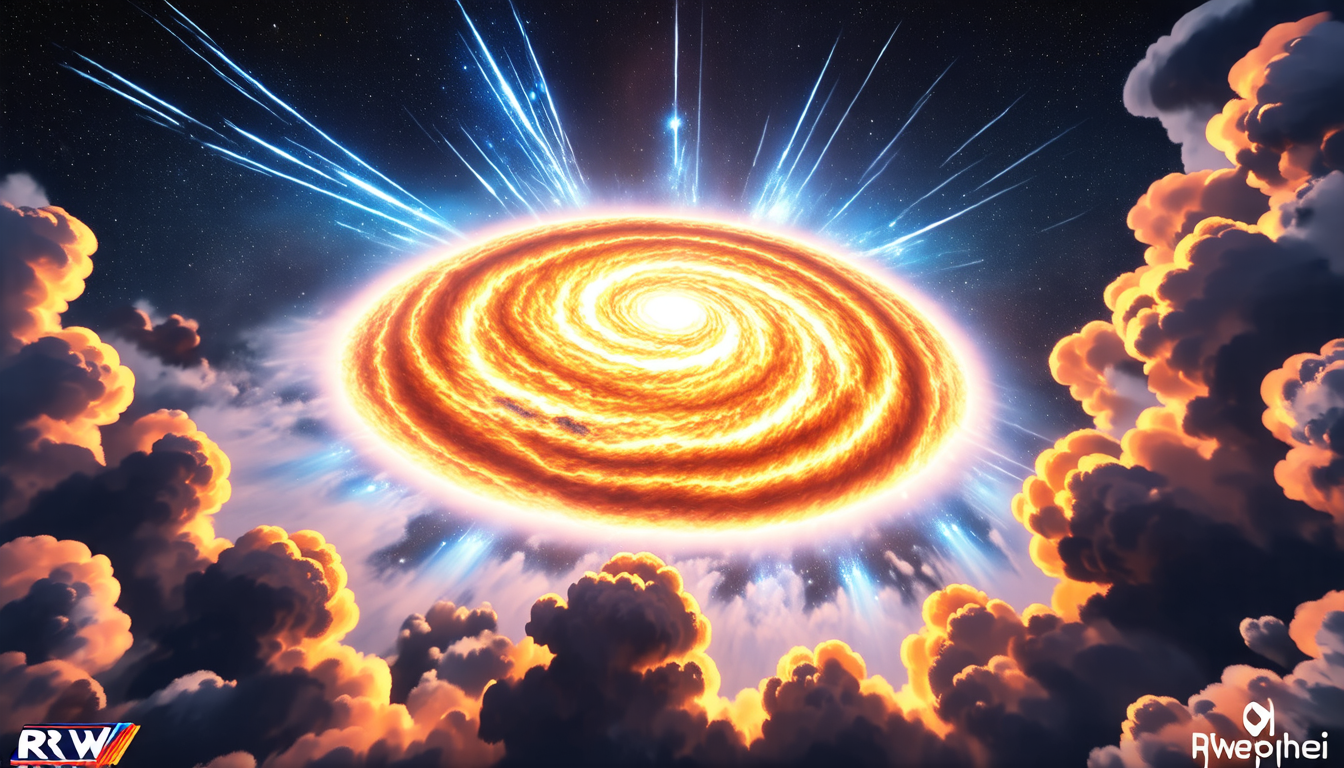
The stars are mysterious and awe-inspiring, and scientists have long been fascinated by their inner workings. One of the most massive stars in our galaxy is RW Cephei, a hypergiant that has recently undergone a dramatic change. For over two years, this star has been slowly dimming, losing up to 50% of its original brightness. Researchers from Tartu Observatory and other institutions have been studying this phenomenon, and their findings offer new insights into the star’s behavior.
To understand what’s happening with RW Cephei, let’s take a step back. Stars like our sun are relatively small and stable, while hypergiants like RW Cephei are enormous and short-lived. They burn through fuel quickly, which means they have a much shorter lifespan than smaller stars. When these massive stars exhaust their fuel, they expand to become red supergiants before eventually exploding as supernovae.
RW Cephei is no exception. Scientists believe that it’s currently in the final stages of its life, and its dimming is likely a sign of mass loss. This process occurs when the star sheds material into space, creating a surrounding cloud of gas and dust. As the star loses mass, its surface area increases, causing it to cool and become less luminous.
To study RW Cephei’s behavior, researchers used a combination of observations from different telescopes around the world. They analyzed the star’s light spectrum, which is like a fingerprint that reveals information about its composition and temperature. By comparing these spectra over time, scientists were able to track changes in the star’s properties.
One key finding was the presence of strong winds blowing away from the star. These winds are likely responsible for the mass loss and are also influencing the surrounding cloud of gas and dust. Another important discovery was the detection of a vertical velocity gradient in the star’s atmosphere, which is a sign of intense activity.
The researchers also observed changes in the star’s magnetic field, which may be connected to its dimming behavior. Magnetic fields play a crucial role in shaping the star’s environment, and their variations could be influencing the mass loss process.
RW Cephei’s dramatic change is not only fascinating from an astronomical perspective but also provides valuable insights into the life cycles of massive stars. By studying these stars, scientists can better understand how they form, evolve, and ultimately die in spectacular explosions.
Cite this article: “Massive Stars Dramatic Transformation Reveals Insights into Life Cycle”, The Science Archive, 2025.
Stars, Rw Cephei, Hypergiant, Mass Loss, Supernovae, Red Supergiants, Magnetic Field, Atmospheric Velocity Gradient, Stellar Evolution, Astronomy





