
Tuesday 11 March 2025
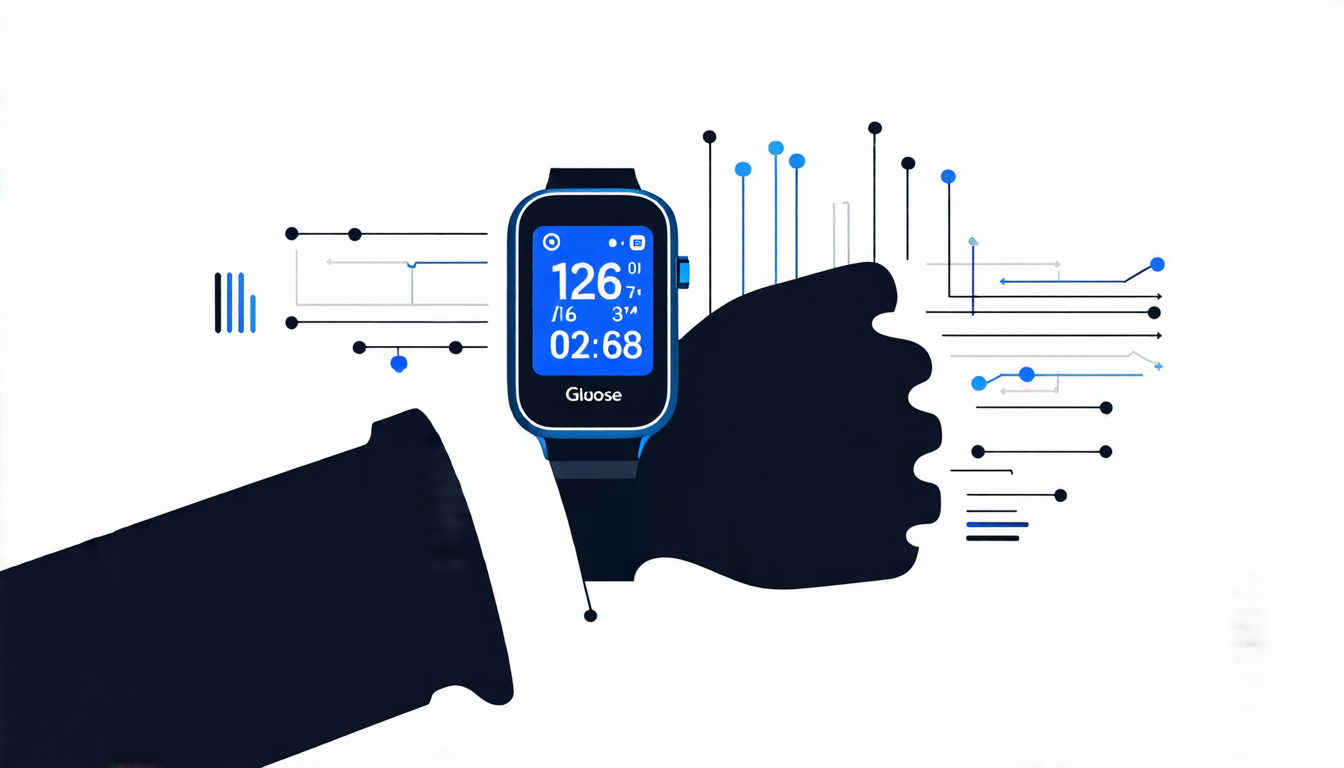
Wearable devices, like fitness trackers and continuous glucose monitors, generate a staggering amount of data about our daily lives. From steps taken to blood sugar levels, these gadgets provide valuable insights into our health and habits. However, making sense of this deluge of data can be overwhelming, especially when it comes to categorizing it into meaningful summaries.
A team of researchers has developed a new approach to tackle this problem, focusing on wearable devices that track glucose levels in people with type 1 diabetes. Their innovative method, called piecewise linearization of quantile functions, uses machine learning algorithms to identify the most informative thresholds for summarizing glucose data.
The traditional way of categorizing glucose levels is to divide them into fixed ranges, such as hypoglycemia (low blood sugar), normoglycemia (normal blood sugar), and hyperglycemia (high blood sugar). While this approach has its limitations, it’s widely used in clinical settings. However, researchers have discovered that these fixed thresholds often fail to capture the unique patterns of glucose levels in different populations.
The new method takes a more nuanced approach by identifying the optimal thresholds for each individual or group. By analyzing the distribution of glucose levels, the algorithm can pinpoint the points where the data changes significantly, creating a piecewise linear representation. This allows for a more accurate and personalized understanding of an individual’s glucose patterns.
To test their approach, the researchers applied it to two large datasets: one from individuals without diabetes and another from people with type 1 diabetes. The results were striking. In both cases, the data-driven thresholds revealed distinct patterns that were not captured by traditional fixed ranges. For example, in the dataset from individuals without diabetes, the algorithm identified a threshold at around 149 milligrams per deciliter (mg/dL), which corresponded to a specific pattern of glucose levels.
When applied to the dataset from people with type 1 diabetes, the algorithm produced different thresholds, indicating distinct patterns of glucose levels. These findings have significant implications for personalized medicine and disease management. By recognizing individualized glucose patterns, healthcare providers can develop more effective treatment plans tailored to each patient’s needs.
The study also highlights the importance of considering the distributional structures of data when summarizing it. Fixed thresholds may work well in certain contexts, but they often fail to account for the complexity and variability of real-world data.
Cite this article: “Personalized Glucose Thresholds: A New Approach to Understanding Blood Sugar Patterns”, The Science Archive, 2025.
Wearable Devices, Glucose Levels, Type 1 Diabetes, Machine Learning Algorithms, Quantile Functions, Piecewise Linearization, Data Analysis, Personalized Medicine, Disease Management, Healthcare Providers