

Wednesday 12 March 2025
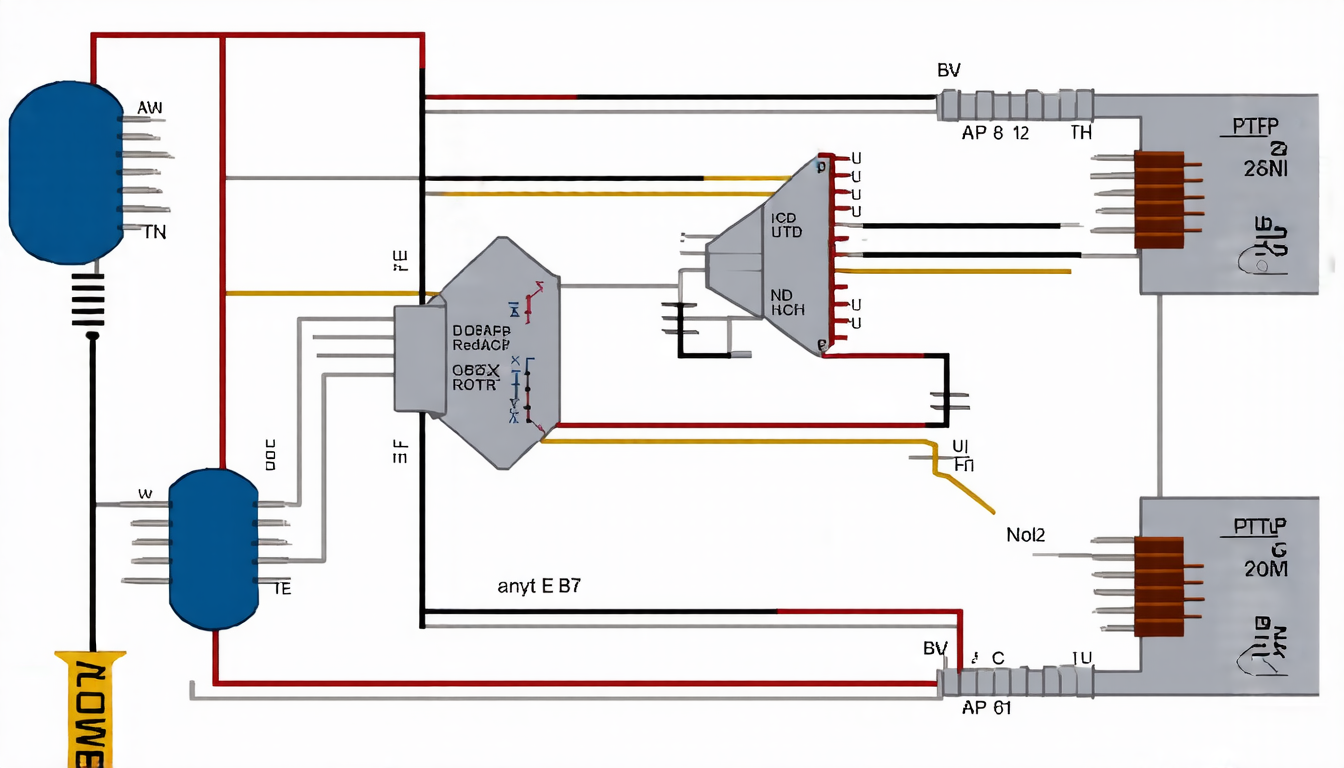
Researchers have made significant progress in developing machine learning algorithms that can accurately predict the behavior of complex analog circuits, a crucial step towards automating the design process.
Analog circuits are the building blocks of many electronic devices, from smartphones to medical equipment. They’re responsible for amplifying, filtering, or switching electronic signals, but designing them is often a tedious and time-consuming task. Engineers typically rely on trial and error, making small changes to circuit parameters until they get the desired outcome.
However, as technology advances, the need for faster and more efficient design methods has become increasingly urgent. With the rise of the Internet of Things (IoT) and artificial intelligence (AI), analog circuits are playing a vital role in many applications, from wireless communication systems to medical devices.
To address this challenge, researchers have been exploring machine learning algorithms that can learn patterns in circuit behavior and make predictions about how they’ll perform. The key is to develop models that can accurately capture the complex interactions between different components within a circuit.
The latest study has achieved remarkable results by using a combination of neural networks and traditional machine learning techniques. By analyzing large datasets of analog circuits, the researchers were able to train their models to predict the behavior of these circuits with high accuracy.
One of the key findings is that simpler circuits, such as low-noise amplifiers, can be accurately modeled using traditional machine learning algorithms like random forests. However, more complex circuits, like power amplifiers and voltage-controlled oscillators, require more advanced techniques, including neural networks and transformers.
The researchers also discovered that increasing the size of the training dataset leads to improved prediction accuracy. This suggests that larger datasets can help overcome the limitations of smaller ones, allowing for more accurate predictions in even the most complex circuits.
The implications of this research are significant. With machine learning algorithms capable of accurately predicting circuit behavior, engineers will be able to design analog circuits faster and more efficiently. This could lead to breakthroughs in fields like wireless communication systems, medical devices, and IoT technology.
The study also highlights the importance of understanding the structural differences between homogeneous and heterogeneous circuits. Homogeneous circuits have a single non-linear mapping, while heterogeneous circuits consist of multiple coupled mappings. By recognizing these distinctions, researchers can develop more effective machine learning algorithms tailored to specific circuit types.
As this research continues to evolve, it’s likely that we’ll see even more innovative applications of machine learning in analog circuit design.
Cite this article: “Predicting Circuit Behavior with Machine Learning”, The Science Archive, 2025.
Machine Learning, Analog Circuits, Neural Networks, Random Forests, Transformers, Iot, Ai, Circuit Behavior, Prediction Accuracy, Electronic Devices.





