

Wednesday 22 January 2025
Scientists have made a significant breakthrough in underwater scene reconstruction, allowing for the creation of highly realistic and detailed virtual environments. This achievement has far-reaching implications for fields such as marine biology, oceanography, and even filmmaking.
Traditionally, capturing accurate underwater scenes has been a challenge due to the scattering effect of water on light. This scattering causes colors to become distorted and objects to appear blurry or faded. To overcome this issue, researchers have developed a new approach that combines multi-view stereo (MVS) with physical image formation models.
The MVS technique uses multiple images taken from different angles to reconstruct a 3D scene. However, in underwater environments, the scattering effect can make it difficult to accurately estimate depth and color information. The new approach addresses this issue by incorporating a physical image formation model that takes into account the way light interacts with water.
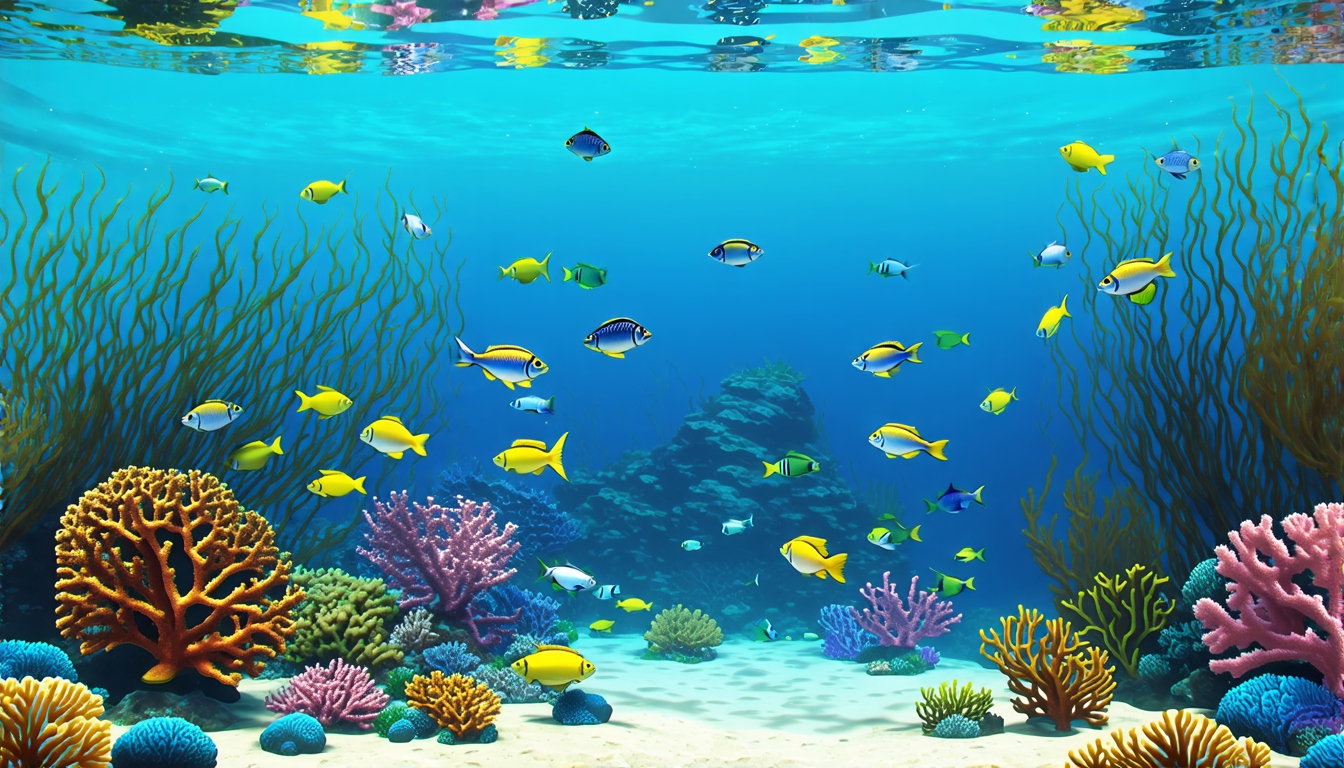
This integrated approach allows for the creation of highly realistic virtual environments that not only accurately capture the shape and structure of underwater scenes but also restore the true colors of objects and backgrounds. The results are stunning, with vivid colors and crisp details that bring the underwater world to life.
One of the key benefits of this new approach is its ability to handle complex underwater scenes with multiple objects and backgrounds. In the past, reconstructing such scenes would require extensive manual editing or specialized equipment. However, with the integrated MVS and physical image formation model, scientists can now automate the process, saving time and resources.
The implications of this breakthrough are far-reaching. For marine biologists and oceanographers, it will provide new insights into underwater ecosystems and habitats. For filmmakers, it will enable the creation of realistic and immersive underwater scenes without the need for expensive equipment or extensive special effects. And for the general public, it will provide a unique window into the underwater world, allowing people to explore and learn about marine environments in a way that was previously impossible.
The next step for scientists is to refine the approach and apply it to real-world scenarios. This may involve collecting more data from various underwater locations or developing new algorithms to improve the accuracy of the reconstruction process. However, with this breakthrough, the possibilities are endless, and the potential applications are vast.
Cite this article: “Revolutionizing Underwater Scene Reconstruction”, The Science Archive, 2025.
Underwater Scene Reconstruction, Virtual Environments, Marine Biology, Oceanography, Filmmaking, Multi-View Stereo, Physical Image Formation Models, Light Scattering, 3D Reconstruction, Underwater Ecosystems





