

Wednesday 12 March 2025
Physics textbooks have a way of making complex concepts seem straightforward and simple. But, have you ever stopped to think about how accurate they really are? A recent study set out to investigate the presentation of the Cavendish experiment in physics textbooks and what it revealed was quite surprising.
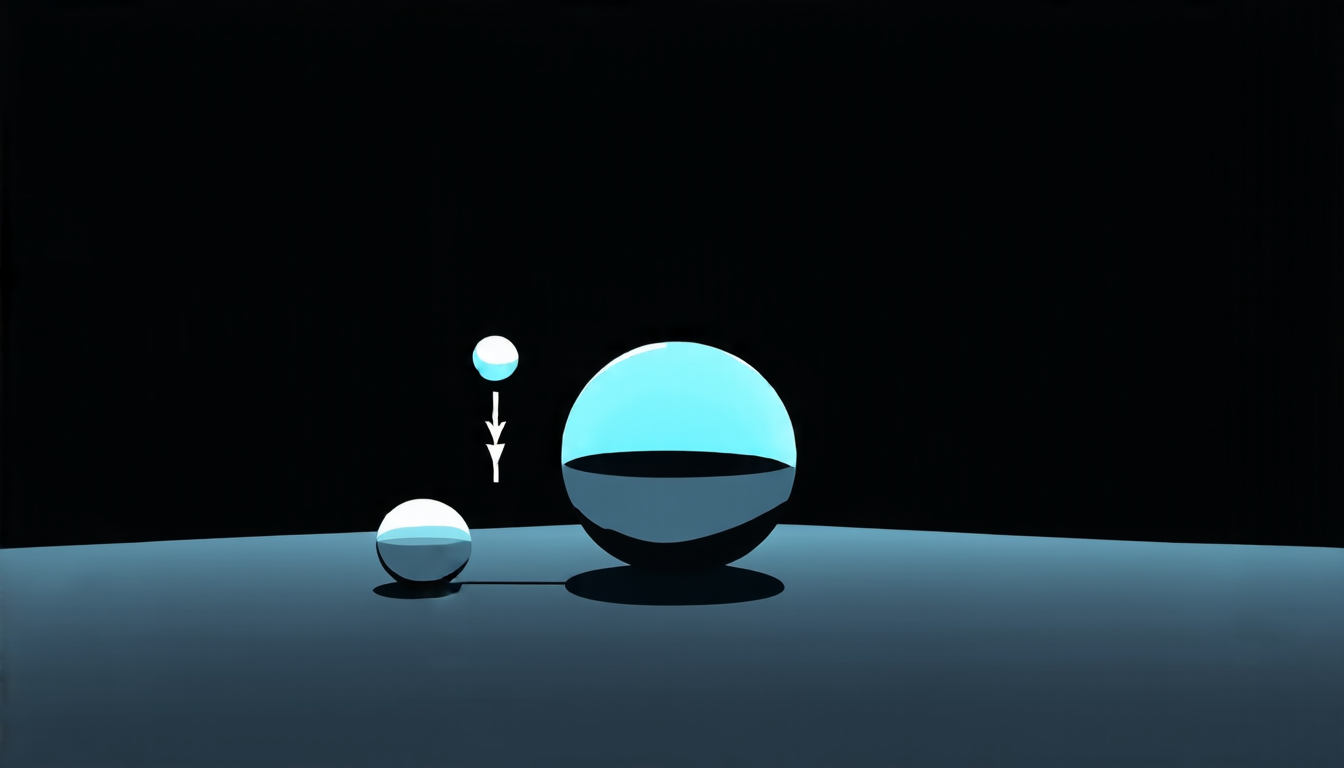
The Cavendish experiment is a fundamental concept in physics that dates back to the 18th century. In it, Henry Cavendish measured the density of the Earth by determining the gravitational attraction between two lead spheres. The experiment has been widely used to teach students about gravity, density, and the importance of precise measurements.
However, researchers discovered that many textbooks have been misrepresenting the Cavendish experiment for decades. Instead of accurately describing its purpose and methodology, they often present it as an experiment designed to measure the gravitational constant (G). This is not only inaccurate but also misleading, as G was not even a concept at the time of Cavendish’s experiment.
The study analyzed over 80 physics textbooks published between 1911 and 2014 and found that nearly half of them incorrectly attributed the purpose of the Cavendish experiment to measuring G. This suggests that the misconception has been perpetuated through generations of physics education, leading many students to learn an inaccurate version of history.
So, why did this mistake occur? One reason is that textbooks often rely on previous editions or other sources without critically evaluating the information. Additionally, there may be a lack of understanding among authors about the historical context and purpose of the Cavendish experiment.
The researchers’ findings have important implications for physics education. By presenting an inaccurate version of history, textbooks can mislead students about the development of scientific concepts and theories. This can lead to a distorted understanding of the scientific process and its progression over time.
Furthermore, the study highlights the importance of critically evaluating information, particularly in science education. Students need to be taught to think critically and question assumptions, rather than simply accepting what they are told without verification.
The researchers’ findings also underscore the need for physics textbooks to be rewritten or updated to accurately reflect the historical context and purpose of the Cavendish experiment. By doing so, students can gain a more accurate understanding of the scientific process and its development over time.
In the end, the study’s results serve as a reminder that even in the field of physics, accuracy and attention to detail are crucial.
Cite this article: “Physics Textbooks Reveal Surprising Errors in Presentation of Cavendish Experiment”, The Science Archive, 2025.
Physics, Textbooks, Cavendish Experiment, Gravity, Density, Gravitational Constant, G, Scientific Education, Critical Thinking, Accuracy





