
Wednesday 22 January 2025
Scientists have made a significant breakthrough in underwater communication technology, using a technique called parametric sonar. This innovative approach allows for the transmission of high-frequency signals through water, enabling faster and more reliable communication between underwater devices.
Parametric sonar works by generating two low-frequency sound waves that interact with each other to produce a higher frequency signal. This signal is then transmitted through the water, allowing devices to communicate over long distances without the need for physical cables or wires.
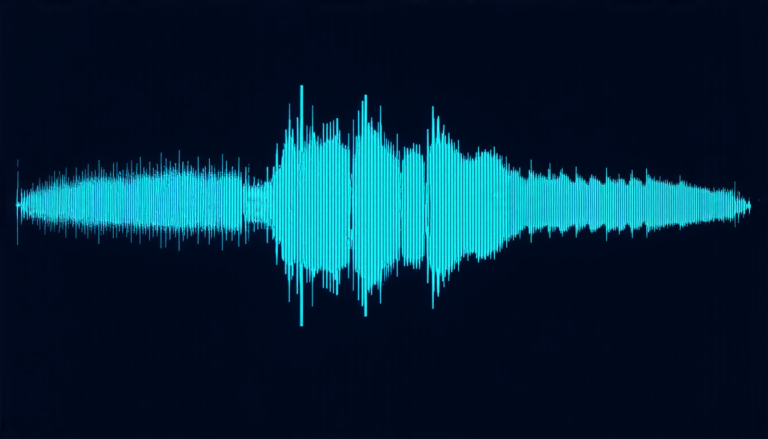
The technology has been tested in a controlled environment, using a specially designed transducer array and a hydrophone to detect the signals. The results show that parametric sonar can transmit high-frequency signals with low distortion and high signal-to-noise ratio, making it ideal for use in underwater communication systems.
One of the key advantages of parametric sonar is its ability to operate at frequencies above 10 kHz, which is beyond the range of traditional sonar technology. This allows for faster data transfer rates and more reliable communication between devices.
The potential applications of parametric sonar are vast and varied. It could be used in underwater sensor networks, allowing sensors to communicate with each other and transmit data back to shore-based stations. It could also be used in autonomous underwater vehicles (AUVs), enabling them to communicate with each other and with surface vessels.
In addition to its practical applications, parametric sonar has the potential to revolutionize our understanding of the ocean itself. By allowing scientists to transmit high-frequency signals through water, it opens up new possibilities for studying marine life and tracking ocean currents.
The technology is still in its early stages, but the results are promising. Further research and development will be needed to refine the technique and make it suitable for use in a variety of underwater environments. However, with its potential applications and benefits, parametric sonar is an exciting area of research that could have far-reaching implications for our understanding and interaction with the ocean.
The team behind the technology has been experimenting with different transducer designs and signal processing techniques to optimize the performance of the parametric sonar system. They have also tested the technology in different water conditions, including saltwater and freshwater environments.
One of the challenges facing the development of parametric sonar is the need for high-powered transducers that can generate the low-frequency sound waves required for the technique to work. The team has been working with materials scientists to develop new transducer designs that can meet these demands.
Cite this article: “Advances in Underwater Communication Technology”, The Science Archive, 2025.
Underwater Communication, Parametric Sonar, High-Frequency Signals, Low-Frequency Sound Waves, Transducer Array, Hydrophone, Signal-To-Noise Ratio, Autonomous Underwater Vehicles, Ocean Currents, Sensor Networks