
Wednesday 22 January 2025
A team of researchers has developed a new algorithm for registering point sets, which is capable of handling complex deformations and multiple datasets simultaneously. The algorithm, called diffeomorphic ICP (iterative closest point), uses a probabilistic approach to match points between two or more sets, while also incorporating large deformation diffeomorphisms to model non-rigid transformations.
The authors begin by reviewing the classic ICP algorithm, which is widely used for registering point sets. However, this algorithm has limitations when dealing with complex deformations and multiple datasets. To address these issues, the researchers developed a new algorithm that combines the benefits of ICP with those of large deformation diffeomorphisms.
The diffeomorphic ICP algorithm starts by assuming that each point set is generated from a known Gaussian mixture model (GMM). The algorithm then uses this GMM to warp the points into a common space, where they can be matched using the classic ICP approach. However, unlike traditional ICP algorithms, the diffeomorphic ICP algorithm also incorporates large deformation diffeomorphisms to model non-rigid transformations.
To achieve this, the authors use a novel energy functional that combines the GMM-based warping with the diffeomorphic registration. The energy functional is minimized using an expectation-maximization (EM) algorithm, which iteratively updates the parameters of the GMM and the diffeomorphism.
The researchers tested their algorithm on both synthetic and real-world datasets, including a dataset of 10 point sets generated from a known GMM. The results show that the algorithm is capable of accurately registering complex deformations and multiple datasets simultaneously.
One of the key advantages of the diffeomorphic ICP algorithm is its ability to handle large deformations without requiring explicit registration of corresponding points between the two sets. This makes it particularly useful for applications where the point sets are highly non-rigid, or where there is no clear correspondence between the points.
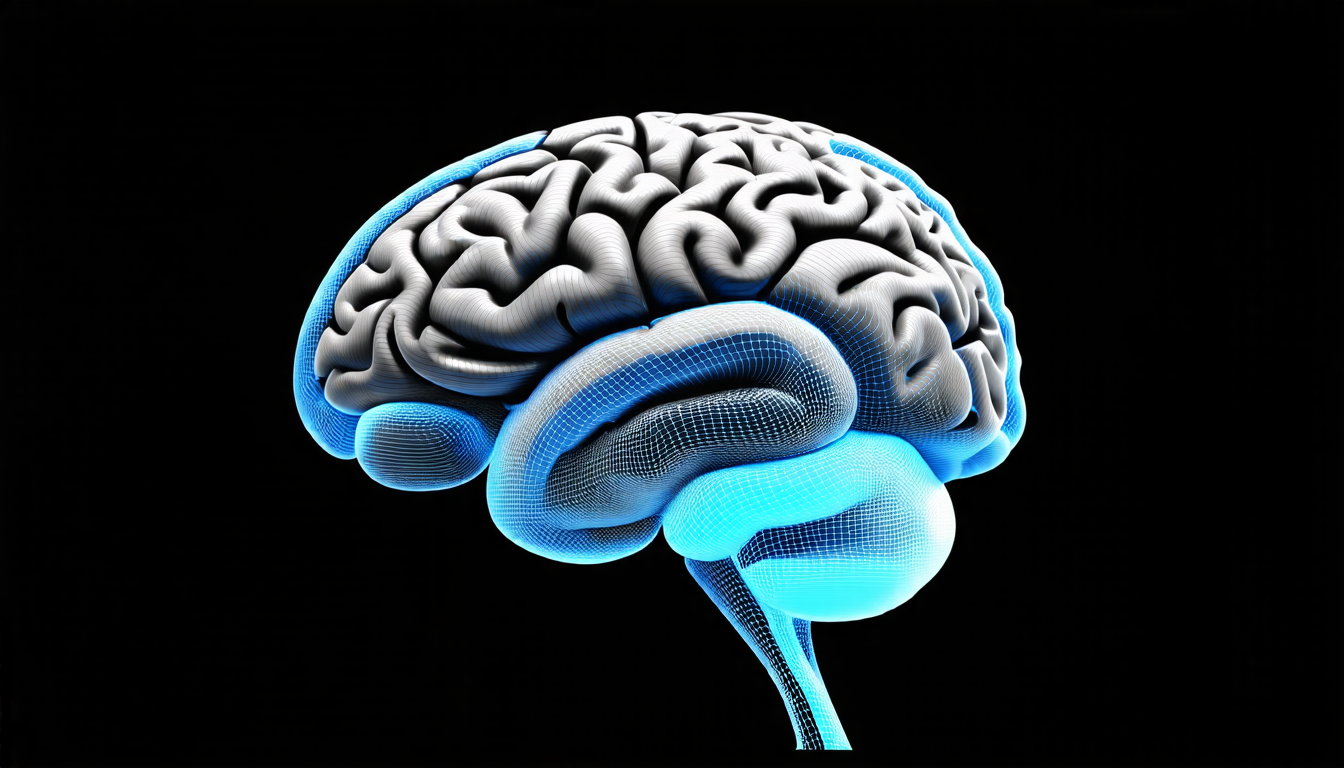
The algorithm has potential applications in a wide range of fields, including computer vision, medical imaging, and robotics. For example, in medical imaging, the diffeomorphic ICP algorithm could be used to register MRI scans of the brain across different patients, or to track changes in brain structure over time.
In addition to its practical applications, the diffeomorphic ICP algorithm also provides a new framework for understanding the relationship between point sets and their underlying GMMs.
Cite this article: “Diffeomorphic Iterative Closest Point Algorithm for Registration of Complex Deformations and Multiple Datasets”, The Science Archive, 2025.
Point Set Registration, Diffeomorphic Icp, Iterative Closest Point, Gaussian Mixture Model, Large Deformation Diffeomorphisms, Expectation-Maximization Algorithm, Computer Vision, Medical Imaging, Robotics, Non-Rigid Transformations
Reference: Adrien Wohrer, “Diffeomorphic ICP Registration for Single and Multiple Point Sets” (2025).