

Wednesday 22 January 2025
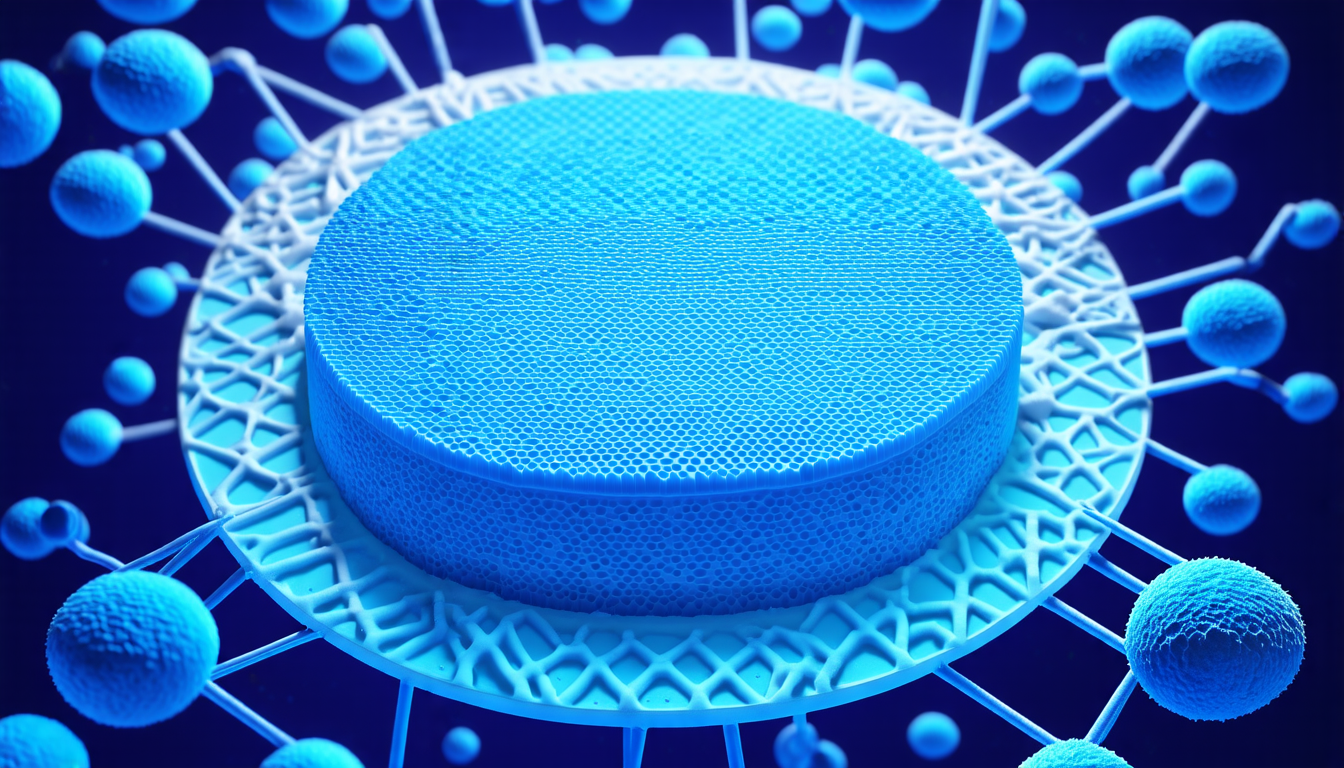
Scientists have been working on developing new ways to create 3D-printed scaffolds for tissue engineering, and a recent breakthrough could pave the way for more effective treatments. Researchers have discovered that by using ultrasound to print poly(ε-caprolactone) (PCL), a biodegradable polymer, they can create scaffolds with controllable porosity.
Tissue engineering is a field of medicine that aims to replace or repair damaged tissues and organs with artificial ones. To do this, scientists need to create scaffolds that mimic the natural environment of the body and can support cell growth and differentiation. Currently, 3D printing technology is being used to create these scaffolds, but it has limitations.
The researchers found that by using ultrasound to print PCL, they could create scaffolds with different porosity levels. Porosity is an important factor in tissue engineering because it affects the ability of cells to grow and migrate within the scaffold. The team was able to control the porosity level by adjusting the printing speed and other parameters.
In addition, the researchers discovered that the ultrasound-printed PCL scaffolds had a higher surface area than traditional 3D printed scaffolds. This is important because it allows for better cell adhesion and proliferation.
To test the effectiveness of the new scaffolds, the researchers seeded them with NIH-3T3 fibroblasts, a type of cells commonly used in tissue engineering studies. They found that the cells grew well on the ultrasound-printed PCL scaffolds, and there was no evidence of cytotoxicity or adverse effects.
The researchers believe that their new technique could be used to create scaffolds for a variety of applications, including bone tissue engineering and wound healing. They also suggest that it could be used to create customized scaffolds tailored to specific patient needs.
Overall, the discovery of a new way to create 3D-printed scaffolds with controllable porosity is an important breakthrough in the field of tissue engineering. It has the potential to improve the effectiveness of treatments and lead to better outcomes for patients.
Cite this article: “Ultrasound-Assisted 3D Printing of Biodegradable Scaffolds for Tissue Engineering”, The Science Archive, 2025.
3D Printing, Tissue Engineering, Poly(Ε-Caprolactone), Pcl, Ultrasound, Biodegradable Polymer, Scaffolds, Porosity, Cell Growth, Biomedical Applications





