

Thursday 23 January 2025
Deep learning models are increasingly being used to analyze medical images, such as X-rays, to detect and segment foreign objects within them. However, creating large datasets of labeled images is a time-consuming and labor-intensive process, which can limit the development of these models.
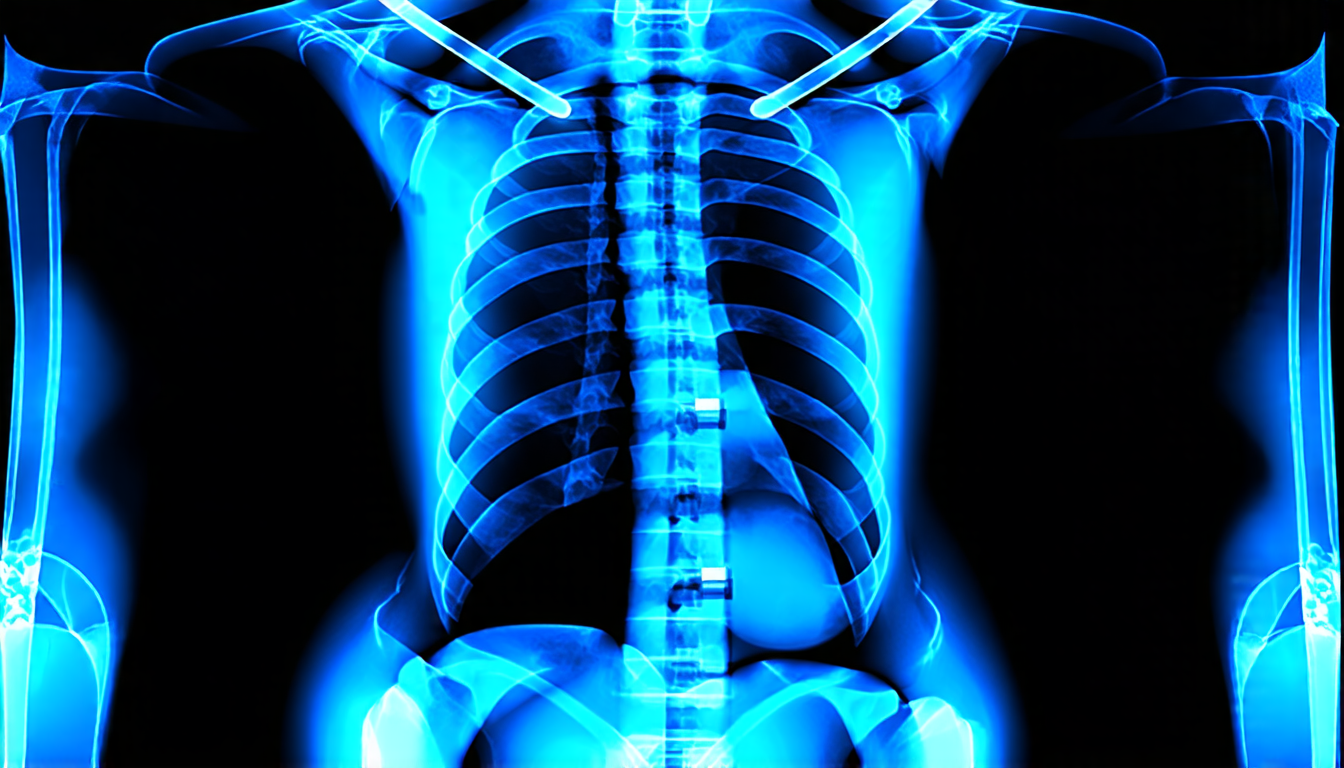
To address this issue, researchers have proposed a novel approach for generating synthetic data for instance segmentation tasks. The method involves inserting arbitrary shapes into chest X-ray images, guided by anatomical structures, to create realistic foreign object scenarios. This allows for the creation of large datasets with minimal manual annotation effort.
The team behind the project used a combination of structure plotting and cut-and-paste augmentations to generate synthetic data. They inserted various shapes, such as lines, polygons, and ellipses, into anatomical regions, mimicking real-world foreign objects like stents, pacemakers, and surgical clips. The generated images were then annotated with pixel-wise masks for further instance segmentation purposes.
The researchers trained several state-of-the-art instance segmentation models on the synthetic data and evaluated their performance on both synthetic and real-world datasets. They found that the models were able to learn from the synthetic data and generalize well to real-world scenarios, achieving competitive performance with models trained directly on manually annotated data.
One of the most promising results was obtained by Mask2Former, a model that achieved close to 55% mean average precision (mAP) when trained on just 500 synthetic samples. When evaluated on a real-world dataset containing foreign medical objects, the same model performed similarly well, achieving an mAP of over 22%.
The study’s findings suggest that synthetic data generation can be a valuable tool for instance segmentation tasks in medical imaging, particularly when combined with expert knowledge and anatomical guidance. The approach could potentially accelerate the development of deep learning models for detecting foreign objects in X-ray images, which is crucial for improving patient safety and reducing healthcare costs.
The research has several implications for the field of medical image analysis. Firstly, it highlights the potential of synthetic data generation to augment existing datasets and improve model performance. Secondly, it demonstrates the importance of incorporating expert knowledge and anatomical guidance into the data generation process. Finally, it underscores the need for further research in this area to develop more robust and accurate models for instance segmentation tasks.
Overall, the study’s results are promising, and the proposed approach has the potential to revolutionize the field of medical image analysis.
Cite this article: “Synthetic Data Generation Accelerates Instance Segmentation in Medical Imaging”, The Science Archive, 2025.
Medical Imaging, Deep Learning, Instance Segmentation, Synthetic Data, X-Ray Images, Foreign Objects, Anatomical Guidance, Expert Knowledge, Pixel-Wise Masks, Mask2Former





