

Thursday 23 January 2025
The quest for a fault-tolerant quantum computer has long been a challenge, as errors can easily creep in during calculations and destroy the fragile quantum states necessary for processing. To tackle this issue, researchers have developed various codes to protect against these errors, but most of them require additional qubits beyond those needed for the actual calculation.
Now, scientists have made a breakthrough by discovering a family of codes that use only one extra qubit to correct errors, making them more efficient and practical for real-world applications. These codes are known as non-Clifford stabilizer codes, which are designed to work with specific types of quantum error correction methods.
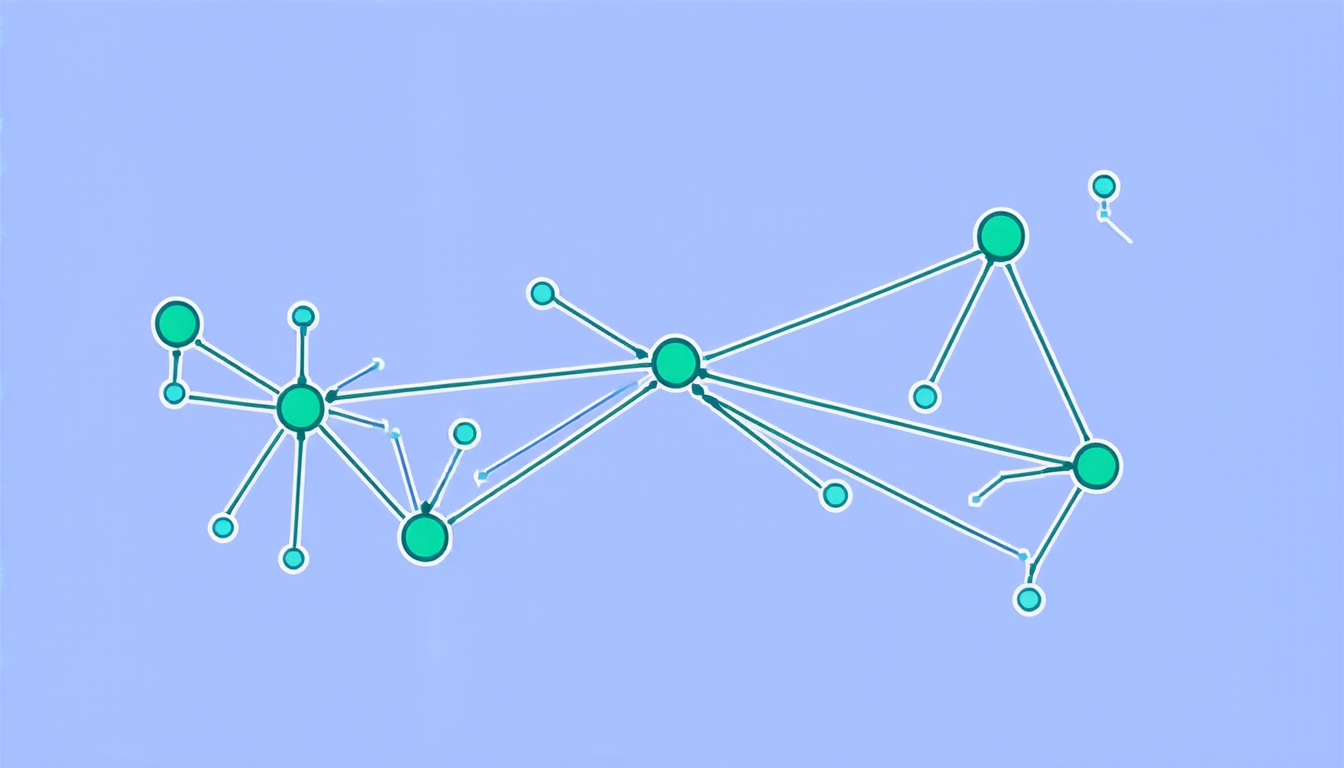
The new codes are based on the concept of graph states, where a set of interconnected nodes represents the qubits involved in the calculation. By cleverly manipulating these graphs, researchers can create codes that can correct errors without requiring extra qubits for each qubit being measured. This means that only one additional qubit is needed to perform error correction across all the qubits involved.
The team behind this breakthrough used a combination of theoretical work and computer simulations to develop these new codes. They found that by carefully designing the graph states, they could create codes with specific properties that allowed them to correct errors efficiently using just one extra qubit.
To test their codes, researchers simulated various scenarios where errors would naturally occur during quantum calculations. They discovered that their new codes were able to correct errors at a rate comparable to traditional codes, but with significantly fewer resources required. This is a major step forward in the development of practical and efficient fault-tolerant quantum computers.
The implications of this breakthrough are significant. With more efficient error correction methods, researchers can build larger-scale quantum computers that can tackle complex problems in fields like chemistry, materials science, and cryptography. The potential applications are vast, from simulating complex molecular interactions to creating unbreakable encryption codes.
While there is still much work to be done to bring these new codes to life, the discovery of non-Clifford stabilizer codes with only one extra qubit marks a significant milestone in the pursuit of practical and efficient fault-tolerant quantum computing.
Cite this article: “Efficient Quantum Error Correction with Minimal Resources”, The Science Archive, 2025.
Quantum Computer, Error Correction, Qubits, Non-Clifford Stabilizer Codes, Graph States, Quantum Error Correction Methods, Fault-Tolerant, Practical Applications, Cryptography, Quantum Computing





