

Thursday 23 January 2025
The SIRS process is a mathematical model used to study the spread of infectious diseases on networks. It’s a simple yet powerful tool that has been widely applied in various fields, including epidemiology and computer science. In a recent paper, researchers have extended this model by introducing a new type of immunity, which decays exponentially over time.
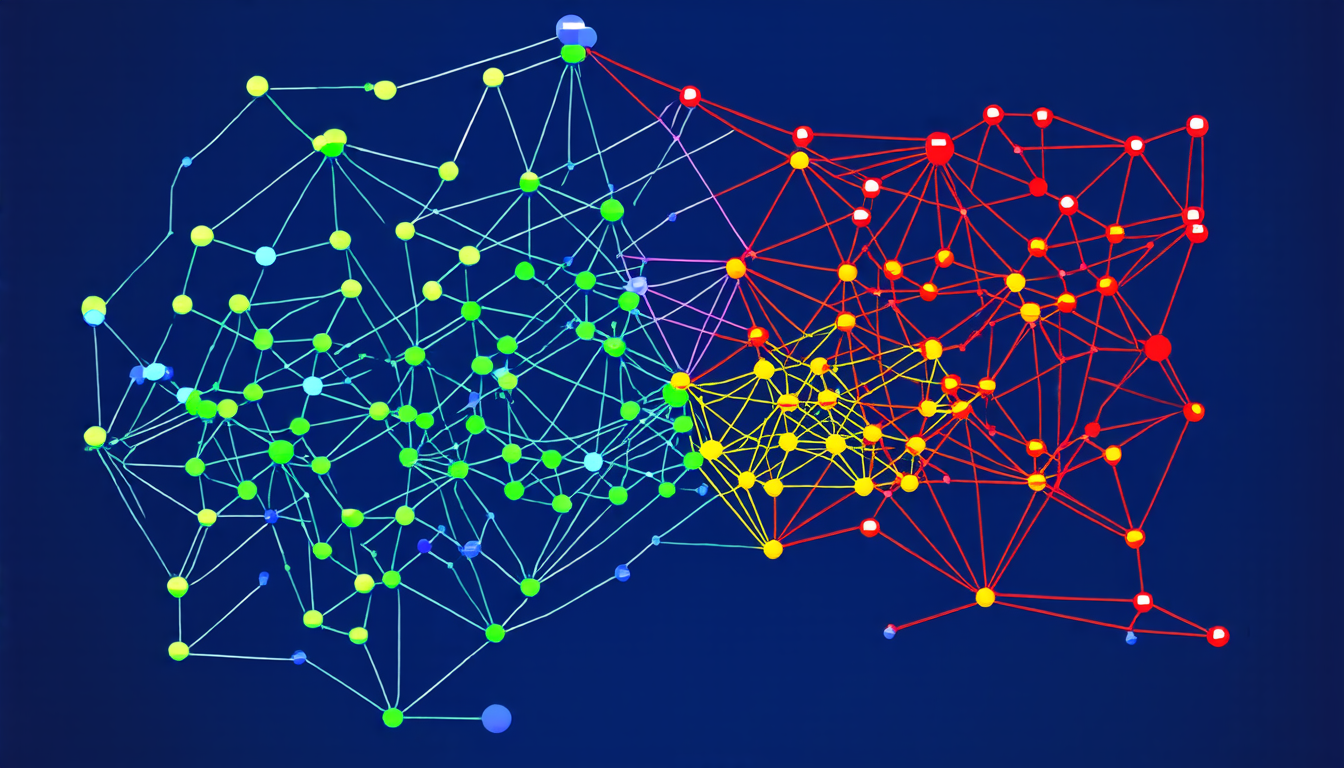
The SIRS process is typically used to study the spread of diseases on networks where nodes represent individuals or entities and edges represent connections between them. Each node has three states: susceptible (S), infected (I), and recovered (R). The model assumes that an individual can only be in one of these states at a time, and that the transition from one state to another is governed by certain rules.
The new type of immunity introduced in this paper decays exponentially over time. This means that even if an individual recovers from a disease, they are not immune to it forever. Instead, their immunity decreases over time, making them more susceptible to future infections.
The researchers used mathematical analysis and computer simulations to study the behavior of this new SIRS process. They found that the decay rate of immunity has a significant impact on the spread of disease. When the decay rate is high, the disease spreads faster and more widely. However, when the decay rate is low, the disease spreads slower and less widely.
The results of this study have important implications for public health policy. For example, if the decay rate of immunity is found to be high, it may indicate that individuals are not immune to certain diseases for as long as previously thought. This could lead to changes in vaccination strategies or other public health interventions.
The researchers also found that the SIRS process with exponential decay of immunity can exhibit complex behavior, including multiple stable states and hysteresis. This means that small changes in the initial conditions of the system can have large effects on its long-term behavior.
Overall, this study provides new insights into the spread of infectious diseases on networks and highlights the importance of considering the decay rate of immunity in public health policy. The results have important implications for our understanding of disease dynamics and could lead to more effective strategies for controlling the spread of disease.
Cite this article: “Decaying Immunitys Impact on Infectious Disease Dynamics”, The Science Archive, 2025.
Sirs Process, Infectious Diseases, Network Epidemiology, Immunity Decay, Exponential Decay, Public Health Policy, Vaccination Strategies, Disease Dynamics, Hysteresis, Complex Behavior.





