

Thursday 23 January 2025
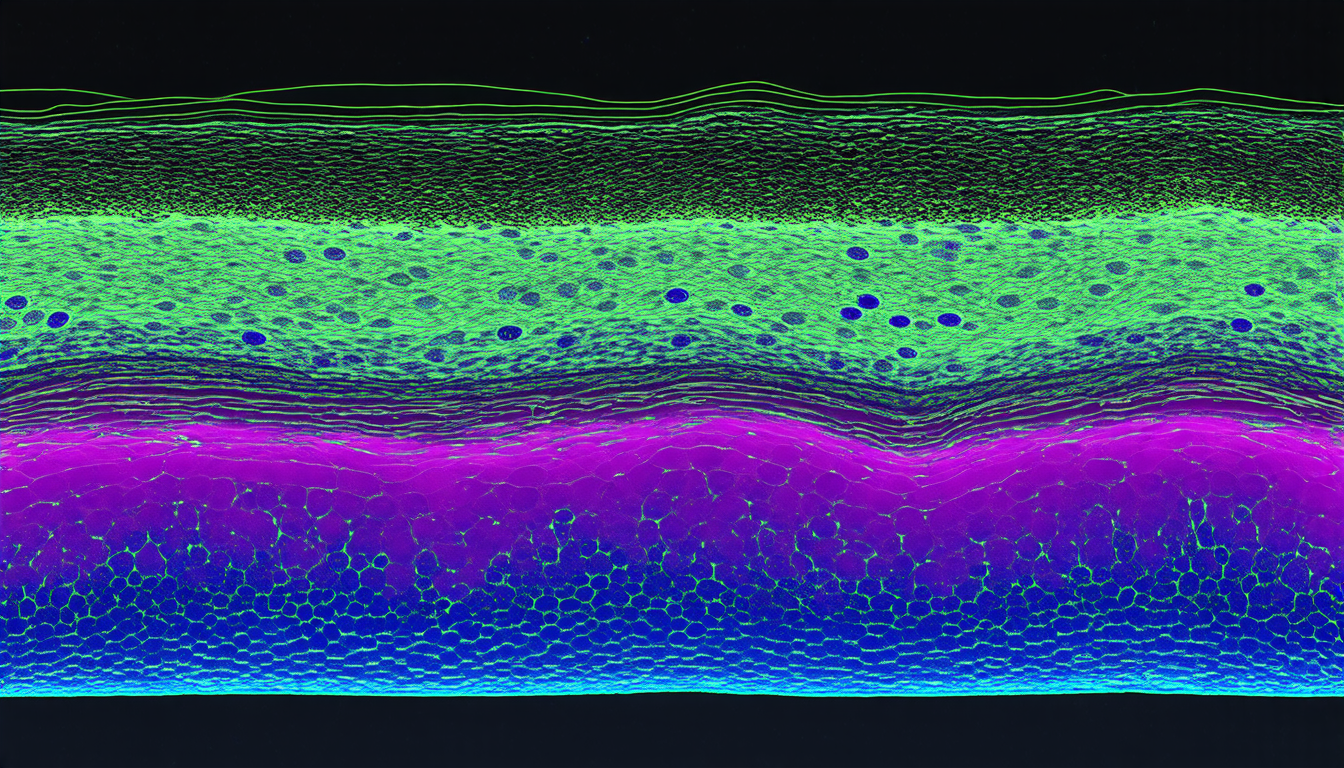
Scientists have long been fascinated by the mysteries of light and its behavior when interacting with matter. One area where this curiosity has led to significant advancements is in the field of optical coherence tomography (OCT). This technique allows us to visualize internal structures within living tissues, revolutionizing our understanding of human health and disease.
But how does OCT work? In essence, it’s a form of microscopy that uses light to create detailed images of tiny structures deep inside the body. The process begins with a beam of light being directed onto the sample – whether it be skin, eyes, or organs – and then splitting into two separate beams. One beam is reflected back off the surface of the sample, while the other travels through the sample before being reflected back.
The key to OCT lies in the way these reflected beams interact with each other. By analyzing the subtle differences in phase between the two beams, scientists can create a detailed map of the internal structure of the sample. This is made possible by a phenomenon called coherence, which refers to the ability of light waves to maintain their phase relationship over time.
In recent years, researchers have been working to improve the resolution and speed of OCT imaging techniques. One approach has been to develop new methods for processing the data collected during imaging, allowing for more detailed images to be generated. Another area of focus has been on developing new technologies that can increase the speed and accuracy of OCT imaging.
One such technology is called full-field OCT (FF-OCT). Unlike traditional OCT systems, which use a beam-splitter to direct light onto the sample, FF-OCT uses a different approach known as Kohler illumination. This method involves directing the light beam directly onto the sample without splitting it first. The result is an increased speed and accuracy of imaging, making FF-OCT particularly useful for applications such as ophthalmology.
In addition to improving OCT imaging techniques, scientists are also working to better understand the fundamental principles underlying this technology. One area of research has been on developing new theories that can help explain how light interacts with matter at the molecular level. This knowledge can be used to improve the performance and accuracy of OCT imaging systems, as well as develop new applications for this technology.
In recent years, researchers have developed a new theory that aims to provide a more comprehensive understanding of how light interacts with matter in OCT. This theory is based on the idea that light can be thought of as a wave, rather than particles.
Cite this article: “Elucidating the Principles of Optical Coherence Tomography”, The Science Archive, 2025.
Optical Coherence Tomography, Oct, Microscopy, Light, Imaging, Phase, Coherence, Wave, Matter, Optics, Physics





