

Wednesday 12 March 2025
The quest for efficient communication networks has been a long-standing challenge in computer science. One of the most fundamental problems is telephone broadcasting, where a message needs to be disseminated to all nodes in a network within a minimum number of rounds. In recent years, researchers have made significant progress in understanding the complexity of this problem.
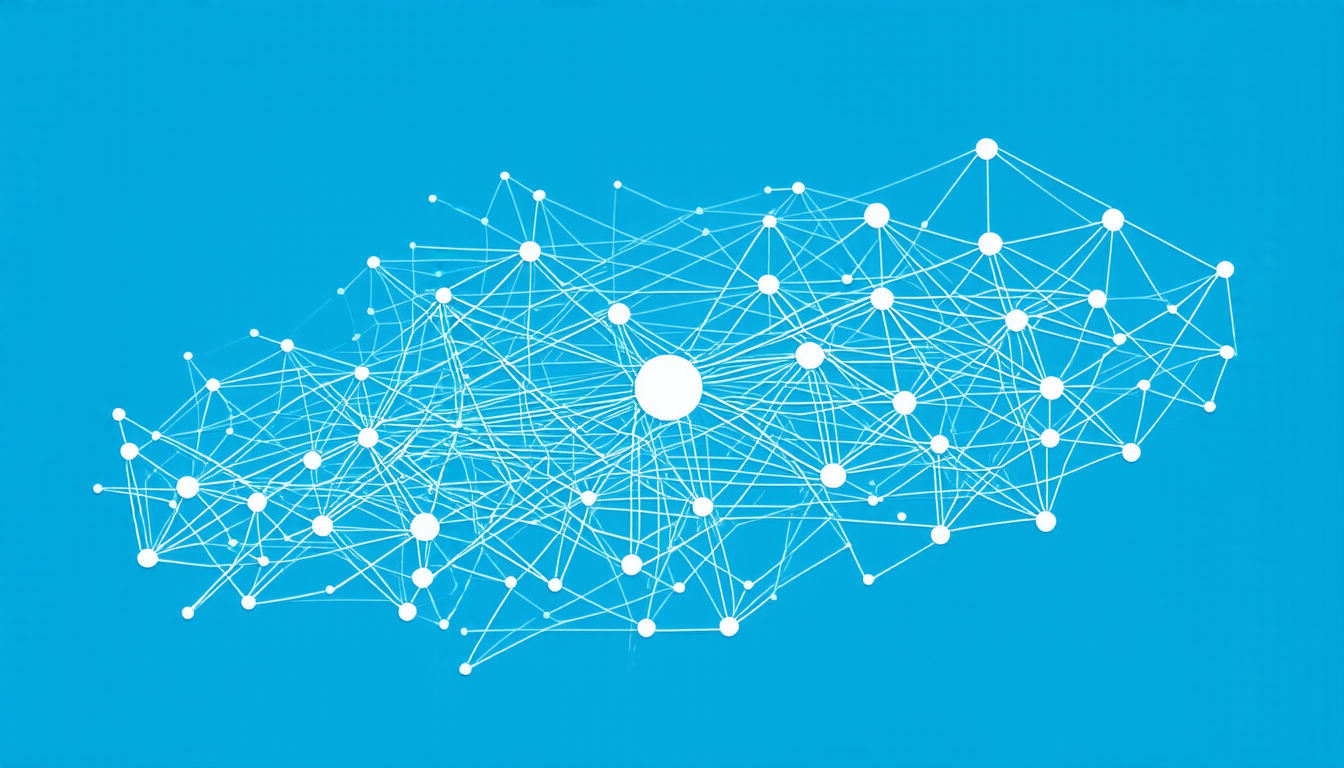
A new study delves into the world of cactus graphs and graphs with bounded pathwidth, revealing that the problem of telephone broadcasting becomes much more challenging in these graph classes. Cactus graphs are a type of network where each node has at most two neighbors, while graphs with bounded pathwidth have a decomposition tree where each bag contains at most a certain number of nodes.
The researchers found that telephone broadcasting is NP-complete for cactus graphs and graphs with pathwidth 2. This means that even the fastest computers would take an impractically long time to solve this problem exactly. However, the study also provides a glimmer of hope by presenting constant-factor approximation algorithms for these graph classes.
For cactus graphs, the researchers developed a 2-approximation algorithm, which is remarkably efficient considering the complexity of the problem. This means that the algorithm can produce a solution within twice the optimal number of rounds. For graphs with bounded pathwidth, the study presents a constant- factor approximation algorithm, which is even more impressive given the vast range of possible graph structures.
The significance of this research lies in its implications for real-world communication networks. As technology advances and our reliance on wireless networks grows, efficient communication protocols become increasingly important. The results of this study provide valuable insights into how to design more effective broadcasting algorithms, allowing us to better manage the flow of information in complex networks.
One potential application of these findings is in the development of wireless sensor networks, where devices need to communicate with each other efficiently to collect and disseminate data. By understanding the complexity of telephone broadcasting in different graph classes, researchers can create more robust and scalable communication protocols.
The study also highlights the importance of exploring new areas of research in computer science. By pushing the boundaries of what is currently known, scientists can uncover innovative solutions to complex problems. In this case, the results have far-reaching implications for fields such as network theory and algorithm design.
In summary, the researchers’ findings offer a deeper understanding of telephone broadcasting in cactus graphs and graphs with bounded pathwidth.
Cite this article: “Complexity of Telephone Broadcasting in Specialized Graph Classes”, The Science Archive, 2025.
Computer Science, Communication Networks, Graph Theory, Cactus Graphs, Pathwidth, Telephone Broadcasting, Algorithm Design, Wireless Sensor Networks, Network Theory, Approximation Algorithms.





